General

Gold-to-Oil Ratio

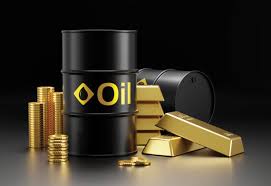
The gold-to-oil ratio measures how many barrels of crude oil you can buy with one troy ounce of gold. It’s calculated as: Gold price per ounce ÷ Oil price per barrel So, if gold trades at $4,800/oz and oil is $60/bbl, the ratio is 80:1 — meaning one ounce of gold buys 80 barrels of oil. According to recent data this ratio remains very elevated, near levels above 70–75 barrels per ounce in early 2026 — an unusually high reading compared to long-term norms. Why It Matters This ratio is not just a number — it reflects market psychology: Gold tends to be a monetary hedge and store of value in uncertain times, while oil is a real economic commodity tied to industrial activity and growth. Historical Context: What Has Happened Before Over the decades, this ratio has swung widely: Long-Term Averages Historically the ratio has tended to average roughly 15–20 barrels per ounce over many decades. Stable Growth Eras 1950s–1960s Around 11–13 as stable economic growth and energy use pushed oil prices and gold prices in line. 1970s–1980s Oil shocks from embargoes and geopolitical tensions pushed oil prices higher relative to gold, lifting the ratio into the 20s. Early 2000s Strong demand for oil kept the ratio low, sometimes below 10, signaling oil was relatively expensive. Global Financial Crisis (2008) Gold surged as a safe haven while oil saw volatility, keeping ratios elevated. COVID-19 Pandemic (2020) The ratio exploded to above 90 — a historic extreme — as oil demand collapsed, prices briefly turned negative, and gold soared. Recent Decade Post-pandemic recovery kept ratios above historical averages, with readings climbing into the 30s and higher as gold remained strong and oil lagged. Where It Stands Now — Early 2026 As of now, the gold-to-oil ratio remains well above long-term norms, with many estimates placing it in the 70–80+ barrels per ounce range. This is a highly elevated reading, historically associated with: Major analysis also notes that recent extremes signal an imbalance that has historically preceded periods of rebalancing between these commodities. What Such High Levels Have Historically Signalled  Economic Uncertainty Higher ratios often coincide with periods when investors seek safety, not growth — gold is bid up, while oil — tied to industrial demand — softens. Past examples include financial crises, pandemics, and major geopolitical stress. Oil Appears Cheap Relative to Gold Financial analysts interpret current high ratios to mean that oil may be undervalued relative to gold — a potential signal for eventual oil price recovery or gold price correction. Mean Reversion Tendencies Historically, extreme deviations tend to mean-revert — either oil prices rise, gold prices fall, or both — bringing the ratio back closer to its long-term average (roughly 15–20). Current Market Dynamics Behind High Ratios Several factors help explain why the ratio remains elevated: Gold’s Safe-Haven Appeal Persisting geopolitical tensions, inflation concerns, central bank buying, and financial market uncertainty support strong gold prices. Oil Market Structure Oil pricing is influenced by supply/demand dynamics, energy transitions, and slower demand growth in some regions — leading to muted price gains compared to gold. Structural Shifts in Energy Use Longer-term secular shifts such as energy transition and slower demand growth in developed markets may reduce oil price responsiveness relative to gold. Outlook: What Could Happen Next? Given the current high ratio, there are three broad possible future scenarios: 1. Mean Reversion — Ratio Falls This could happen if: This would bring the ratio back toward historical averages. 2. Stays Elevated If macro uncertainty persists and demand for safe havens remains strong, the ratio could stay high for an extended period. 3. Moves Even Higher In an extreme crisis scenario — deep recession or major financial stress — gold could climb further while oil weakens, pushing the ratio higher still. Takeaways for Investors & Observers The gold-to-oil ratio is a powerful barometer of where markets place value between growth (oil) and safety (gold).Today’s elevated ratio suggests a market still tilted toward risk aversion and monetary hedging.Historical patterns hint that periods of extreme imbalance often eventually revert toward the norm, but timing is uncertain.For investors, such a ratio can inform decisions about commodity exposure, inflation hedges, and macro positioning.

Gold-to-Oil Ratio Read More »

Cloud Compounding

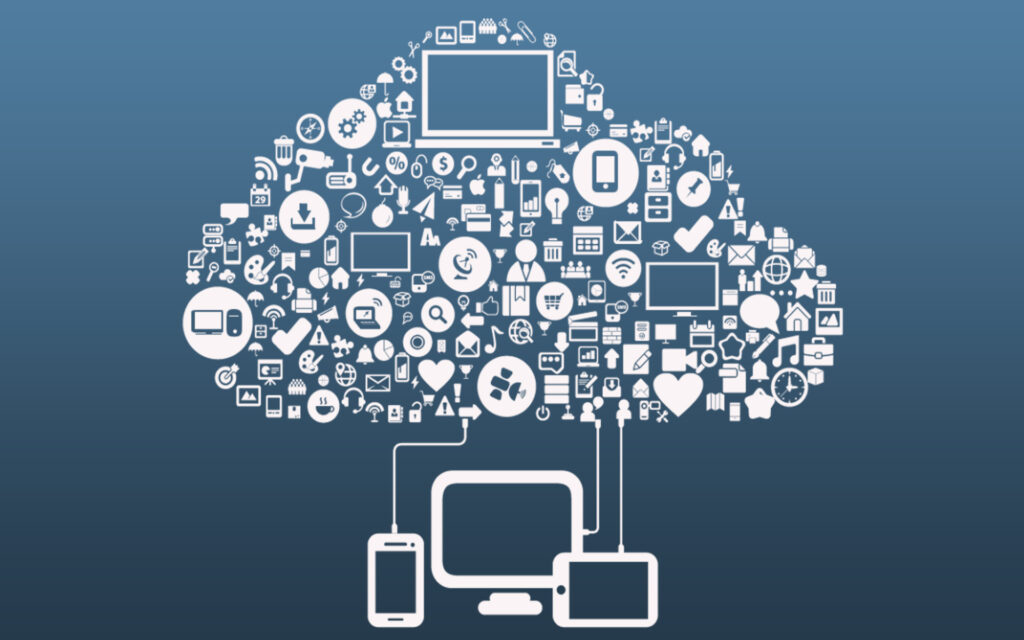
What is Cloud Compounding? Cloud compounding is a concept in cloud computing that involves combining different cloud services to create more powerful and flexible solutions. Think of it like mixing ingredients to make a delicious recipe each cloud service adds a unique flavor, and together they make something better. Why Use Cloud Compounding? Cloud compounding allows businesses to mix and match various cloud tools to meet their specific needs. This approach helps them use the best features from different cloud providers without being tied to just one. How Does It Work? Mixing Services: Just like you might use a different app for email, storage, and video calls, cloud compounding involves using different cloud services for various tasks. For instance, you might use one cloud service for data storage, another for computing power, and a third for AI tools. Integration: These services are designed to work together seamlessly. For example, you can store data in one cloud service and analyze it using another. This integration helps businesses create customized solutions that are more efficient and effective. Flexibility: By combining services, businesses can adjust their technology stack based on changing needs. For instance, if a company needs more computing power for a big project, they can quickly add resources from a cloud provider without overhauling their entire system. Benefits of Cloud Compounding Customization: You can tailor your cloud setup to fit your specific needs by choosing the best tools for each job. Cost-Efficiency: Only pay for the services you use, and avoid paying for features you don’t need. Scalability: Easily scale up or down based on your needs by adding or removing services. Innovation: Access cutting-edge tools and technologies from different providers to stay ahead in the industry. Example of Cloud Compounding Imagine a company that needs to manage large amounts of data, run complex analyses, and communicate with customers. They might: Store their data on one cloud provider. Use another provider’s tools for advanced data analysis. Use a third service for email marketing and customer communication. By combining these services, the company creates a powerful and efficient setup tailored to its needs.

Cloud Compounding Read More »

Green Energy

Green energy is a term for energy that comes from renewable sources. The terms ‘green energy’ and ‘renewable energy’ are often used interchangeably, but there is one essential (and sometimes confusing) difference between them. While most green energy sources are also renewable, not all renewable energy sources are considered entirely green. Green energy is often referred to as clean, sustainable, or renewable energy. The energy sources such as sunlight, wind, rain, tides, etc. can be called as green energy. The production of green energy doesn\’t release toxic greenhouse gases into the atmosphere, meaning it causes little or no environmental impact. Renewable energy includes resources that rely on fuel sources that restore themselves over short periods of time and do not diminish. A renewable energy source may not be considered ‘green’ if, for example, power generation that burns organic material from sustainable forests may be renewable, but it is not necessarily green, due to the carbon dioxide produced by the burning process itself. Green energy sources are usually naturally replenished, as opposed to fossil fuel sources like natural gas or coal, which can take millions of years to develop. Green sources also often avoid mining or drilling operations that can be damaging to eco-systems. Most common forms of such energy are as follows, Solar Power is energy from the sun that is converted into thermal or electrical energy. Solar energy is the cleanest and the most abundant renewal energy source available. Solar technologies can harness this energy for a variety of uses, including generating electricity, providing light or a comfortable interior environment, and heating water for domestic, commercial, or industrial use. Wind power harvests the primary energy flow of the atmosphere generated from the uneven heating of the Earth’s surface by the Sun. Therefore, wind power is an indirect way to harness solar energy. Wind power is converted to electrical energy by wind turbines. Hydropower also known as hydroelectric power, this type of green energy uses the flow of water in rivers, streams, dams or elsewhere to produce electricity. Hydropower can even work on a small scale using the flow of water through pipes in the home or can come from evaporation, rainfall or the tides in the oceans. Geothermal energy is type of green power uses thermal energy that has been stored just under the earth’s crust. While this resource requires drilling to access, thereby calling the environmental impact into question, it is a huge resource once tapped into. Geothermal energy has been used for bathing in hot springs for thousands of years and this same resource can be used for steam to turn turbines and generate electricity. Biomass energy, sometimes known as ‘bio energy’, is the energy that is derived from organic matter of plants and animals. Biomass in the form of dead plants, trees, grass, leaves, crops, manure, garbage, animal waste can be a great source of alternative fuels that can be used to replace fossil fuels. Plants make use of a process called photosynthesis that converts energy from the sun into chemical energy. This energy gets transferred to animals when they eat plants. When plants and animal waste are burned, the carbon dioxide and waste stored inside them are released back into the atmosphere. Biofuels energy gets transferred to animals when they eat plants. When plants and animal waste are burned, the carbon dioxide and waste stored inside them are released back into the atmosphere. Green energy is important for the environment as it replaces the negative effects of fossil fuels with more environmentally-friendly alternatives. Green energy can also lead to stable energy prices as these sources are often produced locally and are not as affected by geopolitical crisis, price spikes or supply chain disruptions. The economic benefits also include job creation in building the facilities that often serve the communities where the workers are employed. Due to the local nature of energy production through sources like solar and wind power, the energy infrastructure is more flexible and less dependent on centralised sources that can lead to disruption as well as being less resilient to weather related climate change. These facts suggest that green energy is the future, which can make it a long-term investment option.

Green Energy Read More »

Ayushman Bharat Digital Mission (ADBM)

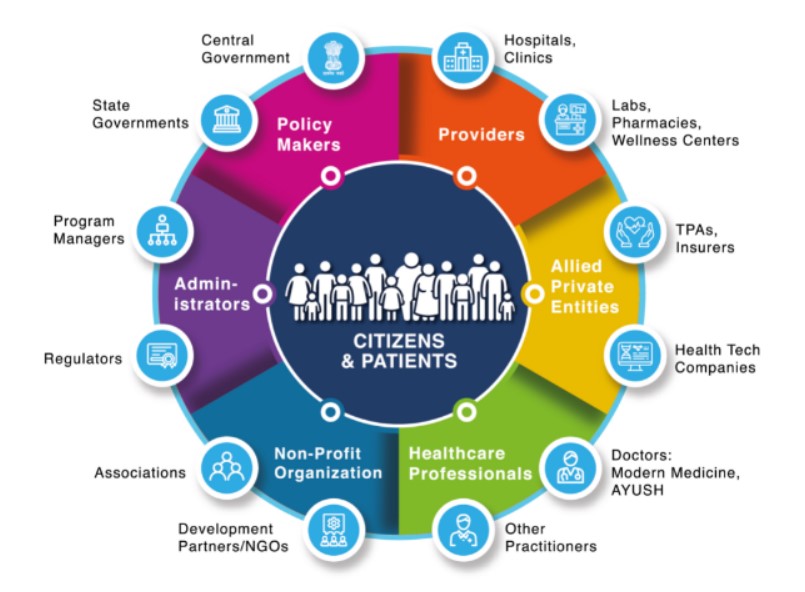
The Ayushman Bharat Digital Mission (ABDM) aims to develop the backbone necessary to support the integrated digital health infrastructure of the country. It will bridge the existing gap amongst different stakeholders of Healthcare ecosystem through digital highways. The ABDM Ecosystem Ayushman Bharat Health Account (ABHA) under Ayushman Bharat Digital Mission is an innovative initiative by the National Health Authority (NHA) to create a one-stop digital platform for all the medical and health needs. It has an aim to make the healthcare ecosystem more centralised and convenient. The 14-digit unique number which is linked to the ABHA digital health ID enables easy access to all the medical records, prescriptions, diagnoses, and health history. Benefits of having an ABHA card include: Its free of cost. Application process is quick & easy. All medical Records stored at one place. You can access your medical records anytime anywhere. You even get an app known as ABHA app where you can access the details. It is highly Secured. Data Sharing only takes place with your consent. The card ensures that each member of the family gets access to quality healthcare services at empanelled hospitals. The card also provides cashless transactions, thus making healthcare more affordable. In case of any hospitalisation, the cardholder can get up to Rs.5 lakhs reimbursement for treatment expenses (for those whose family\’s monthly income is Rs.10000/- or less). In case of any medical emergency just by the ABHA Number all your previous medical history will be available to the doctor treating you. You can store all the health Insurance policies. You will get priority in terms of availing government health insurance schemes and programmes. You can avail free diagnostic services at government hospitals and dispensaries. You can get discount on medicines purchased from government hospitals and dispensaries. You can avail free transportation to and from government hospitals. Avoid long lines in Registration in healthcare facilities across the country. You can create your ABHA Card using Aadhaar or Driving License. You can use your ABHA number to seamlessly sign up for an ABHA address and ensure that the health records created for you are shared only with you. To enable health data sharing, it is recommended that you create ABHA address; it is unique identifier that enables you to share and access your health records digitally. Your ABHA address looks like yourname@abdm. ABHA address with ABDM Consent Manager that will facilitate health data exchange for you with appropriate consent on the ABDM network. You can participate at your own free will and choose to create your ABHA number voluntarily. Also, at any time, you can also request for permanent deletion or temporary deactivation of your ABHA number.

Ayushman Bharat Digital Mission (ADBM) Read More »

Cyber Security

Cybersecurity is the practice of protecting systems, networks, and programs from digital attacks. It\’s also known as information technology security or electronic information security. The term applies in a variety of contexts, from business to mobile computing, and can be divided into a few common categories. Why is cybersecurity important? With an increasing number of users, devices, and programs in the modern enterprise, combined with the increase of data, much of which is sensitive or confidential, the importance of cybersecurity continues to grow. The growing volume and sophistication of cyber attackers and attack techniques compound the problem even further. Organisations that suffer cyber security breaches may face significant fines. There are also non-financial costs to be considered, like reputational damage. Cyber-attacks continue to grow in sophistication, with attackers using an ever-expanding variety of tactics. These include social engineering, malware and ransomware.  Few common categories of cyber-attacks Network security is the practice of securing a computer network from intruders, whether targeted attackers or opportunistic malware. Cloud Security. As organizations increasingly adopt cloud computing, securing the cloud becomes a major priority. A cloud security strategy includes cyber security solutions, controls, policies, and services that help to protect an organization’s entire cloud deployment (applications, data, infrastructure, etc.) against attack. Information security protects the integrity and privacy of data, both in storage and in transit. While using Internet of Things (IoT) devices certainly delivers productivity benefits, it also exposes organizations to new cyber threats. Application security focuses on keeping software and devices free of threats. A compromised application could provide access to the data its designed to protect. Successful security begins in the design stage, well before a program or device is deployed. Often overlooked, mobile devices such as tablets and smartphones have access to corporate data, exposing businesses to threats from malicious apps, zero-day, phishing, and IM (Instant Messaging) attacks. Mobile security prevents these attacks and secures the operating systems and devices from rooting and jailbreaking. Operational security includes the processes and decisions for handling and protecting data assets. The permissions users have when accessed a network and the procedures that determine how and where data may be stored or shared all fall under this umbrella. End-user education addresses the most unpredictable cyber-security factor: people. Anyone can accidentally introduce a virus to an otherwise secure system by failing to follow good security practices. Teaching users to delete suspicious email attachments, not plug in unidentified USB drives, and various other important lessons is vital for the security of any organization.

Cyber Security Read More »

Open Network for Digital Commerce

Open Network for Digital Commerce (ONDC) is an initiative aiming at promoting open networks for all aspects of exchange of goods and services over digital or electronic network. ONDC, is a private non-profit Section 8 company established by the Department for Promotion of Industry and Internal Trade (DPIIT) of Government of India to develop open e-commerce. It was incorporated on 31st December, 2021. ONDC has democratize e-commerce in India and e-comm won’t be limited to few players. Everyone, every supplier including kirana stores, grocery retailers, electronics retailers, small vendors, service providers and restaurants will participate in the digital marketplace on an open platform. The ONDC will work on a format similar to that used in (UPI) Unified Payment Interface.  ONDC is not platform-centric, and its objective is to match the online consumer’s demand with the nearest available source of supply. Consumers can thus find any seller, product, or service via any compatible application or platform – offering real freedom of choice. It wants to harness the network to discover the best pricing among retailers and sellers. According to the commerce ministry, the foundations of ONDC are open protocols for all aspects in the entire chain of activities. With ONDC, sellers and buyers do not need to be on the same platform for a transaction to happen. Buyer side application will help the buyers search for the product or service they want to buy. Gateway will allow discoverability of all sellers in the network (based on criteria such as location, availability and other customer preferences). Seller side application will receive buyer’s requests, show the sellers’ catalogue of goods and services, and fulfil the buyer’s demand. What is it for the sellers? Access to more buyers. Low cost of doing business. Better discoverability of products and cost as seller will have access to all buyers on the network. Autonomy on terms because of multiple choices for being digitally visible. More options for value chain services like logistics & fulfilment. What’s there for buyers? Access to more sellers and therefore more choices. Better service and faster deliveries due to access to hyper-local retailers. Better customer experience. How will it help Small online retailers? ONDC will enable providers of niche products and services with the benefit of scale and critical mass, to go online. Will give small sellers access to systems and technology that currently only giants like Flipkart and Amazon enjoy. Even Amazon, Flipkart & Zomato, etc. will have to register on this platform. It would help millions of small businesses go online and give a huge booster shot to smaller online retailers and new entrants. What about data protection? According to the government’s official statement: ONDC shall take all measures to ensure confidentiality and privacy of data in the network. It shall not mandate sharing of any transaction level data by participants with ONDC.

Open Network for Digital Commerce Read More »

PM Gati Shakti Plan

On the eve of 75th Independence Day on August 15, 2021, Prime Minister Shri Narendra Modi announced from the Red Fort that the government will launch ‘PM Gati Shakti National Master Plan’ worth Rs. 100 lakh-crore. Gati, the Hindi word for speed, aims to boost economic growth (Shakti) through infrastructure building. The Plan was launched on 13th October, 2021. Improvement and development of infrastructure has been a key area of focus for the government. The PM Gati Shakti Plan, will go a long way in developing multi-modal network to create world-class infrastructure with full support on planning, financing, innovation and technology. With an aim to integrate Central Government ministries for faster decision taking with proper co-ordination, presently the plan has brought various important ministries related to infrastructure on one platform. These are railways, roads and highways, petroleum & gas, telecom, power, shipping, and aviation, among others. PM Gati Shakti Plan will enhance India\’s global competitiveness through next-generation infrastructure and seamless multi-modal connectivity to ensure seamless movement of goods and people and improve the ease of living as well as the ease of doing business in the country. Infrastructure creation in India had suffered multiple issues including lack of coordination between different implementation agencies as well as information gap leading to cost and time over run-in implementation of projects. These issues not only led to public inconvenience but also deprived the country of having world class infrastructure. To address this, efforts were put in place to increase coordination between different agencies, make available all the available and required information for infrastructure creation on a web- based platform. Steps have also been taken to address other issues like time-taking approval process, multiplicity of regulatory clearances etc. PM Gati Shakti is based on six pillars: Comprehensiveness, Prioritization, Optimization, Synchronization, Analytics and Dynamic. What are expected outcome from Gati Shakti National Master Plan?  Gati Shakti envisages shaping India into the business capital of the world. A comprehensive and integrated transport connectivity strategy will considerably support ‘Make in India’. Establishing industrial corridors and defence corridors. It will help map the existing and proposed connectivity projects. It should help achieve the various objectives of the government of India such as expanding the length of the national highway network to 2 lakh km, the creation of heliports and water aerodromes, and the development of many new airports. Boosting trade by enhancing the cargo handling capacity and decreasing the turnaround time at Indian ports. Another aim is the expansion of the gas pipeline network. Finance minister Nirmala Sitharaman said while delivering the budget speech for 2022 on February 1, 2022. “The touchstone of the Gati Shakti National Master Plan will be world-class, modern infrastructure and logistics synergy among different modes of movement of both, people and goods, and location of projects.”

PM Gati Shakti Plan Read More »

Decisive Parenting

From the moment a child is born, parents wonder about the role they will play in shaping their child’s outlook on life. School admissions don’t decide the course of just the child’s life. They significantly impact the parents lives as well. Raising a child is not just an emotional and physical investment for parents, but it’s a big financial obligation also. With the cost of education, health and food increasing, raising a child is costlier than ever in India. Parents always want the best for their children. This involves providing for their financial future for bigger needs like their Primary, Secondary Education, their Higher Education, their other goals, and to get them off to a good start in life. Every child has a right to decide his/her future and live out their dreams. However, with the growing costs, this may come out as a heavy burden on the parents. Education inflation is increasing by 15% to 20% every year, and simple savings accounts are too short to cut on those expenses. But this would be possible only if you invest wisely in the present. Investing should start as soon as it is financially viable. The older the child, the greater the expenses. Hence, it becomes important that parents plan for their children’s future needs early on and give sufficient time for these investments to grow. The earlier you start, the greater are the benefits you will reap. For instance, if you start saving and investing as soon as your child is born, imagine the corpus you can accumulate when he/she reaches the age of 18. Financial discipline is one of the most critical factors to meet your long-term financial goals, and financial planning for a child’s future. It requires meticulous planning as well as a sustained approach to build a corpus, keeping in mind the nature and variety of expenses involved. Whatever you choose as an investment option, make sure it is consistent and regular. Mutual Funds provide a brilliant option to address this by way of a Systematic Investment Plan, popularly called SIP. The other important aspect of investing is to not get influenced by market noises and stay on course with your investments. Conclusion: While you can\’t always control your own situation or your child\’s, taking these steps is a great way to set contingency plans for a variety of financial obligations that may affect you in the future. Creating long term financial plans and goals can help achieve financial stability for your family, especially through the years that your child depends on you the most.

Decisive Parenting Read More »

Sovereign Ratings of a Country

Just like companies are rated by rating agencies so are countries rated. Let’s understand how this is done. Sovereign ratings are needed for those who plan to invest in a foreign country. If the country does not enjoy a good rating, such investments are considered risky. Till 2008 sovereign default was not considered a real concern. The debt crises began in 2008 with the collapse of Iceland’s banking system, then spread primarily to Portugal, Italy, Ireland, Greece, and Spain in 2009, leading to the popularization of a somewhat offensive moniker. Argentina, Lebanon, and Ukraine are among the countries that have defaulted on their debt in recent years. The causes of a default can range from high debt burden and economic stagnation to political instability or a banking crisis. In November 2017, Venezuela — which has the world\’s largest oil reserves — is declared to be in partial default by rating agencies Fitch and S&P. Recently we have seen Srilanka defaulted on its $51Billion External Debt, calling the move a \”last resort\” after running out of foreign exchange. So how are countries rated. This process is a little different from how companies are rated. Just as in the case of a company, even for a country there are several quantitative parameters that suggests the health of the economy. However, unlike a company rating, in the case of rating a country, higher weightage is given to other qualitative parameters. Some quantitative parameters which indicate the countries abilities to pay its debt are :- Debt/GDP Current account deficit Interest amount/Expenditure Economic growth rate Savings rate Investment rate The country’s ability to withstand financial shocks are also investigated – whether banks have been subjected to stress tests and how they have emerged from such tests. Besides quantitative measures the rating agencies interview policymakers to assess the policies being planned and the countries outlook towards financial reforms. Analysts also make a judgment of the political risks that prevails such as probabilities of an external war, internal unrest, terrorism threats etc. Thus, while the quantitative parameters become the inputs into some sort of “mathematical model” to assess the country’s credit worthiness while the qualitative parameters which examines  risk environment prevailing there. Thus, sovereign rating essentially assesses the country’s government. In this context it’s interesting to note that US has a AAA rating and India’s rating is BBB- while the outlook is ‘stable’ for both of them (S&P Ratings). The rating given to a country becomes the benchmark for ratings granted to other financial instruments like corporate bonds etc. Since granting rating to a country has massive implications for the subject country, a large element of mature judgment is needed.

Sovereign Ratings of a Country Read More »

PLI Scheme

In the framework of the Atmanirbhar Bharat Programme, the PLI schemes aim at enhancing Indian manufacturers competitiveness, attracting investments in cutting-edge technology, creating efficiencies and economies of scale as well as enhancing exports. Production Link Incentive Scheme (PLI) is an initiative started by the Government of India to not only encourage foreign companies to find workforce in the country and thereby generate employment, and also encourage domestic and local production to create micro jobs. The PLI schemes aim to develop capacities in the local supply chain, introduce new downstream operations, and incentivize investments into high-tech production. PLIs are essentially the incentives to companies to boost the product. They could be in the form of tax rebates, import and export duty concessions, or maybe easier land acquisition terms. Generally, the benefits of a PLI Scheme are passed on to the final consumers of the goods in terms of lower prices. Take the example of electric vehicles. They don’t have ready demand but a shift to greener automobile is essential for the country. In this regard, the government has introduced FAME scheme. It stands for Faster Adoption and Manufacturing of Hybrid and Electric Vehicles. Under this scheme there are lot of concessions for EV makers. How do they spur production of goods? Say you are the government, and you want to spur production of a certain category of goods. The demand for such goods isn’t all that great. But you think once they are manufactured in large quantities, or sold at the right price points, it should work out fine. This is where you will employ PLI or a production-linked incentive scheme. The PLI is an old and popular tool with governments to spur production of goods that the country sees as necessary for social good, taxes, or employment-generation reasons. Products like Auto Components, Automobile, Aviation, Chemicals, Electronic Systems, Food Processing, Medical Devices, Metals & Mining, Pharmaceuticals, Renewable Energy, Telecom, Textile & Apparel, and White Goods come under PLI Scheme. The companies approved for PLI scheme include Motherson Sumi, Bosch, Maruti Suzuki, Hero MotoCorp, Hero Cycles, Toyota, Bharat Forge, Sona BLW and many more.

PLI Scheme Read More »