
General

Sovereign Ratings of a Country

Just like companies are rated by rating agencies so are countries rated. Let’s understand how this is done. Sovereign ratings are needed for those who plan to invest in a foreign country. If the country does not enjoy a good rating, such investments are considered risky. Till 2008 sovereign default was not considered a real concern. The debt crises began in 2008 with the collapse of Iceland’s banking system, then spread primarily to Portugal, Italy, Ireland, Greece, and Spain in 2009, leading to the popularization of a somewhat offensive moniker. Argentina, Lebanon, and Ukraine are among the countries that have defaulted on their debt in recent years. The causes of a default can range from high debt burden and economic stagnation to political instability or a banking crisis. In November 2017, Venezuela — which has the world\’s largest oil reserves — is declared to be in partial default by rating agencies Fitch and S&P. Recently we have seen Srilanka defaulted on its $51Billion External Debt, calling the move a \”last resort\” after running out of foreign exchange. So how are countries rated. This process is a little different from how companies are rated. Just as in the case of a company, even for a country there are several quantitative parameters that suggests the health of the economy. However, unlike a company rating, in the case of rating a country, higher weightage is given to other qualitative parameters. Some quantitative parameters which indicate the countries abilities to pay its debt are :- Debt/GDP Current account deficit Interest amount/Expenditure Economic growth rate Savings rate Investment rate The country’s ability to withstand financial shocks are also investigated – whether banks have been subjected to stress tests and how they have emerged from such tests. Besides quantitative measures the rating agencies interview policymakers to assess the policies being planned and the countries outlook towards financial reforms. Analysts also make a judgment of the political risks that prevails such as probabilities of an external war, internal unrest, terrorism threats etc. Thus, while the quantitative parameters become the inputs into some sort of “mathematical model” to assess the country’s credit worthiness while the qualitative parameters which examines  risk environment prevailing there. Thus, sovereign rating essentially assesses the country’s government. In this context it’s interesting to note that US has a AAA rating and India’s rating is BBB- while the outlook is ‘stable’ for both of them (S&P Ratings). The rating given to a country becomes the benchmark for ratings granted to other financial instruments like corporate bonds etc. Since granting rating to a country has massive implications for the subject country, a large element of mature judgment is needed.

Sovereign Ratings of a Country Read More »

PLI Scheme

In the framework of the Atmanirbhar Bharat Programme, the PLI schemes aim at enhancing Indian manufacturers competitiveness, attracting investments in cutting-edge technology, creating efficiencies and economies of scale as well as enhancing exports. Production Link Incentive Scheme (PLI) is an initiative started by the Government of India to not only encourage foreign companies to find workforce in the country and thereby generate employment, and also encourage domestic and local production to create micro jobs. The PLI schemes aim to develop capacities in the local supply chain, introduce new downstream operations, and incentivize investments into high-tech production. PLIs are essentially the incentives to companies to boost the product. They could be in the form of tax rebates, import and export duty concessions, or maybe easier land acquisition terms. Generally, the benefits of a PLI Scheme are passed on to the final consumers of the goods in terms of lower prices. Take the example of electric vehicles. They don’t have ready demand but a shift to greener automobile is essential for the country. In this regard, the government has introduced FAME scheme. It stands for Faster Adoption and Manufacturing of Hybrid and Electric Vehicles. Under this scheme there are lot of concessions for EV makers. How do they spur production of goods? Say you are the government, and you want to spur production of a certain category of goods. The demand for such goods isn’t all that great. But you think once they are manufactured in large quantities, or sold at the right price points, it should work out fine. This is where you will employ PLI or a production-linked incentive scheme. The PLI is an old and popular tool with governments to spur production of goods that the country sees as necessary for social good, taxes, or employment-generation reasons. Products like Auto Components, Automobile, Aviation, Chemicals, Electronic Systems, Food Processing, Medical Devices, Metals & Mining, Pharmaceuticals, Renewable Energy, Telecom, Textile & Apparel, and White Goods come under PLI Scheme. The companies approved for PLI scheme include Motherson Sumi, Bosch, Maruti Suzuki, Hero MotoCorp, Hero Cycles, Toyota, Bharat Forge, Sona BLW and many more.

PLI Scheme Read More »

Electric Vehicles (EV)

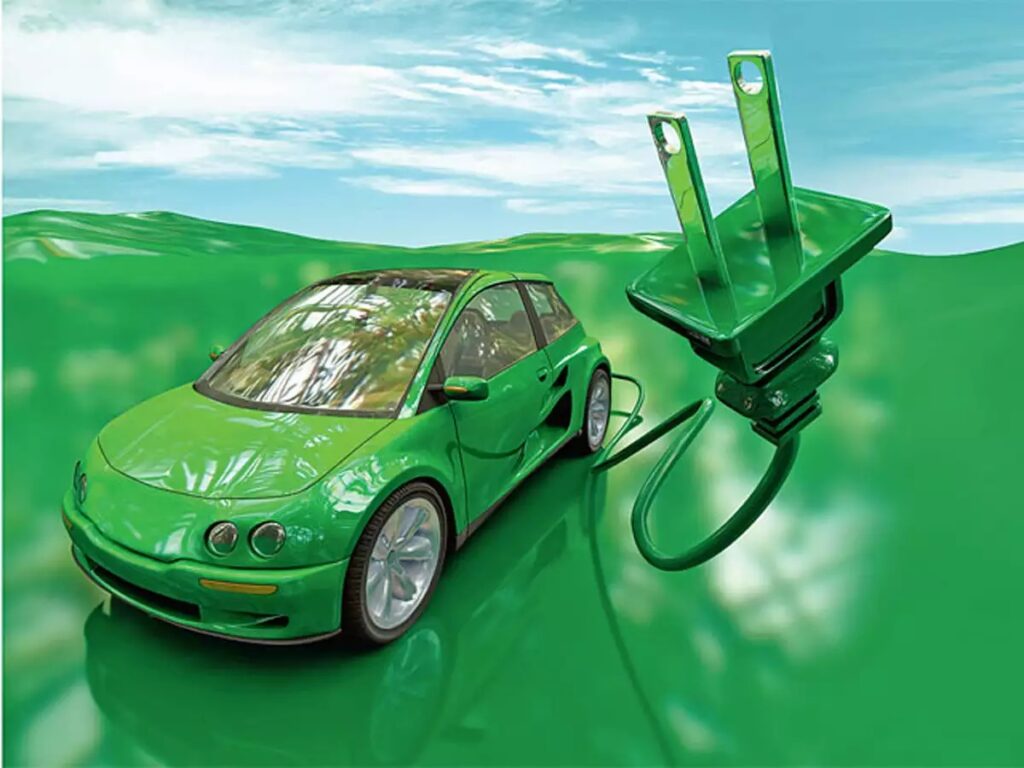
The Electric Vehicle industry in India is growing very fast. The governments of India have launched schemes and incentives to promote electric mobility in the country and some regulations and standards are also in place. The running cost of an electric vehicle is much lower than an equivalent petrol or diesel vehicle. Electric Vehicles (EVs) are run by electric motors which are powered by energy stored in batteries. EVs have an electric motor instead of an Internal Combustion Engine (ICE). Electric vehicles use electricity to charge their batteries instead of using fossil fuels like petrol or diesel. Benefits of Electric Vehicle over Internal Combustion Engine Low Maintenance Cost The most important reason that can motivate you to buy an EV is the maintenance cost. If you buy a car with an IC engine, it will have more mechanical parts and therefore will have more complexities and difficulty in maintenance. EVs are easy and cheaper to maintain because of their simple structure and operations. Low Cost Another major advantage that EVs deliver over conventional IC engine vehicle is the running cost. The running costs come down to even less than a single rupee per kilometer depending on the vehicle used. Convenient Charging You might be familiar with the crowd that suddenly emerges on the fuel stations during peak hours. Also, planning to get the fuel refilled while you are on your way to your workplace can get you late too. EVs have a major advantage in this case where you can simply plug in your vehicle at your home for 4 to 5 hours and you are ready to move again without any delay. EVs nowadays also come with fast charging capabilities which allows them to charge up within 60 mins. Easy Driving All the electric vehicles starting right from an electric scooter and going all the way up to an electric bus are gearless. Yes, EVs are an absolute pleasure to drive because you don’t have to operate the gear mechanisms. You only have to use a set of buttons or pedals which will make you increase or decrease the speed and that’s all. Pollution Free EVs are one of the most eco-friendly modes of transport available right now in the market. If you are using EV, you have definitely done good for the environment. Buying an EV can reduce the carbon footprint because there will be no emissions at all. Government Incentives Now, the central government also wants you to buy an EV because EVs are the future. The central government has recently introduced a new electric vehicle policy under which you can get additional benefits up to ₹1.5 Lakhs. Availability of adequate Charging Infrastructure is one of the key requirements for accelerating the adoption of electric vehicles in India. In this regard, Ministry of Power has issued “Charging Infrastructure for Electric Vehicles – Guidelines and Standards” mentioning the roles and responsibilities of various stakeholders at Central & State level, for expediting the development of public EV charging infrastructure across the country. The government of India have undertaken multiple initiatives to promote manufacturing and adoption of electric vehicles in India. With support of the government, electric vehicles have started penetrating in the Indian market. However, availability of adequate Charging Infrastructure is one of the key requirements for accelerated adoption of electric vehicles in India. Some of the Indian companies associated with EVs are, Tata Motors Ltd., Ashok Leyland Ltd., Amara Raja Batteries Ltd., Exide Industries Ltd., Hero MotoCorp Ltd., Himadri Speciality Chemicals Ltd., Vedanta Ltd., Hindalco Industries Ltd., JBM Auto Ltd., Olectra Green Ltd., SML Isuzu Ltd., and many more.

Electric Vehicles (EV) Read More »

Semiconductor Technology

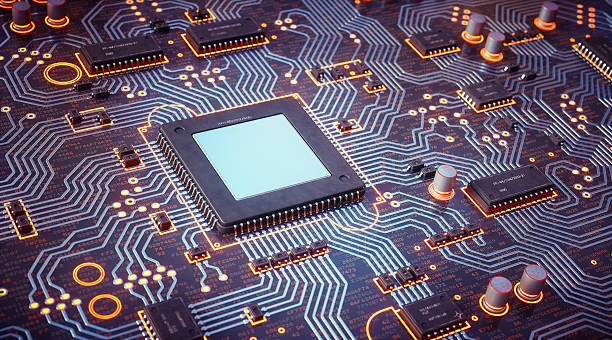
You’ve undoubtedly heard about semiconductors. But while most people have heard of semiconductors, very few people know much about them. They really are everywhere, from the processor and AI chips in our smartphones to electronic devices for electric and autonomous vehicles, to new sensors for healthcare. What is Semiconductor? A semiconductor is a physical substance designed to manage and control the flow of current in electronic devices and equipment. It either doesn’t allow a freely flowing electric current or repels the current completely. A semiconductor sits between a conductor and an insulator and is commonly used in the development of electronic chips, computing components, and devices. It’s generally created using silicon, germanium, or other pure elements. Without semiconductors, our world would look much more like when we would have no electronic hand calculators, microwave ovens, digital alarm clocks, cell phones, tablets, personal computers, electronically controlled transmissions or washing machines. Once reserved for televisions and radios, semiconductors are now unavoidable in day-to-day life. From making toast in the morning to switching on a light, checking the weather or reading an e-book. Controlling the computers we use for business, the phones and mobile devices we use to communicate, the cars and planes that get us from place to place, the machines that diagnose and treat illnesses, the military systems that protect us, and the electronic gadgets we use to listen to music, watch movies, and play games, just to name a few. A single semiconductor chip has as many transistors as all of the stones in the Great Pyramid in Giza, and today there are more than 100 billion integrated circuits in daily use around the world, that’s equal to the number of stars in our corner of the Milky Way galaxy. Semiconductor firms generally organize their activities around the two main stages of semiconductor production, design and manufacturing. Companies that focus only on design are referred to as “fabless” firms, while companies that focus only on manufacturing are called “foundries.” Semiconductor firms that do both are called Integrated Device Manufacturers, or IDMs. Taiwan, United States, South Korea, Japan & Netherland dominates the semiconductor market. Taiwan is the country that produces the greatest number of chips globally, thanks to Taiwan Semiconductor Manufacturing Company, which controls 51% of the global chip market. Let there be no doubt that the fusion of hardware and software is accelerating in America, but when it comes to producing chips of any kind, Asian countries dominate the chip market, which includes the supply chain as well. As a matter of fact, many American companies rely on Asian countries for Chips to meet their manufacturing needs. Some Indian companies associated with semiconductor technology are Tata Elxsi, ASM Technologies, MosChip Semiconductor Technologies & many more. Now Indian conglomerate Vedanta Ltd. is planning to invest up to 1.5 Lakh Crore into the electronic chip and display manufacturing space. It expects to roll out display units, for use in mobile phones and electronics devices, by 2024 and electronic chips from Indian manufacturing plants by 2025.

Semiconductor Technology Read More »

Metaverse

The metaverse is a virtual universe that extends the dimensions of the physical world. The metaverse, as you may know, is a collection or network of 3D virtual worlds designed to foster social interaction. Using advanced human-computer interaction hardware (e.g., Augmented Reality-Virtual Reality headsets) and software, users can interact with each other in the metaverse through their digital avatars. One of the keys to developing the metaverse is high quality virtual reality, which allows users to interact with different elements in the same way they would in the real world. Fundamental implementations of Metaverse Gaming Virtual Reality software power gaming platforms by creating an illusion for a realistic experience using 3-D images, VR headsets, full display screens. Companies like Meta and Epic Games attempt to build a connected universe of virtual realities, gaming has a new home. Social Interactions In today’s world, where a large portion of our communication is done through social media channels and messaging platforms, interactions can become very mechanical and emotionless, and may frequently lead to miscommunication and misunderstandings. This is a major issue. With the metaverse, people will be able to socialize in the virtual world, where they will be able to connect, collaborate, and communicate even if they are not physically present. Yet no one will feel the difference or experience physical separation. Media & entertainment Do you recall the film Avatar? Perhaps you may recall how the sci-fi film depicted human interaction. The humans in the film would interact with the alien world through virtual avatars, which would be created using a combination of artificial intelligence (AI), virtual reality (VR), and augmented reality (AR) technology, without ever leaving their safe confines. In the metaverse , media and entertainment will look very similar. To enter the virtual world, all you have to do is put on your AR-VR headsets. You can attend virtual concerts, visit virtual theme parks, place bets on sports, and so on, just as you do in the real world. The metaverse will also increase participation and make it possible for multiple artists to perform together, allowing for an even closer connection with fans. Virtual Tourism With the metaverse, customers will be able to take a 3D virtual hotel tour and research the location of the hotel where they are considering staying using VR platforms and hardware. Before booking a hotel room, travellers can put on their 3D digital avatars and take a virtual tour of the facility. For instance, you can explore the Atlantis, The Palm, located in Dubai virtually. In addition, with virtual tourism, another use is that people who would otherwise be unable to travel due to physical limitations or other factors can use it to travel around the world. Commerce & Trade Brands will set up virtual shops in the metaverse in the future, where buyers will be able to take a 3D virtual tour and try out various products before making a purchase. The products will be delivered to your home once the purchase has been made. The purchasing process will be very similar to what we currently encounter in supermarkets, except that it will take place online entirely. Manufacturing The metaverse will also be a large-scale industrial workspace. Manufacturing companies can make digital copies of their machinery known as \”digital twins\” that they can test in the metaverse before implementing in the real world. The design can then be corrected or improved before construction begins, saving time and resources. Theme Park Disney Park visitors could soon be riding through the metaverse as the entertainment giant explores headsetless augmented reality. It will track visitors through their phones, and generate and project personalised 3D effects onto nearby physical spaces such as walls and objects around the visitors in the park. The experience of visiting the park virtually will be catered to each individual, while some may greet Belle and Cinderella, the others may say hi to Mickey Mouse upon their arrival, and so on.

Metaverse Read More »

Internet of Things

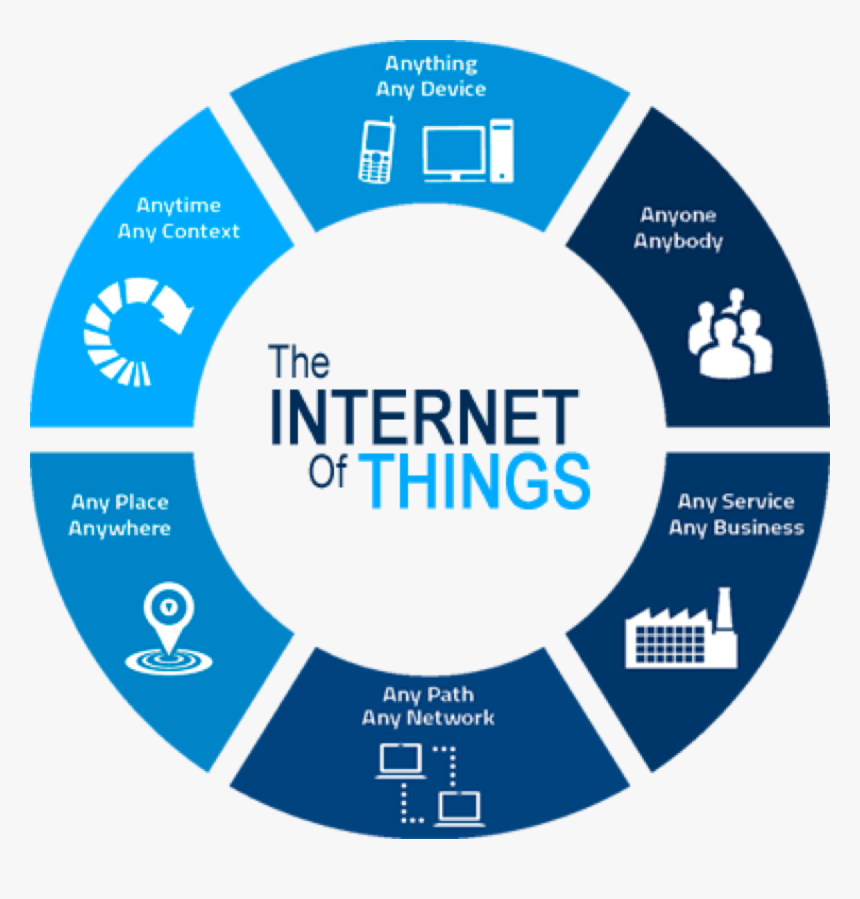
The Internet of Things, refers to the billions of devices including interrelated computing devices, digital machines, objects, animals or people that are provided with Unique Identifiers and the ability to transfer data over a network without requiring human-to-human or human-to-computer interaction. Connected to the internet and equipped with sensors, these devices power much of the developing data-based economy and bridge the divide between the physical and digital worlds. Due to super-cheap computer chips and the commonly used wireless networks, it\’s possible to turn anything, from something as small as a pill to something as big as an aeroplane, into a part of the IoT. Importance of IOT It is one of the most important technologies of everyday life. It can connect every day objects like kitchen appliances, Cars, thermostats, Monitors to the internet via embedded devices. Seamless communication is possible between people, processes and things. Smart home concept is a good example of IoT. Internet enabled thermostats, doorbells, smoke detectors and security alarms create a connected hub where data is shared between physical devices and users can remotely control the things in that hub via a mobile app or website. I.e., adjusting temperature Settings, unlock doors, etc. Emerging tools and technologies like smart speakers, machine learning, and 5G are enabling huge gains to efficiency and more control at home and in the workplace. For Example A lightbulb that can be switched on using a smartphone app is an IoT device. An IoT device could be as light as a child\’s toy or as serious as driverless truck. IoT enables companies to automate processes and reduce labour costs. It also cuts down on waste and improves service delivery, making it less expensive to manufacture and deliver goods, as well as offering transparency into customer transactions. Best suited for Sectors like Defence, Infrastructure, Manufacturing, Automation Industry, Agriculture, Transportation & Logistic, Public Sector, Retail, Healthcare, etc. What are IoT Platforms? One IoT device connects to another to transmit information using Internet transfer protocols. IoT platforms serve as the bridge between the devices\’ sensors and the data networks. Top IOT platformsare Amazon Web Services, IBM’s Whtson, Microsoft Azure, ThingsWorx IOT platform, Cisco IOT Cloud Connect, Oracle Integrated Cloud, etc. IOT Market in India In India, the government is focusing on the benefits entailing the introduction of Internet of Things with its flagship programs such as Digital India, Make in India and Smart India-Smart Cities among others. For IoT to truly become key to consumers, it needs to fit around, enhance their daily lives and reach all tiers of the economy, thus becoming more inclusive. Smart cities are the future and the Indian Government has identified over 100 potential cities to address the growing challenges of rapid urbanisation. Governments with the help of IoT platforms and applications is targeting to improve core infrastructure services such as traffic congestion and parking problems by real time tracking, analysing and action to better the services.

Internet of Things Read More »

Drone

Drones can be referred as Unmanned Aerial Vehicles (UAVs), Miniature Pilotless Aircraft or Flying Mini Robots, drones are gaining popularity. The last few years have been significant in terms of drone adoption, usage expansion across industries, government organisations and global awareness. Originally drones were developed for the military and aerospace industries, drones have found their way into the mainstream because of the enhanced levels of safety and efficiency they bring. Drones are a transformative technology that, over the next decade, will change in ways you likely never imagined. From quick deliveries at rush hour to scanning an unreachable military base, drones are proving to be extremely beneficial in places where man cannot reach or is unable to perform in a timely and efficient manner. Today drones are used for Agriculture, Parcel Delivery, Disaster mitigation and Relief, Logistics, Filmmaking and photography, Law Enforcement, Real Estate, Navigation and many more. Commercial drones fall into the category of Electronic Vehicles. Similar to Electronic Automobiles, drones offer another important option in fending off greenhouse gasses and becoming carbon neutral. Big tech companies like Facebook and Google are experimenting with solar powered drone technology to beam Internet to remote locals. This could transform connectivity. Drone fireworks are gaining popularity. Drone displays are becoming a replacement for fireworks, due to concerns about firework-related air pollution and environmental damage. Since, there are multiple uses of drones and they are cost-efficient in the long term, there are a few companies like Paras Defence and Space Technologies Ltd., Hindustan Aeronautics Ltd., Zen Technologies, Rattanindia Enterprises, Info Edge, DCM Shriram Industries, which are looking to expand their business with the help of drones. Despite the convenience of drones, their potential threats to the community or the environment should not be overlooked. Air traffic safety is the biggest concern due to the risk of injuries to the general public. In most situations, drones are not allowed to fly over controlled airspace and near clusters of people. On 26th August, 2021 new drone rules were published by the Ministry of Civil Aviation with 30 key features of Drone Rule, 2021. This rule had replaced the Unmanned Aircraft System Rule 2021, issued on 12th March, 2021. Also, no pilot license will be required to operate micro drones used for non-commercial use, nano drones and organizations using such drones. The number of forms has also been reduced from 25 to 5 and types of fees sharply reduced. Digital sky platform is an initiative by the aviation ministry to provide a secure and scalable platform that supports drone technology frameworks such as NPNT (no permission, no take-off), designed to enable flight permissions digitally and managing unmanned aircraft operations and traffic efficiently. Government of India is planning to create a strong drone  ecosystem in India while eliminating all unnecessary operational and entry barriers and generating employment opportunities as there are more than 200 startups in this field.

Drone Read More »

Artificial Intelligence (AI)

Artificial intelligence (AI) has gained immense importance over the years, so much so that it has found its presence felt in almost all the sectors that one can think of. There are various uses of AI in the today’s scenario. Words cannot suffice the potential that AI holds when it comes to adding value to the Indian economy. Industries have been using AI to bring automation into the processes. Better AI algorithms are being developed every day to pace up various industry processes. The number of companies adopting AI technology in India is increasing with every passing day. What is Artificial Intelligence? Artificial Intelligence is the intelligence shown by machines through which they try to mimic human intelligence. With the help of AI, machines could be trained in certain circumstances to take the decision on their own. With that, they can work on their own without any human intervention. Some of the major sectors that take the help of AI services are, Banking, Medical Assistance, Transportation & Logistic, Navigation, Cyber Security, Education, Human Resources, Smart Devices, Social Network Platforms, Agriculture, Manufacturing, Retail, Marketing, Financial Services, etc. Some of the major filed where AI is widely used are Online Food Delivery, Shopping, Google Maps, Driving Assistance, E Payment Gateways, Search and Recommendation and many more. The role of artificial intelligence (AI) applications in enterprises is rapidly evolving with AI Tools like Customer Relationship Management (CRM) and Enterprise Resource Management (ERM). With each day new uses and applications of AI are emerging. This also makes it an important field for students and learners to dive into. There is an exponential growth in the demand for skilled AI developers. Benefits of Artificial Intelligence Automation – Businesses that use AI automation are able to augment their capabilities, while off-loading repetitive tasks to the machine. Some jobs can be tiring like , paper checking, form submission, etc. These can be automated with the help of AI with the least human intervention. Speed – AI can do a lot of work without stopping as compared to humans with remarkable speed. Accuracy – AI reduces the chances of error as compared to humans. Since the machine will always act according to the fixed AI algorithm, there are fewer errors. AI helps us in defining new limits of accuracy and precision with reduced risks. Exploration– Artificial Intelligence has helped us to discover many unexplored places like volcanic sites, ocean beds, etc. Humans cannot visit these vulnerable sites as they can’t survive in those places. An AI machine can go to such vulnerable places and can also collect information. Data Collection– Data analytics is already a trending technology in the modern-day business world. Industries and businesses know the value of analyzing huge chunks of data and extracting useful information from it. Low Cost – If AI is outperforming human efforts, then opting for AI automation will slash costs in the long run for a business. Some Indian names associated with AI business are Tata Elxsi Ltd., Bosch Ltd., Happiest Minds Technologies Ltd., Persistent Systems Ltd., etc. The number of AI start-ups in India has significantly increased in recent years. Some overseas companies like Google, Apple, Amazon, Microsoft are already using AI. The future scope of Artificial Intelligence keeps on increasing due to new job roles and advancements in the AI sector. Various roles in an AI career are, AI analysts and developers, AI Data Scientists, AI Software Engineer, AI Architect, AI Researchers, AI Algorithm Specialist, Robotics Expert, Military and Aviation Experts, Maintenance and Mechanical Engineers, Surgical Al Technicians, etc.

Artificial Intelligence (AI) Read More »

Savings Ratio

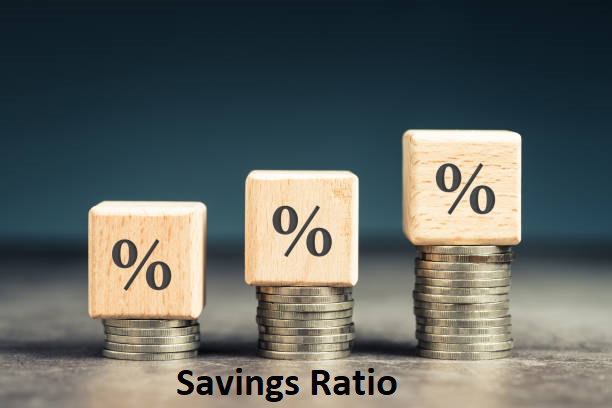
If you’re minimizing your debt, putting money away for retirement and generally bringing in more than you spend each month, you’re financially strong. It’s a very simple concept and stands for the amount of money that one saves at the end of every month expressed as a percentage of the monthly earnings. We would now discuss about the “Savings Ratio”. So, what is savings ratio? Just as the measure of our blood pressure gives us an idea about our health, in the same manner “Savings Ratio” gives us an indication about our financial health. When calculating your saving rate, it’s important to note that it should include your income after taxes, medical expenses such as health insurance, Life Insurance, as well as property taxes and interest on any outstanding debt, including your mortgage, because you’ll over-estimate your savings otherwise. So how is Saving’s Ratio calculated? It is a very simple calculation. All you need to do is divide your savings per month by the income per month. Let’s say your income per month is Rs 100,000 and your savings per month is Rs 10,000 Then your Saving’s Ratio is (10,000/100,000)%=10% Once you figure out your savings rate, you can get a sense of how close you are to financial independence. How much should our savings ratio be? The percentage of saving’s ratio depends upon one’s age. For a young person of 30 years who has lifestyle and EMI expenses a savings ratio of 10% would be good enough. As one grows older and as salary level goes up, the savings ratio of 25% would be reasonable. However, after 50 when one would’ve finished the EMI cycles a savings ratio of more than 30% would be healthy. In contrast a savings ratio of less than 5% would suggest that one’s financial health is fragile.

Savings Ratio Read More »

Thinking About Moving Closer to Your Kids?

Four Financial Implications to Contemplate For some people, living near their grown children is ideal. For others, it’s better to have some separation, even if it’s only an hour or two drive. Each family is different, but how do you know if you should move closer to your kids after you retire? You may love the town that you live in now, but your children have moved away. As they continue to grow and have families of their own, a thought may cross your mind, “Should I consider moving closer to my children and grandchildren?” If so, what are some financial contemplate to keep in mind? Cost of Living Do a cost-comparison between where you live now and the area in which you’re considering moving to. What are real estate prices like? Take a look at the average home costs in your area including property taxes, insurance, maintenance, and upkeep. Check out local restaurants, grocery stores, shops, and any other daily expenses that will impact your budget. Emotional Cost of Relocating One of the biggest considerations you’ll need to make is what your living situation will look like.. Will you be happier being far away from close friends and familiar faces? Many people I know who have relocated have found it challenging to rebuild a strong social network late in life. While your children and grandchildren may be physically closer than before, that doesn’t mean they will have as much time to spend with you as you ‘d hope. It can take time to make new friends, especially at an older age. Will your children and grandchildren be able to fill the gap? The answer is different for everyone. Do think about it. Should you rent or own You need to weigh the pros and cons of renting versus buying a home? When you’re looking for housing, you’ll also want to consider functionality. Will you be hosting celebrations and holiday dinners in your home, or do you primarily plan on spending time over at your child’s place? If so, then you may find it best to downsize to a condo or apartment. If you want to be able to have grandchildren sleepover, host Thanksgiving dinner, and entertain friends and family, then you’ll want to look for a piece of property that can accommodate your needs. Medical and Health issues. You’ll also want to determine how monthly expenses like health care and insurance will vary as well. Medical concerns are fairly common in late-life. Many have chronic conditions that require medications, monitoring and other forms of ongoing management. So, this would be a question and concern to the health while being with children and grandchildren because they would be busy  in their stuff and often make a decision due to health emergency or mental decline. Choosing to move to be closer to adult children can be one of the biggest decisions you make later in life, so be sure, the decision you make is right for you. If you are not sure that retiring to the town where your grandkids live is right for you, there are other options. You can make a tradition of back and forth reciprocal visits, or consider spending part of the year there. Lots of families enjoy planning vacations together, perhaps renting a beach house that accommodates everyone. Choose carefully, choose wisely.

Thinking About Moving Closer to Your Kids? Read More »