
Rajen Gala

Sweat Equity

What is Sweat Equity? Sweat Equity refers to the non-cash contribution of a person to the Company. According to the Companies Act, sweat equity are equity shares that a company issues to an individual in consideration of his/her services, know-how or any other value addition that the company has benefited from. In other words, it is the equity given to a company\’s executives to reflect the value the executives have added and will continue to add to the company. For instance, if a person works for creating patents for a company, then the company can issue equity (shares) to him, instead of paying cash. It could be issued for many other things too such as the person providing technical know-how, brand rights or similar value additions to the company. All the limitations, restrictions and provisions relating to equity shares are applicable to such sweat equity shares. These equity shares can be issued free of monetary consideration or at a concession to their prevailing value. A company may issue sweat equity shares if the following conditions are fulfilled: (a)  The issue of sweat equity shares is authorized by a special resolution passed by the company. (b) The resolution specifies the number of shares, current market price, monetary consideration, if any, and the class or classes of directors or employees to whom such equity shares are to be issued. (c) Not less than one year has, at the date of the issue, elapsed since the date on which the company was entitled to commence business. (d)  The sweat equity shares of a company whose equity shares are listed on a recognized stock exchange are issued in accordance with the regulations made by the Securities and Exchange Board of India (SEBI) in this behalf. Are “sweat equity” the same as “stock options”? Not exactly. They are similar to the extent that both are means of providing non-cash incentive or compensation to individuals. However, sweat equity, as widely understood, are real shares allotted to individuals upfront. Stock option, on the other hand, is merely a right given to an individual to acquire shares of the company at a future date at a pre-agreed price. SEBI has issued separate guidelines for sweat equity and stock options. In a broader sense, sweat equity can be issued to anyone who has rendered services to the company. Sweat equity can be issued to an employee, consultant or a vendor. That is the reason start-up companies use sweat equity as currency to pay for services that they cannot pay for in hard cash. However, in India, as per SEBI regulations, sweat equity shares can be issued only to employees or directors.


Sweat Equity Read More »

Macaulay Duration

Macaulay Duration is the weighted average maturity of the cash flow from the bond. When Interest rate rise, the price of the bond falls, then the question arise, is that any matrix that we can use to evaluate a bond? See how sensitive it is going to be the price of that bond and given that there is a change in the interest rate. So, we have a Macaulay duration which will perform that function. Macaulay Duration is expressed in terms of years. So, we can compare the duration in years for different bonds. In a bond for the higher number of years for its Macaulay duration it is going to be more sensitive to interest rate changes. Let us understand the calculation, Suppose Face Value of the Bond is Rs.1000/- Annual Coupon Rate is 6% Current Market Rate of interest is 6.5% Since we have a Face Value of Bond Rs.1000/- and the annual coupon rate is 6% means its going to pay Rs.60/- p.a. Here, we can use the market rate of interest of 6.5% to discount the cash flow. We are going to move by each time the present value of the cash flow, the formula is. Cash Flow / (1 + Current Market Rate of Interest) ^t 60 / (1+6.5%) ^1 = 56.34 for the first year. Further, I am discounting the Present value of the cash flow for each year. Finally, in the 5th year we have a cash flow of Rs.1060/- since we are getting the face value of the bond along with its interest. In each case we take the time (t) & we multiply by the present value of the cash flow we get present value of time Weighted Cash Flow. Now once we have Present Value of Cash Flow & Present Value of time Weighted Cash Flow we can sum up.   Time Period (t) Cash Flow Present Value of Cash Flow Formula Present Value of time Weighted Cash Flow Formula 1 60 56.34 60/ (1+6.5%) ^1 56.34 56.34*1 2 60 52.90 60/ (1+6.5%) ^2 105.80 52.90*2 3 60 49.67 60/ (1+6.5%) ^3 149.01 49.67*3 4 60 46.64 60/ (1+6.5%) ^4 186.56 46.64*4 5 1060 773.67 1040/ (1+6.5%) ^5 3868.37 773.67*5 Total 979.22 4366.08 Macaulay Duration 4.46   4366.08 / 979.22 This makes sense that the bond is trading at a discount since the current market rate of interest is higher than what bond pays. Here, you see that the bond is trading at a discount (Rs.979.22) then its face value. To calculate Macaulay Duration, divide Present Value of time Weighted Cash Flow with Present Value of Cash Flow. After discounting the cashflow the Macaulay Duration comes to 4.46 years. Suppose we have another bond with Macaulay Duration of 7.85 years that means the bond is going to be exposed to more interest rate risk if interest rate changes. If the interest rates skyrocket that is going to affect the bond with the higher duration, more. The volatility of the bonds price is going to be higher with respect to changes in the interest rates.

Macaulay Duration Read More »

Cyber Security

Cybersecurity is the practice of protecting systems, networks, and programs from digital attacks. It\’s also known as information technology security or electronic information security. The term applies in a variety of contexts, from business to mobile computing, and can be divided into a few common categories. Why is cybersecurity important? With an increasing number of users, devices, and programs in the modern enterprise, combined with the increase of data, much of which is sensitive or confidential, the importance of cybersecurity continues to grow. The growing volume and sophistication of cyber attackers and attack techniques compound the problem even further. Organisations that suffer cyber security breaches may face significant fines. There are also non-financial costs to be considered, like reputational damage. Cyber-attacks continue to grow in sophistication, with attackers using an ever-expanding variety of tactics. These include social engineering, malware and ransomware.  Few common categories of cyber-attacks Network security is the practice of securing a computer network from intruders, whether targeted attackers or opportunistic malware. Cloud Security. As organizations increasingly adopt cloud computing, securing the cloud becomes a major priority. A cloud security strategy includes cyber security solutions, controls, policies, and services that help to protect an organization’s entire cloud deployment (applications, data, infrastructure, etc.) against attack. Information security protects the integrity and privacy of data, both in storage and in transit. While using Internet of Things (IoT) devices certainly delivers productivity benefits, it also exposes organizations to new cyber threats. Application security focuses on keeping software and devices free of threats. A compromised application could provide access to the data its designed to protect. Successful security begins in the design stage, well before a program or device is deployed. Often overlooked, mobile devices such as tablets and smartphones have access to corporate data, exposing businesses to threats from malicious apps, zero-day, phishing, and IM (Instant Messaging) attacks. Mobile security prevents these attacks and secures the operating systems and devices from rooting and jailbreaking. Operational security includes the processes and decisions for handling and protecting data assets. The permissions users have when accessed a network and the procedures that determine how and where data may be stored or shared all fall under this umbrella. End-user education addresses the most unpredictable cyber-security factor: people. Anyone can accidentally introduce a virus to an otherwise secure system by failing to follow good security practices. Teaching users to delete suspicious email attachments, not plug in unidentified USB drives, and various other important lessons is vital for the security of any organization.

Cyber Security Read More »

Organic & Inorganic Growth

Let us imagine there is a “bhelpuri Wala” who has a stall in a famous marketplace. He has been in this business for a long time and has quite a reputation. He sells “Bhel” under the brand “Crispy Snacks.” With time his business starts growing. He soon has money to stock other products. So, he introduces Sev Puri, Dahi Puri, Chaat etc. under the “Crispy Snacks” banner. The addition of new products gives further impetus to his business. This kind of growth is what we typically call, “Organic” growth. It is growth that comes from within the same business. As time goes by and his business grows further, he starts accumulating a lot of money. With all the money at his disposal, he gets more ambitious and wants to invest the money in his business to make it grow even faster. But he realizes that even if he invests the money, it would not be possible to grow the business within a short span. So, he starts to think of another approach to attain quick growth. He hits upon another idea. He purchases four new snack shops in the same area lock stock and barrel and brings them all under the “Crispy Snacks” banner. Such growth which can be purchased, and which is essentially from the outside is known as “inorganic” growth.

Organic & Inorganic Growth Read More »

Net Present Value of Money

Two friends A and B were sitting under a tree and engrossed in some discussion. They had a problem on hand. A’s father had agreed to pay him Rs 1 Cr. to help him settle in life But B’s father had made another arrangement. Not sure of B’s maturity, he was promised Rs 1.2 Cr after 3 years. B was showing off his offer to A saying that his father had given a much better deal. However, A not ready to give up argued that his deal was better because he was getting paid immediately. Now this argument went on for several hours till it was evening. However, this problem was just not getting resolved. This argument was taking place just in front of my office. Seeing these guys’ argument stretch across the entire day, I got curious and walked up to them to understand their problem. When they explained their positions, I offered to intervene provided they stopped their argument. I told them that in order to compare their situations it would be necessary to find out the net present value of the Rs 1.2 Cr that B had been promised after 3 years. Here, it is important to understand that the purchasing power of money reduces almost every day due to the rise in price of goods and services due to inflation. Therefore, the value of Rs 1.2 Crores after 3 years needs to be discounted by an assumed rate of inflation. Let us say the rate of inflation we assume is 8%per annum! The formula for calculating the net present value or NPV = Amount / (1+R) ^n where Amount is the Rs 1.2 Cr that B would get after 3 years. “R” is the rate of assumed inflation and “n” stands for a 3-year period. So, using the formula we get NPV = 1.2/ (1+.08) ^3 =  1.2/ (1.08) ^3 = Rs 95 lakhs Thus, I told B that the net present value of the money promised to him is Rs. 95 lakhs and hence it less than what A is receiving. I thus told them that one should simply not get blindly excited by the amount being offered in the future. Inflation is our constant companion and hence, it is imperative to calculate the present value of all future cash flows for comparison.

Net Present Value of Money Read More »

Balance Fund

Our work demands often leave us with little or no time to spend with the family. This routine can lead to unwarranted stress and fatigue. Both work and family are the cornerstones of life, neither of which can be ignored. That is why we need to strike a right balance between work and personal life to lead a happy and a healthier life. Balancing both aspects of your life means, you have to give yourself equally so that one will not suffer at the expense of the other. In the long run, the joy, happiness and fulfillment derived from both are worth the effort. Investing in balanced funds (also known as Hybrid funds) is not much different. Equity and debt as an asset class have equal role to play in creating long-term wealth. EQUITY provides the opportunity to grow capital through stock price appreciation and dividends, while DEBT portfolio brings in the stability through fixed income (interest) and capital gains on bond prices. Similar to work-life balance, balanced funds are here to give us the best of both worlds. Before we learn about balanced funds, let us first understand how are mutual fund schemes classified? Mutual fund schemes are classified by the type of investments they own. An EQUITY FUND primarily invests in stocks. A DEBT FUND invests in bonds or fixed interest bearing instruments. A BALANCED FUND invests in a mix of both – Equity & Debt. What are Types of balanced funds? Balanced funds can be broadly classified into two types: Equity-oriented balanced funds These hybrid funds invest at least 65% of their corpus in equity and equity-related securities. The remaining corpus is invested in debt instruments or even money market investments to provide stability during volatile market conditions. Debt-oriented balanced funds These hybrid funds invest at least 65% of their total corpus in debt securities. The debt component of the scheme includes investments in fixed-income instruments such as treasury bills, debentures, bonds, government securities, and so on. Some part of the fund could also be invested in cash and cash equivalents to give it a liquid component. Why balanced funds? The EQUITY PORTION provides an opportunity to participate in the equity markets. The DEBT PORTION strives to generate stable income through interest income. The mix of Equity & Debt offers lower volatility as compared to other equity schemes since the debt portfolio provides stability of income. An equity oriented balanced fund usually keeps its equity allocation between 65% to 80% thus enjoying the tax benefit of long-term capital gains tax, if held for more than 365 days. A Balanced fund frequently rebalances its portfolio to maintain the equity-debt asset allocation leading to profit booking offered by upward market movements in either stock markets or debt markets. A Balanced fund is ideal for those who want to benefit from the stock market but don\’t have the appetite for volatility. Balanced funds also bring the following advantages: Some investors don\’t want to invest in different funds. What they want is a single, all encompassing choice that they can invest regularly. A well managed balanced fund provides a cushion to the returns generated when the stock market falls, the bonds tend to hold their value better, and when the stock market rises, bonds yields are typically lower. This combination of equity and debt serves well for those investors who don’t have the appetite for risk associated with an equity fund.  

Balance Fund Read More »

Quality at Reasonable Price

Quality at Reasonable Price, is investing in well-managed businesses that exhibit superior returns, generate strong cash flow and are available at attractive valuations. QARP investors, think in terms of economic value, which a business can create by delivering growth with superior returns. Quality at Reasonable Price ensures you invest in quality companies. Buying quality stocks at a reasonable price reduces the chances and extent of a fall in your net worth and thereby dramatically increase your chances of staying invested. Wealth is the natural outcome of staying invested and compounding growth of your investment. QARP can be based on the careful consideration of both investment risk (quality) and expected returns (price). This produce a portfolio that is style unaware and can include both value and growth, depending on the risk / return. Generally, investment is done in high quality companies, particularly those with suitable dividends which are available at reasonable price. This leads to improve long-term investor returns, while also providing downside protection in adverse markets.

Quality at Reasonable Price Read More »

Target Maturity Fund

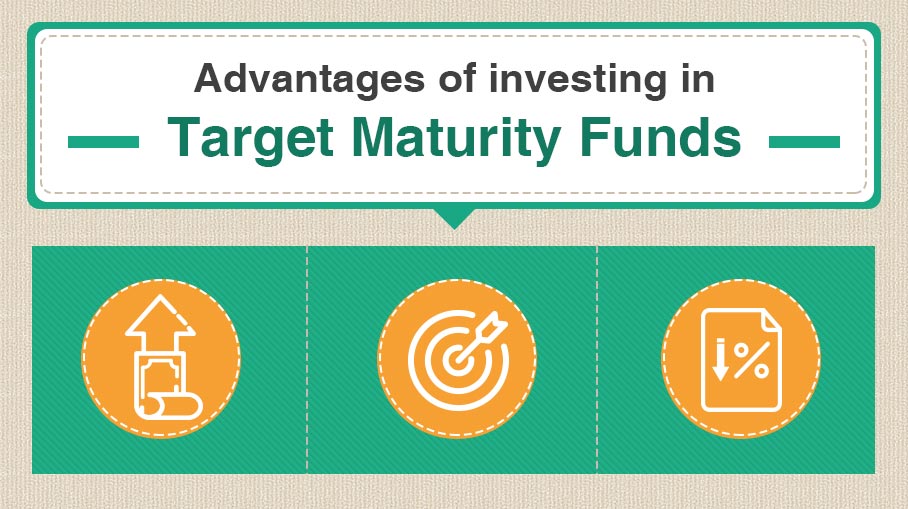
Target Maturity Funds a type of debt fund in bonds of defined maturity, have gained in popularity as a higher-return safe investment. It consists the fund’s benchmark index, such as Nifty PSU bond or the Nifty SDL (State Development Loans) Index. These Funds are high in credit quality, but unlike bank fixed deposits, they are not immune to interest rate risk. Such type of funds, carry lower interest rate risk and provide more predictive and stable returns. These funds have no default risk since the investment is in government securities and highly rated bonds of public sector companies. Are target maturity funds an alternative to fixed deposits? You can invest in target maturity funds if you fall in the higher income tax brackets. It is taxed similarly to debt-oriented funds. You may invest in target maturity funds instead of fixed deposits only if it matches your investment objectives and risk tolerance. You may avoid these funds if you cannot hold them until maturity or fall in the lower income tax bracket. Target maturity funds are a passive investment in bonds of a similar maturity constituting the fund’s benchmark index, such as the Nifty PSU bond or the Nifty SDL. It is an open-ended debt scheme with a specified maturity date.

Target Maturity Fund Read More »

Growth at a Reasonable Price

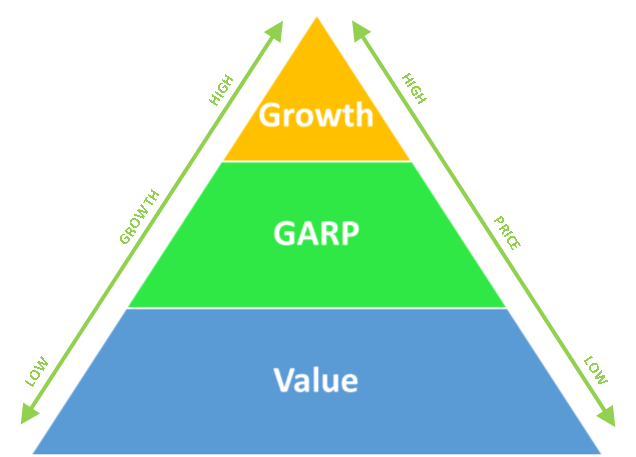
Growth at a reasonable price (GARP) is an equity investment strategy that combines growth and value investing attributes. It is a fundamental driven investment strategy that balances pure growth and pure valuation, as the former tends to invest in high-growth, yet expensive stocks, while the latter may take a long-term investment to pay off. GARP investors are looking for a stock that is trading for slightly less than its estimated value that also has earnings growth potential. GARP investors do not necessarily stick to specific ratios or valuation metrics to help them select stocks. GARP investors usually do follow price/earnings (P/E = current share price/earnings per share) valuations in order to find investments that have been slightly discounted by the market. For instance, if XYZ Co., is currently trading at Rs.200 and its forecast earnings per share is Rs.12.5, the stock is trading at 16x its earnings. Depending on the industry, this P/E ratio could be high or low. A GARP investor would compare XYZ’s multiple to the multiples of other companies operating in the same industry. Typically, a P/E ratio in the 10x-20x range is reasonable for a GARP investor. Higher P/E multiples tend to indicate that the business is overvalued. GARP investors also look for low price/book ratios (P/B = current share price/book value per share) and a PEG ratio of less than 1 (PEG = P/E ratio/projected growth in earnings). While the criteria used to identify a quality company can differ, some shared attributes typically include Sustainable business model Sustainable business model and a strong competitive advantage are better positioned to maintain their market position and generate consistent profits over time. Consistent earnings growth Investors are typically more attracted to companies that have a track record of consistent earnings growth, as this is indicative of the company’s ability to sustain its growth in the future. Strong financials Companies that possess a robust financial position, characterised by a low level of debt, a healthy balance sheet, and strong cash flow, are typically regarded as being of higher quality when compared to those with weak financials. Management quality Companies with competent management team that have a proven track record of making sound business decisions are generally considered to be of higher quality. Since, GARP strategy is a hybrid solution for growth and value stock-picking, a GARP investor will experience a combination of returns.  For instance, a value investor will do better when markets are falling, while a growth investor will do best as markets rise. A GARP investor will be somewhere in the middle.

Growth at a Reasonable Price Read More »

Price to Book Ratio

Simply speaking, the Price-to-book ratio (i.e., P/B ratio) is the ratio of Price of a stock to that of the value of its tangible assets and is used to compare a stock\’s market value to its book value. Book value is an accounting term denoting the tangible value of the company. It is the total tangible value made up of the assets of the company. Intangibles like “brand” name and “goodwill” are not a part of the book value. It is calculated as: P/B Ratio        =                                  Stock Price                                     Total Assets – Intangible Assets and Liabilities Therefore… What this means is that the lower the P/B, the better the value. A lower P/B ratio could mean the price that the market is quoting does not justify the current value of the assets of the company that it presently holds. One must remember that people pay a price of a stock not only based on its current assets but also based on future prospects of the company or industry in which it operates. Secondly… The value of intangibles such as goodwill, brand name, management team etc. can be considerable and stock buyers pay quite a premium for such intangibles. Hence, if the intangibles are valuable or if people believe that the company has good prospects in the future, they normally would be willing to pay a much higher price as compared with the value of its current assets. Hence… Despite positive outlook for the industry, if the P/B of the company is quoting low, it calls for more introspection about the company. Something could be fundamentally wrong in the company for the market to be quoting a low price. Perhaps the management is unstable or there is a leadership problem or there could be underlying labour problems in the company or any other factor that perhaps cannot be easily determined. But how is it useful to you & me? This ratio guards you against paying a very high price for a company because it compares the price to what you could recover if the company were to suddenly close down. Hence, while paying a price for a stock one should keep in mind its tangible and intangible assets on one hand and the prospects of both the company as well as the industry on the other hand. As with most ratios, it varies a fair amount by industry. For example… In the telecom sector, this ratio can be expected to be high in keeping with the bright prospects of the industry. Further to this, if the company is a leader in the industry, like Reliance Jio, the market will be able to sustain a high P/B ratio. This is one reason why the stock price of companies like Reliance Jio is high as compared to its book value. Therefore… A higher P/B ratio implies that investors expect management to create more value from a given set of assets, all else being equal. P/B ratios do not, however, directly provide any information on the ability of the firm to generate profits or cash for shareholders.  To Sum Up What: The Price-to-book ratio (i.e., P/B ratio) is used to compare a stock\’s market value to its book value. How: It is calculated by dividing the current closing price of the stock by the latest quarter\’s book value per share. Why: This ratio guards you against paying a very high price for a company because it compares the price to what you could recover if the company were to suddenly close down.

Price to Book Ratio Read More »