Financials

Portfolio Management System

In the dynamic world of finance, where markets fluctuate at the blink of an eye, savvy investors need a robust tool to steer through the stormy waters of investment. Portfolio Management System (PMS) – a comprehensive solution designed to streamline the management of investments, optimize returns, and mitigate risks. Understanding Portfolio Management System At its core, a Portfolio Management System serves as a centralized platform for investors to oversee and manage their investment portfolios. It aggregates data from various sources, including market feeds, financial statements, and economic indicators, providing users with a holistic view of their investments. Key Components of PMS Portfolio Analysis: PMS offers sophisticated tools for analysing portfolio performance, including risk assessment, asset allocation, and benchmarking against market indices. By dissecting the portfolio into its constituent parts, investors gain insights into the drivers of returns and can adjust their strategies accordingly. Transaction Management: Efficient trade execution is critical in maximizing investment returns. PMS facilitates seamless order management, from trade initiation to settlement, while ensuring compliance with regulatory requirements and investment guidelines. Reporting & Analytics: Timely and accurate reporting is essential for monitoring portfolio performance and communicating with stakeholders. PMS generates customizable reports and dashboards, allowing investors to track key metrics, evaluate performance against objectives, and identify emerging trends. Risk Management: In today\’s volatile markets, risk management is paramount. PMS employs sophisticated risk models to assess several types of risk, including market risk, credit risk, and liquidity risk. By quantifying risk exposures and stress-testing portfolios, investors can implement risk mitigation strategies and safeguard against adverse market conditions. Compliance and Regulatory Oversight: Regulatory compliance is a top priority for institutional investors and asset managers. PMS automates compliance monitoring and reporting, ensuring adherence to regulatory requirements and investment policies. Moreover, it facilitates audit trails and provides transparency into investment decisions and actions taken. Benefits of Portfolio Management System Enhanced Decision Making: By providing real-time access to comprehensive investment data and analytics, PMS empowers investors to make informed decisions, capitalize on opportunities, and mitigate risks effectively. Efficiency and Productivity: Automation of routine tasks, such as trade processing and reporting, frees up time for investment professionals to focus on value-added activities, such as portfolio analysis and strategy development. Risk Mitigation: Through robust risk management tools and compliance controls, PMS helps investors identify and mitigate potential risks, ensuring the stability and resilience of their investment portfolios. Scalability and Flexibility: PMS is scalable to accommodate the evolving needs of investors, whether managing a small portfolio or a multi-billion-dollar fund. Moreover, it offers flexibility in terms of asset classes, investment strategies, and reporting requirements.


Portfolio Management System Read More »

When Should One Book Profits?

Profit booking is a part of good financial planning, but it needs to be done thoughtfully. Investors often feel tempted to cash out after seeing good returns, but doing so without a clear purpose can hurt long-term wealth creation. Here are the situations where booking profits is appropriate and beneficial: 1. When you genuinely need the funds and have no suitable alternatives If you have a pressing financial requirement—such as paying for education, buying a home, funding medical expenses, or meeting an important life goal—booking profits makes sense. Equity investments should serve your life goals, not the other way around. When the need is real and unavoidable, taking profits is practical and prudent. 2. When your financial goal is approaching in the next few years As you get closer to a financial goal (typically within 2–3 years), it’s advisable to reduce risk.If your investments have delivered good returns and your goal horizon is nearing, you can start systematically booking partial profits. This helps safeguard the wealth you’ve built and reduces the chance that market volatility will derail your plans right before you need the money. 3. When your actual returns are significantly above your target and you prefer to be more conservative If your portfolio has grown much faster than expected—well above your target returns—you may want to lock in some of those gains.A sensible way to do this is: This approach allows you to secure gains while still staying invested for future growth, but in a more controlled and risk-managed manner. 4. Avoid booking profits purely to time the market Trying to sell high and reinvest at lower levels sounds logical in theory, but rarely works in practice.Market timing is extremely difficult—even professionals struggle with it consistently. If the market continues to rise after you exit, you risk missing out on strong upward moves. Research shows that missing just a few of the market’s best-performing days can drastically reduce long-term returns. It’s usually better to stay invested and let compounding work in your favour rather than constantly trying to outguess market movements. In Summary You should book profits not because markets look high, but because your personal financial situation warrants it—like approaching goals, liquidity needs, or risk management. Otherwise, staying invested and letting your money compound over the long term generally leads to better outcomes.

When Should One Book Profits? Read More »

How to choose a right investment?

Choosing the right investment involves careful consideration of your financial goals, risk tolerance, time horizon, and investment knowledge. Here are some general steps to help you make informed investment decisions: Identify and Define your Goals: Clearly identify your financial goals, such as saving for retirement, buying a home, or funding education. Different goals may require different investment strategies. Risk Tolerance: Understand how much risk you are willing and able to take. Investments come with varying levels of risk, and it\’s essential to align your risk tolerance with the potential returns of an investment. Time Horizon: Consider how long you can leave your money invested before needing to access it. Generally, longer time horizons may allow for more aggressive investment strategies, while shorter time horizons may require more conservative approaches. Portfolio Diversification: Diversification involves spreading your investments across different asset classes (e.g., stocks, bonds, real estate) to reduce risk. A well-diversified portfolio can help protect against losses in any single investment. Research Investments: Take the time to research and understand the investments you are considering. This includes examining historical performance, fees, and potential risks. Consider seeking advice from financial professionals or using reputable investment platforms. Consider Investment Options: Different investment vehicles suit different goals. Common options include stocks, bonds, mutual funds, exchange-traded funds (ETFs), real estate, and more. Each has its own risk and return profile. Check Investment Costs: Be aware of any fees associated with buying, holding, or selling an investment. High fees can significantly impact your overall returns over time. Stay Informed: Keep yourself informed about economic conditions, market trends, and any changes that may affect your investments. Regularly review your portfolio to ensure it aligns with your goals. Monitor and Rebalance your Investments: Periodically review your investment portfolio to ensure it continues to meet your goals and risk tolerance. Rebalance your portfolio if necessary, especially after significant market movements. Seek Professional Advice: If you are unsure about where to start or have a complex financial situation, consider seeking advice from a financial advisor. They can provide personalized guidance based on your individual circumstances. Remember that all investments come with some level of risk, and there are no guarantees of profit. It\’s essential to make informed decisions based on your unique financial situation and goals.

How to choose a right investment? Read More »

Rule of 8 – 4 – 3

Investing, often likened to a chess game, requires strategic thinking, calculated moves, and a keen understanding of risk and reward. In the fast-paced world of finance, where decisions can make or break fortunes, having a structured approach to investment decisions is crucial. Enter the Rule of 8-4-3, a time-tested framework that offers investors a systematic methodology to navigate the complexities of financial markets and optimize returns. Understanding the Rule of 8-4-3 in Investing: The Rule of 8-4-3 can be seamlessly integrated into the investment process, empowering investors to make informed decisions across three key stages: Gather Information (8): In the initial phase, devote approximately 80% of your time and resources to gather relevant data and insights. Conduct comprehensive research on potential investment opportunities, including fundamental analysis of companies, macroeconomic trends, industry dynamics, and geopolitical factors. Utilize a variety of sources, from financial reports and market research to expert opinions and news updates. Building a robust information base provides a solid foundation for informed investment decisions. Evaluate Options (4): Once armed with a wealth of information, transition to the evaluation phase. Dedicate around 40% of your resources to assess the various investment options available. Conduct thorough due diligence on each opportunity, analyzing factors such as risk-reward ratios, valuation metrics, growth prospects, and competitive advantages. Consider diversification strategies to mitigate risk and optimize portfolio performance. Prioritize investments that align with your investment objectives, time horizon, and risk tolerance. Make a Final Choice (3): In the final phase, allocate 30% of your resources to make decisive investment decisions. Trust your judgment and the insights gleaned from the previous phases to select the most promising opportunities. Implement a disciplined approach to portfolio construction, balancing asset classes, sectors, and geographic regions to achieve optimal risk-adjusted returns. Continuously monitor your investments, adjusting your strategy as market conditions evolve and new information emerges. Practical Applications in Investing: The Rule of 8-4-3 serves as a valuable guide for investors across various asset classes and investment strategies: Stock Market Investing: Use it to analyze individual stocks, construct diversified portfolios, and capitalize on market inefficiencies. Fixed Income Investments: Apply it to evaluate bonds, assess credit risk, and optimize yield and duration exposure. Real Estate Investment: Utilize it to analyze property markets, assess rental yields and capital appreciation potential, and make informed investment decisions. Alternative Investment: Employ it to evaluate alternative assets such as private equity, venture capital, and hedge funds, maximizing portfolio diversification and return potential.

Rule of 8 – 4 – 3 Read More »

Rule of 10, 5, 3

The \”Rule of 10, 5, 3\” is a simple guideline used in investing to evaluate the potential risk and return of an investment opportunity. Here\’s how it works: Rule of 10: This refers to the idea that no single investment should represent more than 10% of your total investment portfolio. Diversification is key to managing risk in investing, and by limiting exposure to any single investment, you can mitigate the impact if that investment performs poorly. Rule of 5: Within any single investment, you should aim to limit your exposure to any one sector to no more than 5% of your total portfolio. This further diversifies your investments and reduces the risk of sector-specific downturns impacting your portfolio significantly. Rule of 3: Finally, within any single sector, it\’s advisable not to have more than 3% of your portfolio invested in any one company. This guards against the risk of a single company\’s poor performance affecting your overall investment returns disproportionately. By adhering to these rules, investors aim to spread their risk across a range of investments, sectors, and companies, thereby enhancing the resilience of their portfolio to market fluctuations and unforeseen events. It\’s important to note that while these rules offer helpful guidelines, individual circumstances and risk tolerances may vary, so they should be used as part of a broader investment strategy tailored to your specific goals and preferences.

Rule of 10, 5, 3 Read More »

What Should You Do When the Markets Fall and You Need Funds Urgently?

Needing money during a market downturn can be stressful, especially if a large portion of your portfolio is in equity. However, with proper planning and the right investment structure, you can significantly reduce this risk. Here’s how to think about it: 1. If You Have Invested in Debt Funds, You’re Largely Safe Debt funds are generally more stable compared to equity investments. Their volatility is low, and short-term fluctuations are limited.So, if a part of your portfolio is in debt funds, you can comfortably withdraw from them even during a market decline without worrying much about significant losses. This is why debt exposure is crucial for meeting near-term goals. 2. Equity Investments Require More Caution You need to be concerned primarily if your funds are heavily invested in equity schemes. Equity markets can experience sharp declines, and withdrawing during such times may lead to losses.But the good news is: you can manage this risk well in advance so that you’re not forced to redeem during a downturn in your goal year. 3. Plan Ahead If Your Goal Is Many Years Away Suppose you need funds after 15 years. In this case: This phased de-risking ensures that your final-year requirement is not exposed to sudden market volatility. 4. Ensure Proper Asset Allocation from the Start It’s risky to invest your entire portfolio in equity funds—no matter how long your investment horizon is. A balanced portfolio should include: Proper asset allocation smoothens returns and minimizes the possibility of needing funds during a downturn when only equities are affected. 5. Continuous Monitoring and Guidance Since I am associated with you, I will continuously monitor your investments and guide you on suitable strategies—whether it’s shifting to safer assets, booking profits, or rebalancing when required.This constant oversight ensures that your portfolio remains aligned with your goals and risk tolerance at every stage.

What Should You Do When the Markets Fall and You Need Funds Urgently? Read More »

Exchange Traded Fund

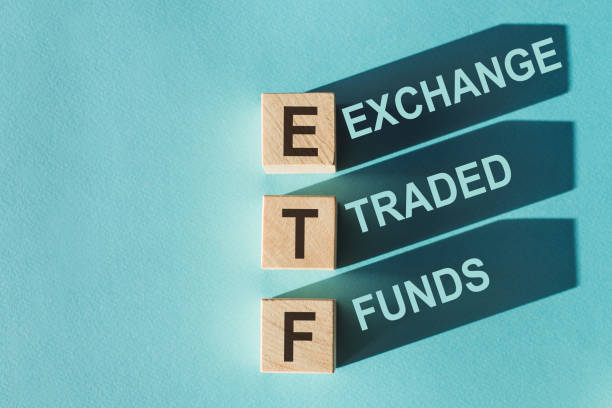
What are Exchange Traded Funds (ETFs) ? A security that tracks an index, commodity, sector, or other asset, but that can be traded on an exchange like a stock. An ETF is called an exchange traded fund because it\’s traded on an exchange just like stocks. Common ETFs are Nifty Bees, S&P 500 ETF, Gold Bees. Exchange traded funds are marketable securities with a specified price for the bundle or index tracked. Easier to trade on an exchange. Popular choice for diversification as it holds various asset classes under one ETF. ETF share prices fluctuate all day as the ETF is bought and sold; this is different from mutual funds that only trade once a day after the market closes. Mechanism of ETF Fund provider owns the underlying assets, designs a fund to track the performance and sell shares in that fund to the investors. Investors own a portion of the ETF but not of the underlying asset. ETFs are designed to track the value of an underlying asset or index. Advantages of ETF Liquidity: ETFs can be sold throughout the day over stock exchanges, though some funds are more frequently traded than others. Lower cost: ETFs have much lower expense ratios than traditional mutual funds. Transparency: ETFs disclose the fund’s holdings and its NAV daily for open-ended schemes and close-ended schemes. Diversification: ETFs allow investors to diversify their portfolio across horizontals such as industries, sectors, styles, or countries. Types of ETFs Equity ETFs Equity ETFs track an index of equities. You can choose ETFs covering large businesses, small businesses, or stocks from a specific country. Equity ETFs also let you target sectors that might be doing well at that time, like tech stocks or banking stocks, which makes them a popular choice. Bond/Fixed Income ETFs Spreading your investment risk is just good practice. That’s why most professionals will also invest in fixed-income and bond ETFs that provide steady return at potentially lower risk than equity ETFs. Commodity ETFs Often harder to access than stocks, ETFs are a great way to get into commodities like gold, silver or oil. These are an attractive alternative to stocks to further diversify your portfolio and risk. Currency ETFs Currency ETFs will invest in either a single currency, like the US dollar, or a basket of currencies. The ETF will either invest in the currency directly, use derivatives or a mix of the two.

Exchange Traded Fund Read More »

Corporate Finance

Corporate finance deals with how corporations address funding sources, capital structuring, accounting, and investment decisions. Corporate finance is also often concerned with maximizing shareholder value through long- and short-term financial planning and implementing various strategies. Corporate finance activities range from capital investment to tax considerations. Corporate finance has three main areas: capital budgeting, capital financing, and working capital management. Capital budgeting is the process of prioritizing funds toward the most profitable projects. Capital financing is determining how a company\’s investments and endeavour will be financed. Working Finance management is concerned with cash flow for day-to-day operations and maintaining liquidity. Corporate Finance Activities Investments and capital budgeting Investing and capital budgeting includes planning where to place the company’s long-term capital assets in order to generate the highest risk-adjusted returns. This mainly consists of deciding whether or not to pursue an investment opportunity, and is accomplished through extensive financial analysis. Capital financing This core activity includes decisions on how to optimally finance the capital investments (discussed above) through the business’ equity, debt, or a mix of both. Long-term funding for major capital expenditures or investments may be obtained from selling company stocks or issuing debt securities in the market through investment banks. Dividends and return of capital This activity requires corporate managers to decide whether to retain a business’s excess earnings for future investments and operational requirements or to distribute the earnings to shareholders in the form of dividends or share buybacks. Why is Corporate Finance Important? Growth and Expansion: Effective corporate finance strategies allow companies to grow. By making smart investment decisions, businesses can increase their market share and profitability. Risk Management: Understanding finance helps companies identify and mitigate risks. This can include market fluctuations, economic downturns, or changes in consumer behavior. Financial Health: Regular analysis of financial statements and cash flow helps companies maintain good health. This is crucial for attracting investors and ensuring long-term stability. How Companies Raise Funds Equity Financing: This involves selling shares of the company to investors. In exchange, these investors get ownership stakes and a say in company decisions. It’s a way to raise money without incurring debt. Debt Financing: Companies can also borrow money through loans or by issuing bonds. While this gives them immediate cash, it requires regular repayments and interest, which can be a burden. Retained Earnings: Companies can reinvest their profits back into the business instead of paying them out as dividends. This is often a cost-effective way to fund growth.

Corporate Finance Read More »

Benchmark

What is a Benchmark? A benchmark is a standard or point of reference that helps you evaluate the performance of something. Think of it as a yardstick that you can use to compare results. For example, if you\’re running a race, your benchmark could be the fastest time recorded for that distance. It gives you something to aim for. Why Are Benchmarks Important? Measurement: Benchmarks help you measure progress. If you\’re trying to improve your grades in school, your previous exam scores can serve as benchmarks to see how much you\’ve improved. Comparison: They allow for comparisons between different entities. For instance, investors might compare a stock\’s performance against a market index like the Nifty 50, Nifty 100, etc. to see how well it\’s doing. Goal Setting: Benchmarks can help set realistic goals. If you know the average performance in your field, you can aim to meet or exceed that standard. Performance Improvement: By identifying gaps between your current performance and the benchmark, you can figure out where you need to improve. Types of Benchmarks Financial Benchmarks: These often relate to investment performance. For example, mutual funds may be compared to stock market indices to see how well they are doing. Educational Benchmarks: In schools, benchmarks might refer to standardized test scores that help educators gauge student progress. Performance Benchmarks in Business: Companies may compare their productivity, customer satisfaction, or sales figures against industry standards to measure success. Technical Benchmarks: In tech, benchmarks are often used to measure the performance of software or hardware. For instance, gaming laptops might be tested against benchmarks to see which one performs better under gaming conditions. How to Use Benchmarks Effectively Identify Relevant Benchmarks: Choose benchmarks that are relevant to your field or goals. For example, if you\’re an athlete, look for benchmarks related to your specific sport. Regularly Review Performance: Check in on your performance against the benchmark periodically. This will help you stay on track and make adjustments as needed. Set Actionable Goals: Use benchmarks to set specific, achievable goals. Instead of saying \”I want to be better,\” you could say \”I want to improve my exam score by 10%.\” Learn from Others: Look at how top performers reach their benchmarks. This can provide insights into strategies you might apply to your own situation. Benchmarks are powerful tools that can help you measure and improve your performance in various areas of life. Whether you’re a student, an investor, or a business professional, understanding and using benchmarks can guide you toward achieving your goals. So next time you set out to improve, remember to check your benchmarks—they might just be the key to your success!

Benchmark Read More »

Blockchain

A blockchain is a distributed database shared among a computer network\’s nodes. They are best known for their crucial role in cryptocurrency systems for maintaining a secure and decentralized record of transactions, but they are not limited to cryptocurrency uses. Blockchains can be used to make data in any industry immutable the term used to describe the inability to be altered. Because there is no way to change a block, the only trust needed is at the point where a user or program enters data. This aspect reduces the need for trusted third parties, which are usually auditors or other humans that add costs and make mistakes. Each blockchain network has various participants who play these roles, among others: Blockchain users – Participants (typically business users) with permissions to join the blockchain network and conduct transactions with other network participants. Regulators – Blockchain users with special permissions to oversee the transactions happening within the network. Blockchain network operators – Individuals who have special permissions and authority to define, create, manage, and monitor the blockchain network. Certificate authorities – Individuals who issue and manage the different types of certificates required to run a permissioned blockchain. How does it work? Let us start with the blocks. Each block contains stored data, as well as its own unique alphanumeric code, called a hash. These cryptographically generated codes can be thought of as a digital fingerprint. They play a role in linking blocks together, as new blocks are generated from the previous block’s hash code, thus creating a chronological sequence, as well as tamper proofing. Any manipulation to these codes’ outputs an entirely different string of gibberish, making it easy for participants to spot and reject misfit blocks. Another key feature to the inner workings of blockchain is decentralization. In lieu of a centralized entity, blockchains distribute control across a peer-to-peer network made up of interconnected computers, or notes. These nodes are in constant communication with one another, keeping the digital ledger up to date. So, when a transaction is taking place among two peers, all nodes take part in validating the transaction using consensus mechanisms. These built-in protocols keep all in-network nodes in agreement on a single data set. No blocks can be added to the blockchain until it is verified and has reached consensus. Luckily, this step has been sped up with the advent of smart contracts, which are self-executing programs coded into a blockchain that automate the verification process. Once a transaction is recorded, it is considered permanent. Blockchains are one-way operations in that there are no reversible actions. This immutability is part of creating transparency across the network and a trustworthy record of all activities on the blockchain.

Blockchain Read More »