Krutiika Gala

Mera Bill Mera Adhikaar

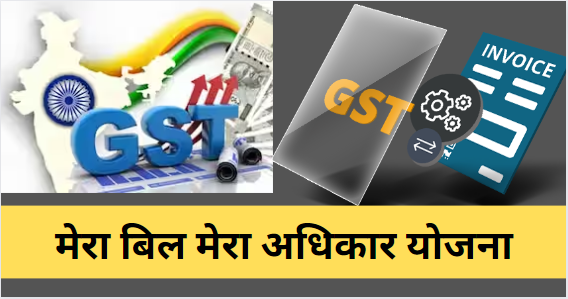
The government of India has launched a new app known as Mera Bin Mera Adhikaar, an app which can be used on both Android as well as iOS-based devices. This scheme is to get towards creating awareness about the importance of receiving invoices for B to C transactions Fostering a more transparent economy. Under this scheme, consumers are offered incentive to demand bills for their purchases. This price varies from 10,000 Rs to one crore rupees. These prices will be awarded through monthly and quarterly draws, encouraging the individuals to win substantial cash rewards by simply requesting legitimate invoices during the transactions. The minimum purchase value for an invoice to be considered for lucky draw is rupees 200 and a person can upload maximum 25 invoices in a month. The invoice uploaded on the app should have GSTIN of the seller, invoice number, amount paid and tax amount. Only B to C invoices is acceptable, which are issued or received by an end user B2B bills are not acceptable. This game is open to all the invoices issued by the suppliers registered under the goods and service tax. Consumers from the initial batch of six states and Union territories like Assam, Gujarat, Haryana Puducherry Daman & Diu and Dadra and Nagar Haveli are the first beneficiaries for this innovative program.

Mera Bill Mera Adhikaar Read More »

Ayushman Bharat Digital Mission (ADBM)

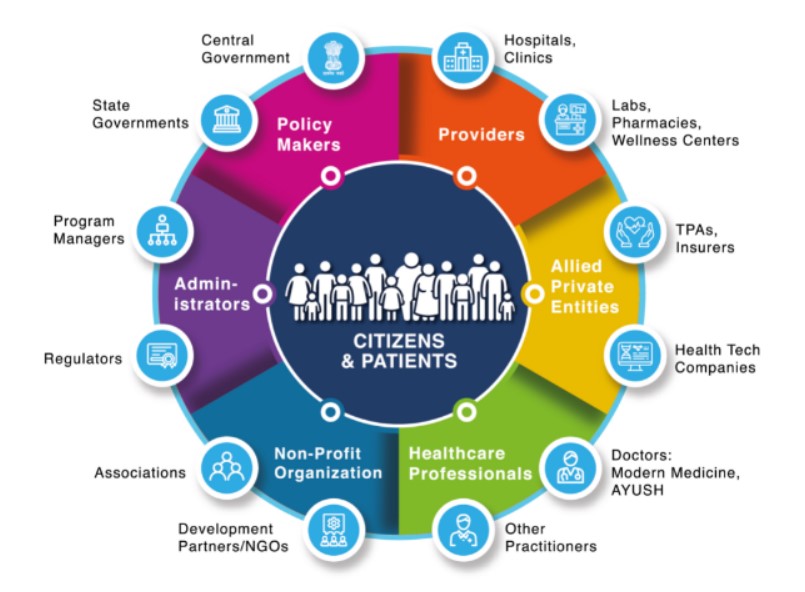
The Ayushman Bharat Digital Mission (ABDM) aims to develop the backbone necessary to support the integrated digital health infrastructure of the country. It will bridge the existing gap amongst different stakeholders of Healthcare ecosystem through digital highways. The ABDM Ecosystem Ayushman Bharat Health Account (ABHA) under Ayushman Bharat Digital Mission is an innovative initiative by the National Health Authority (NHA) to create a one-stop digital platform for all the medical and health needs. It has an aim to make the healthcare ecosystem more centralised and convenient. The 14-digit unique number which is linked to the ABHA digital health ID enables easy access to all the medical records, prescriptions, diagnoses, and health history. Benefits of having an ABHA card include: Its free of cost. Application process is quick & easy. All medical Records stored at one place. You can access your medical records anytime anywhere. You even get an app known as ABHA app where you can access the details. It is highly Secured. Data Sharing only takes place with your consent. The card ensures that each member of the family gets access to quality healthcare services at empanelled hospitals. The card also provides cashless transactions, thus making healthcare more affordable. In case of any hospitalisation, the cardholder can get up to Rs.5 lakhs reimbursement for treatment expenses (for those whose family\’s monthly income is Rs.10000/- or less). In case of any medical emergency just by the ABHA Number all your previous medical history will be available to the doctor treating you. You can store all the health Insurance policies. You will get priority in terms of availing government health insurance schemes and programmes. You can avail free diagnostic services at government hospitals and dispensaries. You can get discount on medicines purchased from government hospitals and dispensaries. You can avail free transportation to and from government hospitals. Avoid long lines in Registration in healthcare facilities across the country. You can create your ABHA Card using Aadhaar or Driving License. You can use your ABHA number to seamlessly sign up for an ABHA address and ensure that the health records created for you are shared only with you. To enable health data sharing, it is recommended that you create ABHA address; it is unique identifier that enables you to share and access your health records digitally. Your ABHA address looks like yourname@abdm. ABHA address with ABDM Consent Manager that will facilitate health data exchange for you with appropriate consent on the ABDM network. You can participate at your own free will and choose to create your ABHA number voluntarily. Also, at any time, you can also request for permanent deletion or temporary deactivation of your ABHA number.

Ayushman Bharat Digital Mission (ADBM) Read More »

Important Points on Health Insurance

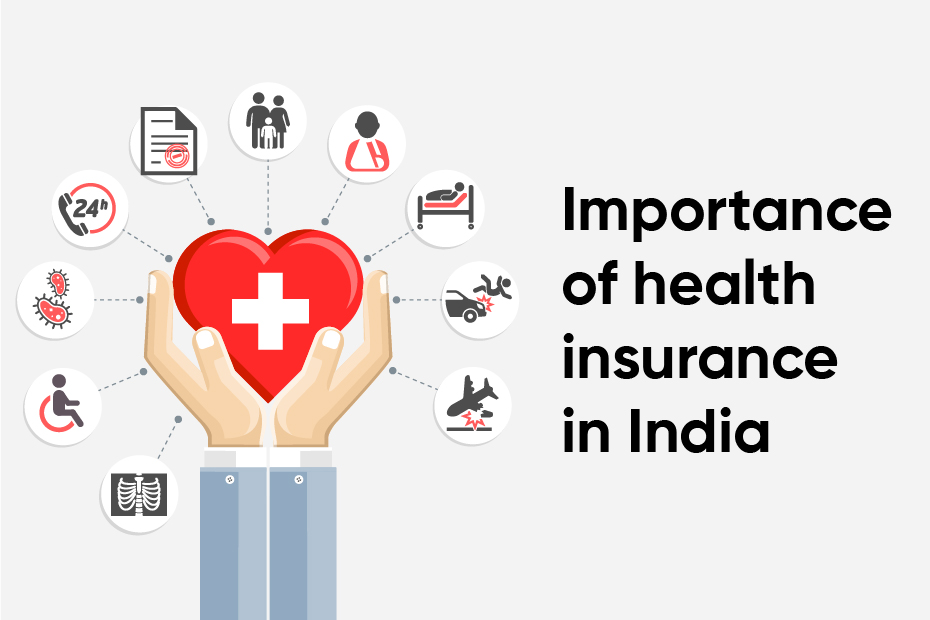
What does a health insurance plan cover. A plan cover includes all the ailments and conditions that the policy offers to pay for. While some plans offer cover only for accidental injuries, surgeries. There are other plans that offer cover for critical illness, ambulance charges, prescription medicine charges and other medical expenses. It is important to find out if the plan offers the right cover for you. Are pre-existing conditions covered? Most of the insurance policies do not cover pre-existing conditions like Diabetes and Blood pressure. So, it is important for you to declare all the health problems you face, so that you can select the correct policy for yourself. The Waiting Period Clause  If you are aware of the waiting period clause, then you would be in a better position to make a decision. The insurer will not accept any claim arising out of pre-existing illnesses or specific illnesses during this period. And it can range anywhere between 24 months to 48 months depending on the insurer and the plan that you have chosen. Moreover, you will be able to claim the benefits only when this period is over. This waiting period shall apply to pre-existing illnesses like thyroid, blood pressure, diabetes, etc. that one may have before buying the policy. Additionally, it is applicable to certain specific treatments and illnesses like arthritis, varicose veins, cataract, etc. So, you can compare and choose a plan that comes with a minimum waiting period to be able to claim the benefits in case of a health emergency. Cashless Hospitalization Benefits Health Insurance companies usually have a tie-up with network hospitals where the insured members can avail cashless treatment in case of a medical emergency. So, you do not need to arrange for funds and then file for its reimbursement. It will be helpful if you check with your insurer for the list of empanelled hospitals and know what all network hospitals are there in your vicinity. Pre and Post Hospitalization Coverage Most health plans cover the medical expenses that may incur during the hospitalization. Buy a plan that covers expenses incurred before and after the hospitalization as well to save expenses incurred on ambulance charges, medical tests, medicines, doctor fees, etc. Usually, most of the policies have pre-hospitalization of 90 days and post hospitalization of 180 days. Co-Payment Clause Lot of people find this term confusing and tend to ignore it at the time of purchase. It is the percentage of the amount that you would need to pay at the time of claim and the rest amount will be, paid by the insurer. So, before you sign your Mediclaim policy check if there is any co-payment clause applicable that might impact your claim amount. If possible, buy a plan that does not have sub-limits. However, if you have any pre-existing medical issues or have crossed a certain age limit most insurers would have a co-payment clause. Day care procedures Nowadays, certain medical treatments are completed within a day. Thus, it is important to ensure if such treatments are covered under your health insurance plan. These are small medical procedures like cataracts, tonsillectomy, etc. Alternative treatments  These are non-allopathic treatments like Ayurveda, Yoga, Unani, Siddha, and Homeopathy (AYUSH). Many health plans allow these non-allopathic treatments’ coverage up to a specified limit. AYUSH treatments have gained importance during the COVID-19 pandemic, and most people prefer these over standard allopathic medicines. Room rent limit on the health insurance plan. A hospital’s room rent may sound like a trivial charge, but it can be exorbitant depending upon the type of hospital. The room rent limit in health insurance specifies the maximum room rent coverage allowed under the policy. If the policyholder chooses a hospital room with a higher rent, he will have to proportionately share the load of the entire hospital bill. Now a days all the health insurance companies have become extremely strict regarding the policies they issue. if at all you have any critical illness and you go for a regular policy the claim will 100% get rejected if at all you have not specified the illness during the inception of the policy. So, it is especially important for you to declare all the diseases the medicines you take for the same to the insurance company.

Important Points on Health Insurance Read More »

Bima Sugam

Bima Sugam will be a one-stop platform for all insurance needs such as Life, and General insurance such as Motor, Travel, health,etc. categories. Insurance companies can onboard the platform. It\’s going to be plug and play with API (Application Programming Interface) In line with creating ease of doing business and making available Life and Health to all at a subsidised premium, there will be a lot of solutions around the same for the policyholders under BIMA Sugam. Who can have access to Bima Sugam? It allows buyers to purchase life, motor or health insurance policies directly. Besides, web aggregators, brokers, banks and insurance agents will act as facilitators in selling insurance policies. The Bima Sugam platform will provide all these facilities to policyholders with an e-insurance account (E-IA). Who will own it? Several insurance companies (both general and life insurers) would become major shareholders of the Bima Sugam platform. The overarching Insurance Platform shall enable the following services for the customers- Buy insurance policy, Claim Settlement, Agent Portability, Policy Portability. Agent portability will surely help genuine customers who are facing difficulties with existing agents in terms of getting services. This may also be due to a shift in the location of the policyholder or agent itself. This also will elevate the after-sales services stronger wherever the agent is involved by creating a good customer experience. Existing Insurance Repository will get a boost in terms of all Insurance companies subscribing to it as Approved Person. Reach of insurance will be expanded and this is going to be a game changer. It will be a huge facilitator and with this platform, you will not need to go anywhere physically.

Bima Sugam Read More »

Personal Accident Cover

We all are exposed to the risks of accidents in our day to day lives. Despite all possible precautions accidents do occur which may result into disablement or loss of body parts or sometimes even death. This policy provides compensation in the event of insured sustaining injuries, solely and directly from an accident caused by violent, visible and external means, resulting into death or disablement be it temporary or permanent. Coverages Available under personal accidental Insurance Accidental death – Death because of car crash or any other unfortunate accident is covered by personal accident insurance. If the insured dies in an accident, the beneficiary receives the compensation of 100% sum assured. Permanent Total Disablement – Any accident injury which makes it impossible for a particular person to work for the rest of his life. Permanent disabled refer to the permanent loss of the functionality. The insured receives 100% pay out in case of permanent total disablement. Permanent Partial Disability – Any accidental injury which reduces the efficiency because of the partial loss of functionality in one or more limbs and there is no chance of recovery, it covers the treatment for permanent partial disability such as loss of one Ieg or one hand or any nerve damage. The coverage will be given from 50% to 100% depending upon the severeness. Temporary Total Disablement. Any accidental injury which exists only on a temporary basis, such as fracture, is also covered with the specified sub limit pay out of a certain amount of the sum assured. In such cases, the insured will return to work eventually after few days or few months. The insured will receive weekly compensation of 1% of sum assured for up to 100 weeks, depending on the type of injury. Child Education Grant. If the insured suffers from the permanent total disability and accidental death. An education grant benefit is provided to the insured children, this is subject to two children’s if their ages is below 25 years. It’s an add on benefit in Personal accidental cover. Terrorism. Injuries affiliate because of terrorist tags are also covered by personal accident insurance. There are few insurance companies that provide this cover. So before buying the accident cover, please check which insurance company will give you this cover. Additional benefits. There are additional benefits such as an ambulance charges, general expenses, fracture cover, etc. You should check with the insurance company whether these additional benefits are provided or not. This can be taken as an add on benefit along with your personal accidental cover. Why is it Important to buy personal accidental cover? For example: Mr. Bhavesh has taken and standard personal accident cover. He met with an accident and has fractured his hand. The cost comes up to Rs.25,000/-. His accidental policy did not cover the fracture cost, it only covered the basic personal accident cost. Hence, he had to pay the entire amount. It is recommended to take an add on of Temporary total disablement and permanent partial disablement whenever you take a personal accident cover. You need to check the risk coverage and sub limits associated with the policy as well. So please read the terms and conditions before taking any personal accident policy.

Personal Accident Cover Read More »

Critical Illness

Critical illness sometimes called catastrophic illness. Critical illness insurance provides a benefit if you experience one or more of the following medical emergencies: Heart attack Stroke Organ transplants Cancer Coronary bypass Because these illnesses require extensive medical care and treatment, their costs can outstrip a family’s medical insurance policy quickly. If you don’t have an emergency fund, you’ll have an even harder time paying those bills out of pocket. There are exceptions to critical illness insurance coverage. Some types of cancer may not be covered, while chronic illnesses are also frequently exempted. You may not be able to receive a pay out if a disease comes back or if you suffer a second stroke or heart attack. Some coverage might end when the insured reaches a certain age. So, like any form of insurance, make sure to read the policy carefully. Why one should Buy Critical Illness cover? To pay for critical medical services that might otherwise be unavailable. To pay for treatments not covered by a traditional policy. To pay for daily living expenses, enabling the critically ill to focus their time and energy on getting well instead of working to pay their bills. Transportation expenses, such as getting to and from treatment centers. It can be used to cover ambulance costs and room rent along with pre- and post-hospitalisation expenses. Besides, if you have any outstanding loans like a home loan or a car loan, the pay-out can help dealing with the EMIs. You can avail all these benefits because as soon as you have been detected with any of the critical illness, the insurance company will hand over the entire critical illness cover amount. How do I buy Critical Illness cover? You can purchase critical illness insurance as a separate policy or you can take an add on cover along with your term insurance which can be more affordable. How is critical illness different from health insurance? Under critical illness, once the person is detected with one of the illnesses, the insurance company gives that person a particular lump sum amount, which can be used for other family expenses as well, while the person is getting treated. Under health insurance, once the person gets admitted in the hospital, the bills, the medicines and the treatment cost are only covered by the health insurance. Auxiliary costs and the loss of income due to the illness where liabilities won’t be covered by health insurance.  Can I purchase a critical illness benefit once I am diagnosed with an illness?    No.

Critical Illness Read More »

Waiting Period in Insurance

What is Waiting Period in Insurance? As the name suggests, waiting period is the time span during which you cannot claim some or all benefits of the health insurance from your insurance provider i.e., you must wait for a specified amount of time before you make a claim. For example: One of the most common types of waiting period is the time you need to wait to be able to use special benefits such as a Maternity Cover; in this case most health insurers will include a waiting period of two to four years i.e., before you can actually benefit from the maternity cover, you should have your policy for at least two years (the amount of time is dependent on the health insurance policy you buy). Why is there a need for waiting period in health insurance? There are several cases where a customer buys a health insurance policy to enjoy the claims and reimbursement. For example : A person doesn\’t have a health insurance policy and is diagnosed with a disease. The doctor suggested him to go for a surgery which is quite expensive and could have put an enormous hole in his savings. Looking at the problematic situation, the person chose to buy a health insurance policy without disclosing the disease. He even got the surgery covered just after the purchase. Hence, to avoid such unethical practices, the waiting period clause was introduced in a health insurance plan. Initial waiting period If the person gets hospitalized in the first 30-90 days from the start of the policy, he/she won\’t receive any claim benefit from their health insurance policy if they fall sick or get hospitalized. There is an initial waiting period that needs to get over if you want to receive the benefits under your health insurance plan. Pre-existing disease waiting period There is a particular waiting period for some specific diseases which are declared by the policyholder at the time of policy purchase. These diseases are known as pre-existing diseases, and the waiting period for such conditions is known as a pre-existing disease waiting period. The pre-existing waiting period usually ranges from one year to four years of continuous policy coverage. The time for such waiting period depends on your medical status and the insurance company you select. Maternity benefits waiting period Some health insurance companies provide maternity benefits, but that cover comes with a waiting period varying from 9 months to 36 months. Disease-specific waiting period There is a specific waiting period varying between one year and two years for particular ailments like a tumor, ENT disorder, hernia, osteoporosis which are mentioned explicitly in the policy documents. These diseases vary from company to company. Critical Illnesses Waiting Period: Regular health insurance plans cover critical diseases after a waiting period of 90 days and reject any claims for such diseases received during this period. Waiting Period for Accidental Hospitalization Accidents can cause the most unexpected injuries and other medical concerns. Therefore, given the nature of accidents; all health insurers do not account for any waiting period when it comes to accidental  hospitalizations. This means, one can claim for accidental hospitalizations even just days into their new health insurance policy. The initial waiting period doesn’t apply here either. The waiting period in your health insurance policy is influenced by various factors. It is essential to read the fine print of the policy waiting periods of a health insurance policy It will allow you to avail the benefits of your health insurance policy as soon as possible instead of bearing medical expenses from your pocket due to a long waiting period clause.

Waiting Period in Insurance Read More »

Pre-existing Disease

What is Pre-existing Disease in Health Insurance? As per Insurance Regulatory and Development Authority of India ( IRDAI), a Pre-existing Disease is any condition, injury, ailment, or disease, which is / are diagnosed by a doctor within 48 months (2 years) before the effective date of the insurance policy issued by the health insurance provider. A pre-existing illness means any health issue that the proposer has been facing prior to purchasing a health insurance policy. A pre-existing disease is an insurance term used to refer to a condition, injury or ailment, which already exists when a policyholder purchases a health insurance policy. Often abbreviated as PEDs, the insurance provider generally excludes these conditions from the policy coverage until the policyholder rides out what is known as an \’initial waiting period\’. Typically, the minimum and maximum waiting periods on such pre-existing diseases is anywhere between two and four years, respectively. Premium Loading There can be a scenario wherein you get instant coverage for your pre-existing disease but for a higher premium. This amount is added to the premium to cover the risks involved for insuring a person already affected by a medical condition. Premium loading for ailments like diabetes and heart diseases is very common. Even with a higher premium, you are secure as the insurance will cover all expenses in case of lengthy hospitalisation or further aggravation of the condition. It is also important to note that only at the time of buying the policy an insurance company can load your premium based on your pre-existing disease. As per IRDAI mandate, no insurance company can load its customer for any disease that occurs after issuing the policy and renewing it without any break. List of Diseases regarded as Pre-Existing: Health insurance providers typically enlist certain, specific diseases as pre-existing in the policy document. Here\’s a list featuring some of the most common types of diseases or conditions that are generally regarded as pre-existing in all insurance policies. Asthma Diabetes High blood pressure Thyroid Some diseases like HIV,  etc. are permanently excluded from your policy. Things to remember While purchasing a health insurance policy, you must truthfully disclose your medical history to your insurance provider. You must inform them if you are suffering from any pre-existing diseases. Failure to notify the insurer about pre-existing conditions can result in your claim being rejected. The insurer may also refuse to renew your policy. The insurer may levy a higher insurance premium if you’re suffering from pre-existing conditions.

Pre-existing Disease Read More »

Why Married Woman Act?

Married Women Property Act, 1874 The Married Woman Property Act (MWP)  can protect the life insurance death claim benefit from creditors and ensure that your wife and children are secured. Lack of awareness and loss of control prevents insured from going for this option. Find out how you can benefit from it. Ramesh was running business on borrowed capital. After his sudden demise, his creditors did their best to go after Ramesh’s assets. Luckily for his wife, Ramesh had purchased a term life insurance policy choosing the option of Section 6 of the MWP Act. It ensured that Ramesh’s wife got the death benefit. But many are not so lucky due to lack of awareness of such a feature available with your life insurance policy. Today, buying on credit has become common place. As a responsible citizen you should make payments during your lifetime on any loan, credit card, outstanding debt payment, etc. but, it also makes sense to ensure that your wife and children really get the death benefit from your life insurance policy. Section 6 of the MWP Act allows an individual to buy a policy for himself under the Act and create a trust for the same. There is no need for creating a trust under the Trust Act. The beneficiaries (wife and/or children) can also be trustees. Even a married woman being a widow can buy MWP policy on her name with her children as beneficiaries. A resident Indian being a married man, can take an insurance policy under the MWP Act. A widower or a divorcee – in such a scenario can name their children as beneficiaries. The procedure is simple, but it has to be done at the time of buying the policy. At the time of making the application, a separate form has to be filled by the proposer for it to be covered under MWP Act. The form seeks details of the beneficiaries, the share of the benefits that are to be accrued to them and the trustees. The beneficiary under the MWP Act in life insurance could be : The wife alone The child / children alone (both natural and adopted) Wife and children together or any of them Each policy under MWP Act is considered as a separate trust automatically. At the time of the proposal, the proposer has to mention the names of the beneficiaries. Proposer may also mention the names of trustees. If the beneficiary is a minor then the appointment of the Trustee is compulsory. Trustee cannot be a minor or a Hindu Undivided Family. Also, the proposer can neither be the beneficiary nor the Trustee. The Beneficiary and the Trustee can be the same person. The trustees can be the wife and/or one or more of his adult children. The policy holder has the option to change the trustees at any point in time. However, the beneficiaries of the plan once declared cannot be changed. In case of divorce, the wife continues to remain a beneficiary and cannot be changed. Advantages of MWP Act. Financial security of wife and/or children. Beneficiaries are financially secure in case of debt accumulated by policyholders. Beneficiaries are financially protected against creditors claiming benefits for repayment of loan or debt. Beneficiaries are financially stable in case joint family property goes into dispute. They are also protected from greedy relatives. In case a policyholder, who is the sole breadwinner in the family, passes away unexpectedly, beneficiaries are not left penniless and are safe enough to maintain their living standards. What are the drawbacks? The policyholder of a MWP policy loses all control over the policy with the exception of paying premiums. The policy becomes a trust property. (wife and/or children) There can be no changes to the policy without the consent of the beneficiaries. The beneficiaries of the plan, once declared, cannot be changed at any time. The proposer cannot take any loan or assign the policy to another person. The policy maturity, surrender value will go to the trust (and hence the beneficiaries only).  

Why Married Woman Act? Read More »

Topup & Super Topup

Top-up Plan & Super Top-up Plan in Health Insurance The value of health is vital for every human on Earth.  ‘Health is wealth’ is a world-famous proverb concerning health. Health is the biggest Wealth in Life. There is strong perspective that, unless a person is Healthy, it’s difficult for him/ her to enjoy. Money doesn’t have a value unless it is really enjoyed. Simply the Possessions of money or things don’t make an individual Rich, It’s the Good Health. Most of us go about our lives without securing our medical expenses in totality. In my experience, the average medical cover opted or provided by an employer is generally in the range of ₹3 Lakhs to ₹5 Lakhs. Do you really think this cover is sufficient? What if the claim amount is more then the cover amount? Can you afford to pay the medical expenses out of your pocket? Do you agree that the medical expenses are increasing at a very fast rate every year? Also, it is not practically possible for everyone to increase the premium of their existing plan, or buy another Health Insurance policy. Needless to say, there’s a need for higher coverage, and that’s where top-up or super top-up plan comes in. Top Up Plan and Super Top Up Plan: A top up plan offers additional coverage to the insured who already have an existing medical insurance plan without the need to buy an additional policy. This plan covers expenditure that may arise out of a single illness; this is over and above the existing base cover. A super top plan offers medical cover when a single claim does not go beyond the threshold limit of the insurance cover but multiple claims do. A super top plan would consider the total of all hospitalisation bills that are submitted, regardless whether they are for a single illness or multiple ones. Take an Example of Mr. Z. Mr. Z has basic health insurance of ₹5 Lakhs. In case Mr. Z buys a top-up plan of ₹ 10 Lakhs with ₹ 5 Lakhs Deductible or he buys a Super top-up plan of ₹ 10 Lakhs with ₹ 5 Lakhs Deductible. What happens if there is a Single Claim of ₹14 Lakhs Top-up Plan Basic Health Insurance plan will cover ₹5 lakhs. Top-up plan will cover the remaining ₹9 lakhs as it exceeds deductible. Super Top-up Plan Basic Health Insurance plan will cover ₹5 lakhs. Super Top-up plan will cover the remaining ₹9 lakhs as it exceeds deductible. Two Claims of ₹4 Lakhs each Top-up Plan Basic Health Insurance will cover for the ₹4 lakhs of first claim and ₹1 lakh of second claim. There will be no claim pay-out from Top-up Plan, as the individual amount of the claim does not exceed ₹5 lakhs. Super Top-up Plan Basic Health Insurance will cover for the ₹4 lakhs of first claim and ₹1 lakh of second claim. Super Top-up will cover the remaining ₹3 lakhs. Two Claims one claim of ₹8 Lakhs and another claim of ₹4 Lakhs Top-up Plan Basic Health Insurance will pay ₹5 lakh from first claim Top-up Plan will pay the remaining ₹3 lakhs for the first claim. No claim is payable for second claim as it does not exceed the deductible limit. Super Top-up Plan Basic Health Insurance will pay ₹5 lakh from first claim Super Top-up will cover the remaining ₹3 lakhs for the first claim and ₹4 lakhs for the second claim. When to opt for a Top-up Health Insurance Policy: Individuals can opt for a top-up or super top-up policy under the following circumstances. When their regular health insurance policy doesn’t offer adequate protection. In such cases they can choose one of these plans to enhance their protection. When they want to increase their cover without having to pay higher premiums. The premium for a top-up or super top-up plan is cheaper than the premium for a normal plan with the same cover, helping them save money. How to decide? Both of these plans have their own benefits. In the long run, a super top-up plan is a cost-saver and offers coverage for wide range of illnesses. It is especially beneficial for senior citizens who have frequent medical expenses that can be covered due to cumulative coverage. However, factors such as your premium outgo, budget and medical history should be considered before opting for either plan. FAQ’s Is it necessary to have a regular health plan? It is not mandatory to have an existing regular or group Mediclaim to buy a top-up or a super top-up plan. Is it necessary to buy a top-up plan or a super top-up plan from the same company? No, it is not necessary. Why are top-up plan or super top-up plan cheap? The deductible limit makes these plans cheaper when compared to regular plans. Higher the deductible threshold limit, lower the premiums of the top-up or super top-up plan. Can I top-up a family floater policy? Yes, top-up and super top-up policies come as individual and floater plans. No claim bonus & top-up plans: If you have accumulated no claim bonus (for claim free years), top-up / super top-up plan will pay the claim amount over and above the regular plan’s sum amount plus no claim bonus amount. Top-up plans generally do not offer No Claim Bonus. Most of the top-up / super top-up plans work on reimbursement basis. They will pay the claim amount after the insurer gets the details of the medical bills, to access whether the policyholder has paid the deductible limit by himself or through any existing health insurance policy. Are there any top-up / super top-up plan for parents / senior citizen? Yes, some companies offer. IS there any income tax benefits on top-up / super top-up plan? Yes, the premiums paid on top-up / super top-up plan are eligible for Income deduction under section 80D. What are the important things to watch out before buying a top-up / super top-up plan? It is advisable to go through

Topup & Super Topup Read More »