
Krutiika Gala

Motor Insurance

Motor Insurance is a type of insurance policy which covers your vehicles from potential risks financially. Policyholder\’s car or two wheelers is provided financial security against damages arising out of accidents and other threats. In India, motor insurance is mandatory. Motor Insurance for Specific Vehicles Private Car Insurance Private Car Insurance is one of the most important purchases to make. Whether it is a natural disaster such as an earthquake or flood; or somebody damages or steals the car, a Car Insurance takes care of it all. With compulsory factors such as third-party liability, one can ensure that any damage occurred to another person’s life or property by his vehicle will be covered in a claim. You can also opt for the Vehicle Insurance Add-on plans, such as zero depreciation, engine & gear box protector, emergency assistance, cost of consumables etc. which enhances your coverage for better protection, in addition to your standard motor insurance policy. Commercial Car Insurance Insurance is available on commercial vehicles like trucks, Private as well as Public Carriers, Trailers, Taxis, 3-wheeler Autos, Buses, Miscellaneous and Special Types of vehicles – Agricultural Mobile Rig, Tractor, and Excavator etc. Basic Motor Insurance coverage include: Loss or damage by accident, fire, lightning, self-ignition, external explosion, burglary, housebreaking or theft, malicious act. Liability for third party injury/death, third party property and liability to paid driver. On payment of appropriate additional premium, loss/damage to electrical/electronic accessories can be covered. Two Wheelers Insurance It provides coverage for from any financial loss to the vehicle due to accidental loss or damage, the legal liability towards third-parties in event of bodily injury, death or property damage. It also offers coverage in event of damage due to natural calamities or manmade events. Importance of Motor Insurance in India Now a days a car has become very much important than a luxury. Going or planning for long-distance travelling ,most of the people prefer to travel in the ease and comfort of their cars instead of using other forms of transport. Whenever you buy a car, motor insurance policy is equally valuable & important. Because of the high premium rates today, many buyers believe that it\’s a waste of money. However, motor insurance policy, over the long run, in future, becomes a very important & valuable investment. Motor insurance is becoming necessary for everyone who owns a car no matter how perfect they drive a car or how super driver they are. Accidents may be caused by anyone, and motor insurance policy helps to ensure that you as well as your car to stay safe . Lots of insurance providers not merely buy insurance policy for destroys & damages to the car but in addition also go for a medical insurance as a part of the policy. In this way, if anything at all happen to you in your vehicle, your insurance policy will take care of all the expenses for that as well. Nowadays an additional advantage to motor insurance is third party liability. Because of this benefit, anyone that gets injured due to any sort of accident he is involved in, it could also be covered under your insurance policy. A motor insurance policy, have to match the size of your pocket without being a strain on your expenses. With the ideal amount of insurance coverage and exclusions, your insurance policy is going to be effective for your vehicle and situation.


Motor Insurance Read More »

Importance of Travel Insurance

Travel Insurance offers not only financial protection but also emergency medical protection if you experience specific difficulties while traveling internationally. It covers a lot of variety of scenarios for you. Here are the few reasons you need Travel Insurance on your international travel. Injury or sickness Travel insurance can help protect you from medical expenses abroad that your normal health insurance doesn’t cover. Travel insurance works in addition to your everyday health insurance and can help supplement medical costs if you get sick or injured during your vacation. But it only covers emergency medical expenses. No pre-existing disesase\’s are covered. Lost of personal and important things Travel Insurance covers risks during travel such as loss of passport and personal belonging cover. Having these risks covered ensures an additional layer of protection against financial loss. Missed connection flight or cancellation of flight In case your flight is cancelled or missed for any reason (as per coverage terms & conditions), having Travel Insurance will give you compensation up to a particular limit. Covers trip disruptions: Trip disruptions mean any disruptions that may cause you to cancel your trip or curtail your trip due to any reason. Travel Insurance also provides coverage for bookings that are cancelled, entire trip cancellations either by you or by the tour company among others (As per the policy Terms and Conditions against each cover). Delay in getting baggage’s Travel Insurance provides for baggage delay as well as baggage loss. Sometimes, it may take more then 10 to 12 hours for you to get your travel bags. What Travel Insurance might not cover Certain things may not be covered under travel insurance. If you have a pre-existing condition or circumstances, dental treatment, loss or damage due to mental disorder / suicide attempt, travel for medical treatment, complications due to pregnancy and child birth, natural adversities before the policy purchased, advanture sports and activities, bad weather conditions,  if you are visiting an area with political unrest, if you do not provide necessary documents or invoices to the insurer and if your claim is beyond the policy inclusions. If you are still wondering why get Travel Insurance, then consider the risks that a Travel Insurance policy covers. The exhaustive coverage protects you against different types of risks and keeps you covered during your travels.

Importance of Travel Insurance Read More »

Exchange Traded Fund

What are Exchange Traded Funds (ETFs) ? A security that tracks an index, commodity, sector, or other asset, but that can be traded on an exchange like a stock. An ETF is called an exchange traded fund because it\’s traded on an exchange just like stocks. Common ETFs are Nifty Bees, S&P 500 ETF, Gold Bees. Exchange traded funds are marketable securities with a specified price for the bundle or index tracked. Easier to trade on an exchange. Popular choice for diversification as it holds various asset classes under one ETF. ETF share prices fluctuate all day as the ETF is bought and sold; this is different from mutual funds that only trade once a day after the market closes. Mechanism of ETF Fund provider owns the underlying assets, designs a fund to track the performance and sell shares in that fund to the investors. Investors own a portion of the ETF but not of the underlying asset. ETFs are designed to track the value of an underlying asset or index. Advantages of ETF Liquidity: ETFs can be sold throughout the day over stock exchanges, though some funds are more frequently traded than others. Lower cost: ETFs have much lower expense ratios than traditional mutual funds. Transparency: ETFs disclose the fund’s holdings and its NAV daily for open-ended schemes and close-ended schemes. Diversification: ETFs allow investors to diversify their portfolio across horizontals such as industries, sectors, styles, or countries. Types of ETFs Equity ETFs Equity ETFs track an index of equities. You can choose ETFs covering large businesses, small businesses, or stocks from a specific country. Equity ETFs also let you target sectors that might be doing well at that time, like tech stocks or banking stocks, which makes them a popular choice. Bond/Fixed Income ETFs Spreading your investment risk is just good practice. That’s why most professionals will also invest in fixed-income and bond ETFs that provide steady return at potentially lower risk than equity ETFs. Commodity ETFs Often harder to access than stocks, ETFs are a great way to get into commodities like gold, silver or oil. These are an attractive alternative to stocks to further diversify your portfolio and risk. Currency ETFs Currency ETFs will invest in either a single currency, like the US dollar, or a basket of currencies. The ETF will either invest in the currency directly, use derivatives or a mix of the two.

Exchange Traded Fund Read More »

Corporate Finance

Corporate finance deals with how corporations address funding sources, capital structuring, accounting, and investment decisions. Corporate finance is also often concerned with maximizing shareholder value through long- and short-term financial planning and implementing various strategies. Corporate finance activities range from capital investment to tax considerations. Corporate finance has three main areas: capital budgeting, capital financing, and working capital management. Capital budgeting is the process of prioritizing funds toward the most profitable projects. Capital financing is determining how a company\’s investments and endeavour will be financed. Working Finance management is concerned with cash flow for day-to-day operations and maintaining liquidity. Corporate Finance Activities Investments and capital budgeting Investing and capital budgeting includes planning where to place the company’s long-term capital assets in order to generate the highest risk-adjusted returns. This mainly consists of deciding whether or not to pursue an investment opportunity, and is accomplished through extensive financial analysis. Capital financing This core activity includes decisions on how to optimally finance the capital investments (discussed above) through the business’ equity, debt, or a mix of both. Long-term funding for major capital expenditures or investments may be obtained from selling company stocks or issuing debt securities in the market through investment banks. Dividends and return of capital This activity requires corporate managers to decide whether to retain a business’s excess earnings for future investments and operational requirements or to distribute the earnings to shareholders in the form of dividends or share buybacks. Why is Corporate Finance Important? Growth and Expansion: Effective corporate finance strategies allow companies to grow. By making smart investment decisions, businesses can increase their market share and profitability. Risk Management: Understanding finance helps companies identify and mitigate risks. This can include market fluctuations, economic downturns, or changes in consumer behavior. Financial Health: Regular analysis of financial statements and cash flow helps companies maintain good health. This is crucial for attracting investors and ensuring long-term stability. How Companies Raise Funds Equity Financing: This involves selling shares of the company to investors. In exchange, these investors get ownership stakes and a say in company decisions. It’s a way to raise money without incurring debt. Debt Financing: Companies can also borrow money through loans or by issuing bonds. While this gives them immediate cash, it requires regular repayments and interest, which can be a burden. Retained Earnings: Companies can reinvest their profits back into the business instead of paying them out as dividends. This is often a cost-effective way to fund growth.

Corporate Finance Read More »

Cloud Compounding

What is Cloud Compounding? Cloud compounding is a concept in cloud computing that involves combining different cloud services to create more powerful and flexible solutions. Think of it like mixing ingredients to make a delicious recipe each cloud service adds a unique flavor, and together they make something better. Why Use Cloud Compounding? Cloud compounding allows businesses to mix and match various cloud tools to meet their specific needs. This approach helps them use the best features from different cloud providers without being tied to just one. How Does It Work? Mixing Services: Just like you might use a different app for email, storage, and video calls, cloud compounding involves using different cloud services for various tasks. For instance, you might use one cloud service for data storage, another for computing power, and a third for AI tools. Integration: These services are designed to work together seamlessly. For example, you can store data in one cloud service and analyze it using another. This integration helps businesses create customized solutions that are more efficient and effective. Flexibility: By combining services, businesses can adjust their technology stack based on changing needs. For instance, if a company needs more computing power for a big project, they can quickly add resources from a cloud provider without overhauling their entire system. Benefits of Cloud Compounding Customization: You can tailor your cloud setup to fit your specific needs by choosing the best tools for each job. Cost-Efficiency: Only pay for the services you use, and avoid paying for features you don’t need. Scalability: Easily scale up or down based on your needs by adding or removing services. Innovation: Access cutting-edge tools and technologies from different providers to stay ahead in the industry. Example of Cloud Compounding Imagine a company that needs to manage large amounts of data, run complex analyses, and communicate with customers. They might: Store their data on one cloud provider. Use another provider’s tools for advanced data analysis. Use a third service for email marketing and customer communication. By combining these services, the company creates a powerful and efficient setup tailored to its needs.

Cloud Compounding Read More »

Blockchain

A blockchain is a distributed database shared among a computer network\’s nodes. They are best known for their crucial role in cryptocurrency systems for maintaining a secure and decentralized record of transactions, but they are not limited to cryptocurrency uses. Blockchains can be used to make data in any industry immutable the term used to describe the inability to be altered. Because there is no way to change a block, the only trust needed is at the point where a user or program enters data. This aspect reduces the need for trusted third parties, which are usually auditors or other humans that add costs and make mistakes. Each blockchain network has various participants who play these roles, among others: Blockchain users – Participants (typically business users) with permissions to join the blockchain network and conduct transactions with other network participants. Regulators – Blockchain users with special permissions to oversee the transactions happening within the network. Blockchain network operators – Individuals who have special permissions and authority to define, create, manage, and monitor the blockchain network. Certificate authorities – Individuals who issue and manage the different types of certificates required to run a permissioned blockchain. How does it work? Let us start with the blocks. Each block contains stored data, as well as its own unique alphanumeric code, called a hash. These cryptographically generated codes can be thought of as a digital fingerprint. They play a role in linking blocks together, as new blocks are generated from the previous block’s hash code, thus creating a chronological sequence, as well as tamper proofing. Any manipulation to these codes’ outputs an entirely different string of gibberish, making it easy for participants to spot and reject misfit blocks. Another key feature to the inner workings of blockchain is decentralization. In lieu of a centralized entity, blockchains distribute control across a peer-to-peer network made up of interconnected computers, or notes. These nodes are in constant communication with one another, keeping the digital ledger up to date. So, when a transaction is taking place among two peers, all nodes take part in validating the transaction using consensus mechanisms. These built-in protocols keep all in-network nodes in agreement on a single data set. No blocks can be added to the blockchain until it is verified and has reached consensus. Luckily, this step has been sped up with the advent of smart contracts, which are self-executing programs coded into a blockchain that automate the verification process. Once a transaction is recorded, it is considered permanent. Blockchains are one-way operations in that there are no reversible actions. This immutability is part of creating transparency across the network and a trustworthy record of all activities on the blockchain.

Blockchain Read More »

How to Calculate the Nifty?

The NIFTY 50, a benchmark index for the Indian stock market, is calculated using a free-float market capitalization-weighted method. Here’s a simple way to understand how it’s done: Free-Float Market Capitalization: This represents the market value of the shares that are available for trading by the public, excluding promoter holdings and other restricted shares. Index Value Calculation: Calculate the Market Capitalization for each company in the NIFTY 50: Market Capitalization = Number of Shares × Current Market Price Calculate the Free-Float Market Capitalization for each company: Free-Float Market Capitalization = Market Capitalization × Free-Float Factor Sum the Free-Float Market Capitalization of all 50 companies to get the total free-float market capitalization. Base Market Capitalization: This is the total market capitalization of the index at the base date, which is a fixed historical point in time. NIFTY 50 Index Value: NIFTY 50 Index Value = Current Total Free-Float Market Capitalization / Base Market Capitalization × Base Index Value The base index value is typically set at 1000 for convenience, and the base market capitalization is the total market value of the index constituents on the base date.  Example Calculation Suppose the base date market capitalization of NIFTY 50 is ₹1,00,000 crores. The current free-float market capitalization is ₹2,00,000 crores.  Then the NIFTY 50 index value would be: NIFTY 50 Index Value= (2,00,000 crores / 1,00,000 crores) ×1000 =2000 This index value indicates how the market has performed relative to the base date.

How to Calculate the Nifty? Read More »

Direct Equity Vs Mutual Fund

Direct Equity Direct equity involves investing directly in individual stocks of companies listed on the stock market. Direct equity has higher risk as the performance of the investment depends entirely on the performance of the stocks that you have chosen. Direct equity requires significant research and knowledge about the stock market and individual companies to make the informed investment decisions. It allows for greater control over your investment portfolios, as you choose which specific stock to buy or sell. Mutual Fund Mutual funds pull money from multiple investors to invest in a diversified portfolio of stocks, bonds or other securities managed by professional fund managers. Mutual funds offer diversification, which helps to spread risk across various securities and reduce the impact of poor performance of individual stocks. Ideal for investors who may not have time expertise or resources to research and manage individual stocks. Mutual funds typically have lower minimum investment requirement compared to direct equity, making it much more accessible to a wider range of investors. Conclusion In conclusion, all investments carry some degree of risk and can lose value if the overall market declines. In the case of individual stocks, if the company gets bankrupt, the entire amount becomes zero but in case of mutual funds, it’s considered a little safer compared to stocks because of its diversification, which helps to mitigate the risk and volatility in your portfolio. So, keep in mind that mutual funds and direct equity both have risk involved in it But because of the diversification in mutual funds the risk tolerance for an investor reduces giving them a good amount of return.

Direct Equity Vs Mutual Fund Read More »

Price Earning to Growth Ratio

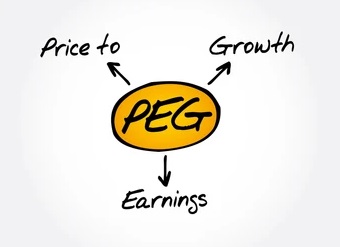
The PEG Ratio or Price Earnings to Growth Ratio determines a stock’s value while considering future earnings growth. Like the P/E Ratio, the PEG Ratio is used to get a better understanding of whether a company’s stock is overpriced, underpriced or right (priced). The PEG Ratio uses the P/E Ratio of a company and compares it with that company’s annual growth rate. If a company’s stock is priced, then its P/E Ratio should equal its annual growth rate. PEG Ratio is calculated as   = PE Ratio / Expected Earnings Growth (%) The P/E Ratio is the ‘Price to Earnings’ Ratio’ The expected earnings growth will be in percentage form and is available from the company’s annual report. A PEG ratio of 1 suggests equilibrium between market value of stock and anticipated earnings. It means that the stock is priced, and current market price (numerator) justifies the anticipated growth rate (denominator). For Example: A company stock has a P/E of twenty. Analysts feel that the stock has anticipated earnings growth of 12% over the next five years. PEG Ratio =  20 / 12 =  1.66                               Here, stock prices are higher than its earnings growth. This means that market price is higher compared to anticipated earnings growth. This can be attributed to ‘hype’ or undue enthusiasm in the market for that stock. To keep up with the market hype, the company will now have to grow faster. This means that if the company does not grow at a faster rate, the stock price will decrease (stock price correction will occur as hype will die down). Another example… Another company’s stock has a P/E of thirty. Analysts feel that the stock has an anticipated earnings growth of 40% over the next five years. PEG Ratio =  30 / 40 =  0.75 Here, stock prices are lower than its earnings growth. This means that market price is lower compared to anticipated earnings growth. This tells us that the company’s stock is undervalued. Stocks are trading in line with the growth rate and the stock price has potential to increase in future. Some thumb rules… PEG Ratio greater than 1 means:- The market’s expectation of growth is higher than analysts’ estimates. The stock is currently overvalued due to heightened demand for shares (investor hype). PEG Ratio less than 1 means:- Markets are underestimating the projected growth, and the stock is thus undervalued (a contra pick). Analysts’ estimates of future earnings growth are currently set too high. Advantages of PEG Ratio… Investors prefer PEG because it puts a definite value in relation to the expected growth in earnings of a company. PEG ratio can offer a suggestion of whether a company’s high P/E ratio reflects an excessively high stock price or reflects promising growth prospects for the company. Disadvantages of PEG Ratio… Less appropriate for measuring companies without high growth. Large well-established companies, for instance, may offer dependable dividend income but little opportunity for growth. A company’s growth rate is an estimate and is subject to limitations of projecting future events i.e., in this case estimated growth rate is only an estimate based on past trends.  

Price Earning to Growth Ratio Read More »

UDGAM

UDGAM – Unclaimed Deposits Gateway to Access Information This portal has been developed by RBI for use by members of the public to facilitate and make it easier for them to search their unclaimed deposits across multiple banks in one place. The establishment of the web portal would make it easier for consumers to locate their unclaimed deposits and accounts, giving them the option to either make their deposit accounts active or collect the deposit amount. Users will have access to information about their unclaimed deposits for the seven banks already included on the portal thanks to UDGAM. Any deposits in a savings, current, or fixed deposit are categorized as “Unclaimed Deposits” if they haven’t been used for 10 years. Unclaimed deposits are defined as “balances in savings/current accounts that are not operated for 10 years. term deposits that are not claimed within 10 years of the maturity date. Bank’s transfer these funds to the Reserve Bank of India’s Depositor Education and Awareness (DEA) Fund. Bank depositors have the right to reclaim unclaimed funds from the bank where they were held, including any accrued interest, even after the funds are transferred to the DEA. The RBI observed that despite efforts to increase public awareness in a statement from July 2022 that the number of unclaimed deposits was rising. However, despite periodic public awareness initiatives by banks and the RBI, the number of Unclaimed deposits is showing a growing trend. List of banks available on centralised web portal for unclaimed deposits 1. State Bank of India 2. Punjab National Bank 3. Central Bank of India 4. Dhanlaxmi Bank Ltd. 5. South Indian Bank Ltd. 6. DBS Bank India Ltd. 7. Citibank The search feature for the remaining banks on the portal would be rolled in by October 15, 2023.

UDGAM Read More »