Rajen Gala

Currency Wars

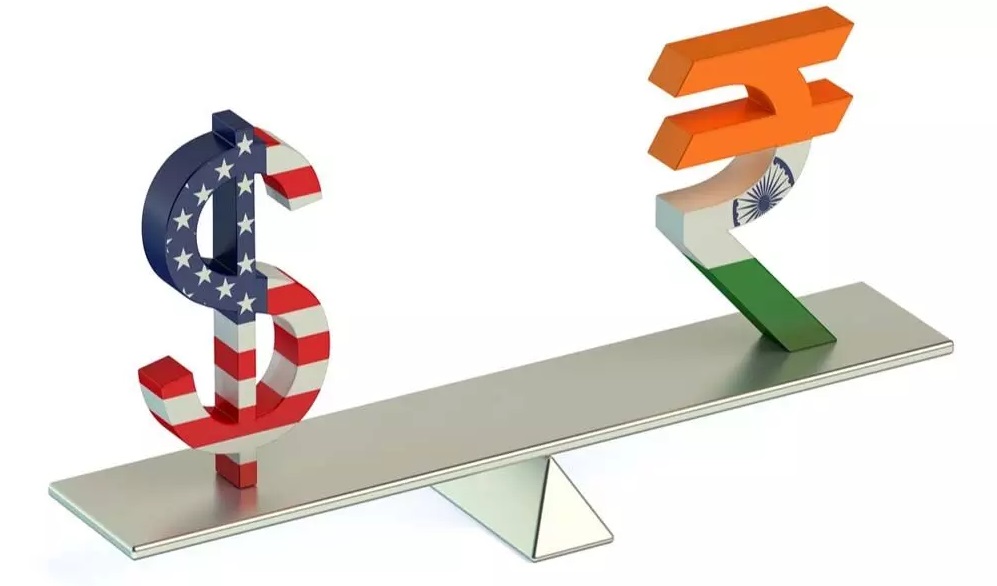
What’s all this about currency wars? To understand currency wars it’s important to understand how the value of currency of a country would impact its economy with respect to the currency of a trading partner. Let us, as always, simplify with an example. Say the cost of a hair dryer in China is Yu 100. Let’s also assume there is a huge demand for this product in the US. Let’s assume that the exchange rate is Yu 50 per USD. This means that if a consumer in the US wants to buy this item from China, he will need Yu 100. To buy Yu 100, he will need $2 (since exchange rate $1= Yu 50) Hence the item would cost him US $2. Now let’s assume China decides to devalue its currency… Currently a consumer had to pay $1 to get Yu. 50 Let’s say after devaluation the exchange rate is $1 = Yu. 100 So, in this exchange rate regime the item which was earlier costing $2 would cost only $1 Thus, for the US customer the cost of the Chinese product has halved. Hence, he is likely to increase his demand for the product and prefer it over other such products manufactured elsewhere due to the price advantage. But please note that the Chinese manufacturer, in both the cases, gets Yu 100 for the product. This means that by devaluing the Chinese Yuan, the product gets cheaper in the US without hurting its price in China. So, while China continues to earn the same per item, the US customer has to pay only half the price. So naturally US customers would prefer to buy this item from China. Therefore, China would sell more of this item in the US and its market share would go up substantially. Thus, China stands to gain due to higher profits earned by way of devaluation. Seeing China gain by devaluing its currency, other countries who are adversely affected by China’s move would naturally want to devalue their currencies as well so that they too remain in the race of exporting their goods to the US. This is the start of a Currency War. In this race of currency devaluation, the US which is one of the largest consuming countries gets affected badly as well. Goods manufactured in the US become uncompetitive both in its own market as well as in International markets. This leads to lower profits of US companies leading to layoffs which, in turn, gives rise to social problems there. This is precisely why the US wants China to appreciate their currency and create a level playing field. If China fails to pay heed to the US’s requests, the option available to the US could be to levy duties on the imported Chinese goods to the extent that it would become expensive for the local buyer and thus make it competitive with local products. However, this would go against the spirit of free world trade and hence is not as easily implementable as it appears. Clearly the artificial devaluation of a currency affects: Other exporting countries who too have to resort to such devaluation. Importing countries by making their own products uncompetitive. This artificial altering of exchange rates creates hostility between the countries leading to what is now famously called Currency Wars.
Currency Wars Read More Β»

How to Buy Gold?

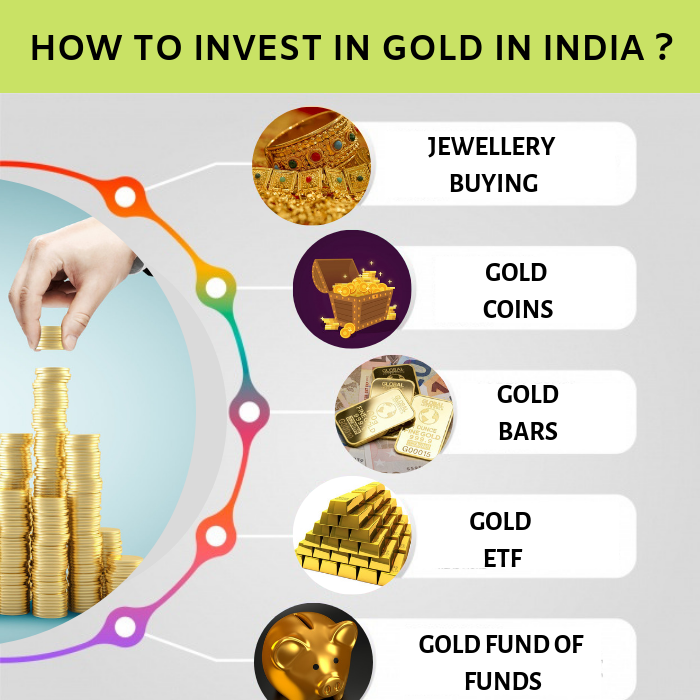
Indians’ love for Gold is inevitable. Akshaya Tritiya has always been considered as one of the auspicious occasions to buy gold according to Hindu traditions, but when there is inflation in the market and gold prices are soaring, making informed gold investment choices is the need of an hour. It has been witnessed that investing in physical gold in the form of either gold coins or jewellery has been the most conventional option for consumers. The cost such as making charges which can go up to as high as 25% to 30% of the gold price and GST at 3%, are irrecoverable on resale. The purity and safety of Gold will depend upon the shop you buy form. Over the years Physical Gold has served as a hedge fund against inflation. There is always a fear of theft and the risk of loss. For physical gold the investor has to buy at least 10grams and pay coin making charges. Many digital platforms have come up, that allow to invest in gold digitally. One can transact any time just by clicking a button and can also convert the digital gold into physical coins or bars. In such platforms the fear of getting duked in terms of the authenticity of the gold is minimum. It represents certified 24 Karat gold of 99.99% purity. If you are running out of money but want to invest on digital gold then there are many portals that let you invest in it only at the cost of one rupee. The whole process of buying the digital gold is quite transparent it is well regulated and severely documented process. There is no scope for adulteration on landing in a fraud circumstances. GST is applicable on digital gold. Gold Exchange Traded Funds (ETFs) and Sovereign Gold Bond (SGB), are the smart way to invest in Gold. There is no GST on investing in to Gold ETFs and Sovereign Gold Bonds. Gold ETFs are listed on the exchanges and invest in physical gold. These are essentially gold linked Mutual Funds whose value goes up when the metals value appreciates. Each unit of Gold ETF represents 0.01 gram or 1 gram of 24 Karat gold depending on which Gold ETF you buy. Gold ETFs provide ample liquidity as they can be sold on exchange anytime. Gold ETFs charge an expense ratio that includes charges for storage and handling of gold, as well as the insurance cover to protect the gold kept in vaults against calamities or disasters. Sovereign Gold Bonds are government securities denominated in grams of gold. The Bond is issued by Reserve Bank on behalf of the Government of India. The Bonds are issued in denominations of one gram of gold. An individual can invest maximum for up to 4 kg of gold through SGBs, in a fiscal year. The Bonds bear fixed interest at the rate of 2.50 % per annum, payable semi-annually. SGBs assure market price of gold at the time of selling. SGBs come with a tenor of 8 years where no Long-Term Capital Gain is paid, if kept for the full tenure. It allows early redemption only after the fifth year from the date of issue where one has to pay Long-Term Capital Gains. The bond is tradable on exchanges, if held in dematerialized form. But low trade volumes can be a hinderance. Investors in Digital Gold, Gold ETFs and Sovereign Gold Bonds do not bear any making charges or premium. Also, they don\’t have to worry about purity, storage and insurance of gold. With the Russia Ukraine conflict, Gold has again immerged as the best investment avenues. In times of inflation, one may consider investing in digital or a paper gold as it is considered a safe haven since it holds its value better than currency backed assets which may rise in price but falling in value.

How to Buy Gold? Read More Β»

Bond Price & Yield

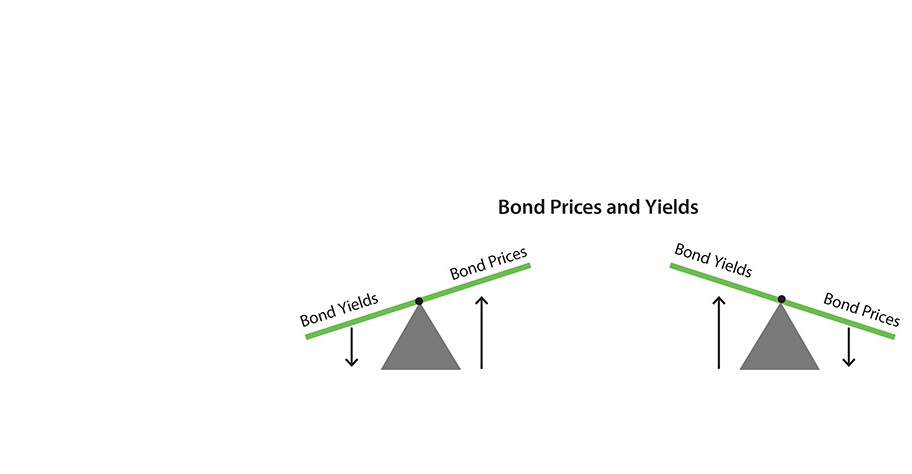
Why do bond yields go up, when bond prices go down? You might have come across a rule which states that When bond prices go down, bond yields go up & vice versa Let’s understand this rule. You will agree that when a seller of a goods sells at a lower cost, he makes a lower profit. However, the purchaser of the good makes a gain due to the attractive price of purchase. Now let’s understand with a simple example. Ravi has a corporate bond of Rs.100/- which gives him 10% returns per annum. In other words, the company would pay him Rs.110/- at the end of the year for the Rs.100/- loan that Ravi has given to the corporate. The 10% yield thus translates to a Rs.10/- profit for Ravi. Now let’s assume that Ravi has an emergency and needs money. He goes to his friend John who quickly realizes that Ravi needs money urgently. So, he makes and offer to Ravi to buy his bond for Rs.90/-. Ravi agrees to the offer and sells the bond for Rs.90/-. At the end of the year, John receives Rs.110/- from the corporate. Thus, John earns Rs.20/- from his investment of Rs.90/- in the corporate bond he bought from Ravi. Thus, John’s % return (which is popularly known as the yield)works out to: {20/90}x100 = 22.2% Thus, while Ravi was earning a return of 10%, the sale of the bond at a lower price of Rs.90/- translated into a gain for John in terms of higher yield which went up from 10% to 22.22%. Having understood the concept, it will not be difficult for you to appreciate the inverse relationship between the price of the bond and its yield (for the buyer of the bond). i.e., A bond’s yield goes up when its price goes down and conversely the yield of the bond comes down when the price of the bond goes up. When interest rates fall, it causes a fall in the value of the related investments. However, bonds that have been issued will not be affected in such a way. They will keep paying the same coupon rate as issued from the beginning, which will now be at a higher rate than the prevailing interest rate. This higher coupon rate makes these bonds attractive to investors willing to buy these bonds at a premium. Conversely, when interest rates rise, newer bonds will pay investors better interest rates than existing bonds. Here, the old bonds are less attractive and will drop their prices as compensation and sell at a discounted price.

Bond Price & Yield Read More Β»

Currency Derivatives

One of the most exotic terms in derivative trading is Currency Derivatives. But what are currency derivatives? And how are they transacted? Let me try & simplify the term, Let’s say there is a farmer who grows tea in India, which is exported to the USA. And there is an importer of tea in the USA. Let’s assume the current rate of exchange is Rs. 80 for 1 USD. Assume that the tea grower agrees to supply 10 quintals of tea to the importer at 10 dollars a quintal three months down the line upon harvesting. (1 Quintal = 100 kgs) It is important to understand that the importer buys tea at 10 dollars a quintal, no matter what the exchange rate is. The tea grower thinks that the rate of exchange, which is currently trading at Rs.80/- to a US dollar, could fall to Rs.78/- in 3 months. This means that while the importer would pay her 100 dollars ( $10 per quintal x 10 quintals = $ 100), she would earn only Rs.7800/- ( $100 x Rs.78/- per dollar) instead of Rs.8000/- ( $100 x Rs.80/- per dollar) thus incurring a loss of Rs.200/-. (Rs. 8000/- – Rs.7800/-) So the tea grower goes to a currency trader and signs a β€˜forward contract’ which says that at the end of 3 months the currency trader would hedge her against a possible decrease in exchange rates. This means that, at the end of 3 months, the currency trader would pay her Rs.8000/- for her 100 USD, no matter what the prevailing exchange rate. Such a contract is called a Currency Derivatives contract because it is a currency contract that has to be executed at some future date. Now, let’s look at 3 different scenarios: 1st scenario: Say that after 3 months the rate of exchange remains Rs.80/- to a USD. In this case the farmer will take the 100 USD she has received from the importer & go to the currency trader. The trader will pay her Rs.8000/-, as per the contract. So the tea grower makes Rs.8000/- in all. Β Now, let’s look at the 2nd scenario: Say that after 3 months the rate of exchange reaches Rs.82/- to a USD (i.e. $100 = Rs.8200/-) In this case the farmer’s call was wrong. She will take the 100 USD she has received from the importer & go to the currency trader. The trader will pay her Rs.8000/-, as per the contract and would sell off the 100 USD in the market for Rs.8200/-, thus making a profit of Rs.200/-. Β Now, let’s look at the 3rd scenario: Say that after 3 months the rate of exchange drops to Rs.78/- to a USD. ($100 = Rs.7800/-) In this case the farmer’s call was right. She will take the 100 USD she has received from the importer & go to the currency trader. The trader will pay her Rs.8000/-, as per the contract thus incurring a loss of Rs.200/-. Thus, while the tea grower may not make any profit if the rupee becomes weaker against the dollar, she will definitely profit if the rupee appreciates & drops below Rs.80/-. But at least she would have been at peace for the period of 3 months since she remained protected against any kind of fall in the rupee.

Currency Derivatives Read More Β»

LiquiLoans

LiquiLoans is a Profitable RBI Regulated Peer-to-Peer (P2P) NBFC founded in 2018. LiquiLoans is one of the only P2P platforms in India which provides investors an access to India’s Prime Retail Borrowers i.e., Safest Borrowers. LiquiLoans is founded by Mr. Gautam Adukia and Mr. Achal Mittal who have previously co-founded a successful rental platform Rentomojo (currently valued at over Rs. 950+ Crores). Together they have 25+ years of banking and start-up experience (Rentomojo, HSBC, ICICI, IIFL Wealth etc.) LiquiLoans is funded by Matrix Partners, which has invested in various marquee companies like Ola Cabs, Practo, Quikr and Cloud Nine. Other Marquee Angel Investors include CEO of CRED and Barclays Wealth Management. What is the role of LiquiLoans? LiquiLoans as a platform plays a critical role by assessing each investor to safely lend funds to only multiple creditworthy retail borrowers who pass the stringent credit assessment, thereby enabling investor to earn a high return by taking minimum / nil risk. Who are creditworthy retail borrowers? In India, all retail borrower’s get a credit score from (CIBIL) Credit Information Bureau (India) Limited, Experian Credit Score, CRIF Mark Credit Information (Top credit Rating Agencies for Individuals) basis their repayment performance which showcases their ability and intent to repay multiple credit lines / loans. These scores are in the range of 300 to 900 wherein prime borrowers i.e., borrowers having a high score (Average 700+) showcase that the borrower has been regularly repaying multiple credit lines/loans i.e., has demonstrated high ability & repayment intent. LiquiLoans sources such prime Borrowers, ensuring all investors on the platform get a diversified and safe exposure to such borrowers. How are high quality Borrowers Sourced? To source high quality prime retail borrowers LiquiLoans has tide up with, India’s largest service providers : 250+ Partners Services Offered: Up-skilling Education (Online MBA, Coding, Quant Trading, Data Science Courses, etc.) Discretionary Non-Fatal Healthcare (Hair & Skin Care, IVF and Stem Cell Procedures) and Home Decor (Upgradation of Self Owned Residential Property – Modular Kitchen etc.) Loans Offered: Largely No Cost EMI Loans Average Loan Value: Rs.50,000/- (Maximum up to Rs.10 Lakhs) Average Loan Tenure: Less than 12 Months (Maximum up to 36 Months) Revenue Model: Earnings via upfront discount (Subvention) offered by service providers for all approved customers. How are the borrowers evaluated? LiquiLoans sources only prime retail borrowers who are not credit hungry i.e., opt for a No Cost EMI Consumer Loan solely as a payment flexibility for their service being consumed from one of LiquiLoans’ Vendor Partners. Nearly 100+ data points are checked before approving the loan. How does LiquiLoans assist an investor to recover their money in case of a delay / default? All borrowers sourced by LiquiLoans mandatorily sign an auto-debit mandate before availing the No Cost EMI Loan, making it easy to collect EMIs on time. This ensures automated recovery on each due date as the borrower’s bank account is auto-debited and the EMI gets transferred directly to the Escrow bank account with IDBI Bank. To ensure minimal delay/defaults, LiquiLoans has multiple internal & external safeguards. Why is LiquiLoans safe? High Margin of safety: Investors have approximately 13% Plus safety margin i.e., unless the NPAs increase by approximately 13% the investor shall continue to earn back their full capital & indicate return. Currently the gross NPAs (Loan Defaults) are only around 0.64% (highest recorded was just 1.63% in peak covid in October 2020. Since inception, 100% of investors have made full return with LiquiLoans. Investments are spread across 200-300 plus prime retail borrowers. Exposure to single borrower is less than 0.50% High diversification amongst prime borrowers reduces concentration risk. LiquiLoans platform earns only after the investor. Investment plans Liquid Plan with 8% XIRR, Invest and withdraw any time, best corpus for emergencies, more interest than savings bank account. Short duration plans ranging from 3 Months, 6 Months, 12 Months , 12 Months, 24 Months & 36 Months, Interest ranges from 8.6% XIRR to 9.35% XIRR Flexi Lock-in Plans 12 Months, 24 Months & 36 Months where one gets benefit of earning higher returns with the option to withdraw any time. One can park money for use during unplanned expenses. Interest approximately 9% XIRR. There is option of smart SIP with minimum Rs.5,000/- Investment per month with 8% XIRR and one can withdraw anytime. Β Interest Pay-out Plans Monthly Interest Pay-out Cumulative Interest Pay-out (Growth) How much can one invest? Minimum Investment amount is Rs.10,000/- and Maximum Investment amount is Rs.50,00,000/- Who can Invest? Individuals (18 years older or above), Hindu Undivided Family (HUF), Corporate (Incorporated under Indian Companies Act or RBI Listed Finance Companies), Partnership Firm, Limited Liability Partnership( LLP), Body of Individuals, Society, Artificial Body. Even an NRI can invest.

LiquiLoans Read More Β»

Speculative Attacks

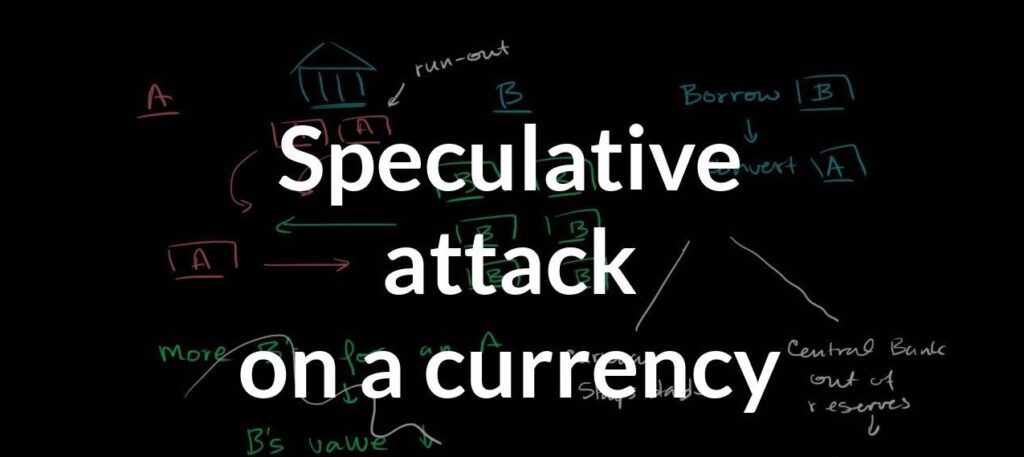
We have all heard of Financial speculation, which involves the buying & selling of stocks, bonds, currencies, real estate or any other valuable financial instrument owing to anticipated fluctuations in its price with the aim of profiting from it. Simply put… Financial Speculation is the process of selecting investments with higher risk in order to profit from an anticipated price movement. Speculation should not be considered purely a form of gambling, as speculators do make informed decisions before choosing to acquire the additional risks. In that sense, it is a positive, though risky, form of investing. But speculation cannot be categorized as a traditional investment because the acquired risk is higher than average. So, what are Speculative Attacks? A Speculative Attack, on the other hand, refers to massive selling of domestic β€˜currency’ in the forex market triggered by misinformation spread by speculators with the aim of profiting from the process. In that sense, it becomes a negative form of investing based on greed. How are Speculative Attacks set in motion? To give an example, if investors think that the present exchange rate (say Rs.80/- for $1) is overvalued, they might expect a devaluation (to say, Rs.84/- for $1) in the near future. This is what is called a negative expectation. Some greedy speculators spread misinformation about a possible devaluation in the near future in keeping with the negative expectations and spread panic in the market. So… Before the attack these speculators buy and hold foreign currency and when the devaluation in the domestic currency takes place, they exchange their foreign currency for a higher sum and thereby profit from it. Now… This triggers panic in the market causing a lot of other investors to also convert their domestic currencies to foreign currencies in a group to escape this loss of Rs.4/- (Rs.84/- – Rs.80/-) If the speculators had purchased foreign currency (at Rs.80/- for $1) before devaluation, then they would now earn a profit on it (by selling it to people at, say, Rs.82/- for $1 which would still be lower than the expected Rs.84/-) Thus… This possibility of earning a profit by artificially creating a fear of suffering a loss is what sets the wheels of speculative attack in motion. How does one fight it? Plan A: The central bank (the RBI) acting as a guardian of the exchange rate creates a fixed exchange rate system. To give an example, it starts selling foreign currency at a fixed rate of say Rs.80/- to undercut the greedy investors (who are selling it at Rs.82/-) by using the money lying in its reserves. Now… If the attack has been engineered by misguided investors, then timely intervention by the central bank may help stem the problem. But if the problem leads to a fundamental economic weakness, like depleting the reserves of the central bank, then Plan A may not suffice and the government would have to look at an alternate measure. So, Plan B… The RBI may simultaneously raise domestic interest rates, which makes investment in domestic currency more lucrative. High interest rate also makes it difficult to obtain domestic currency on credit for speculating in the FOREX market. This may help in controlling speculative attacks but may hurt the domestic economy. But what if Plan B does not work???? So, Plan C… Capital Fasting, in the forex market may also be used in the form of capital controls. The RBI may severely restrict the limit up to which residents can purchase foreign currency. But, use of capital controls during a crisis can seriously affect capital inflows in the future. After all, nobody would like to go to a theatre that shuts all the doors during a fire to prevent a stampede. Ultimately… The RBI also has to take note of all costs incurred to implement either Plan A, B or C and their respective benefits. If the costs outweigh benefits, and if there is a genuine demand for foreign currency, then the RBI may even let the currency devalue.

Speculative Attacks Read More Β»

Saving or Investing

What is better, Savings or Investing. First let us understand the basics. Savings Putting money aside gradually, typically into a bank account. People generally save for any emergencies that might come up. It states that individuals try to save more during an economic recession, which essentially leads to a fall in aggregate demand and hence in economic growth. According to Keynes, however, Saving is a private virtue but a public vice Saving is a private virtue since every individual is induced to save owing to the instinctive fear of future uncertainty and insecurity and, therefore, as a precaution, he saves to safeguard against future contingencies. Savings is a virtue at micro level since at micro level only single individual is doing saving which is not affecting our country GDP, but at the macro level, however, the demand for products and services can decrease if everyone starts conserving more money. Hence, GDP will fall. Due to which Whole system will get into the state of depression. In this way, saving, which is beneficial at a personal level actually becomes disadvantageous at public and national level. Investing Using some of your money with the aim of helping to make it grow by buying assets that might increase in value, such as stocks, property or units of a mutual fund, etc. Okay now let us understand why investing is better than savings. For example, if the inflation rate is 10% and if an individual saves Rs.100/-. After one year, the amount of Rs.100/- saved becomes Rs.90/-. But instead of saving, if an individual had invested the amount of Rs.100/- then the value would have increased. Excess liquidity for an individual can even create unnecessary small expenses. For example, if an individual has a goal of retirement or any other goals, investing money is the only option that will grow the corpus. Saving money without investing won’t help. When to invest money? Now this question is asked thousands of times. To make it simple, if the investment is for a long tenure, there is no particular time, the investment must be done as early as possible. That’s a simple rule that each and every person needs to follow. As we all know , if we work for money ,money also has to work for us.

Saving or Investing Read More Β»

BSE Sensex

The term SENSEX is a blend of words β€˜Sensitive’ and β€˜Index’. Sensex refers to the benchmarkΒ index of the BSE in India. The Sensex is comprised of 30 of the largest and most actively traded stocks on the BSE and provides a gauge of India\’s economy. It is the oldest index in India and provides time series data from 1979 (Sensex was 100 points), BSE, which was previously known as Bombay Stock Exchange. The index is calculated based on a free float capitalization method. Β Instead of using a company\’s outstanding shares it uses its float, or shares that are readily available for trading. Free Floating capital implies total capitalization less director’s shareholding. As per this method the level of index at any point of time reflects the free float market value of 30 constituent stocks relative to a base period. To give an example, let’s assume that Firm ABC has 100 shares. Out of these 100, 70 are available to the general public and 30 are owned by the government. This means that 70 are free-floating shares and thus the free float factor will be 70%. Market capitalization is the valuation of the company. It can be determined by multiplying the price of a share with the number of shares issued. So, how are these 30 companies selected? The BSE\’s criteria for selecting these companies are as followed, The stock should have a listing history of at least one year on BSE to be considered. The company should be in the Top 100 companies listed by full market capitalization. The Security should have been traded on each and every trading day for the last one year, BSE says. Exceptions to this can be made in case of extreme reasons. The Security should be in the Top 150 firms listed by average number of trades per day and by average value of shares traded per day for the last one year. In the opinion of the Index Committee, the firm should have an acceptable track record, BSE says on its website. How is Sensex different from Nifty?   NIFTY SENSEX Full Form Nifty Full Form- National Fifty Sensex Full Form- Sensitive Index Incorporation 1996 1986 Number of Companies Nifty is constituted by 50 of the largest and most liquid companies. Sensex is constructed by 30 of the largest and most actively traded companies. Base Year 1978-1979 1995 Base Value 1000 100 Volume & Liquidity High Low Former Names CNX Fifty S&P BSE SENSEX Number of Sectors Nifty cover 24 industrial sectors Sensex covers 13 industrial sectors Index Calculations Free Float Market Capitalization Free Float Market Capitalization Operated by India Index Services and Products (Subsidiary of National Stock Exchange) BSE (Bombay Stock Exchange)            

BSE Sensex Read More Β»

Liquidity Ratio

These days most people go for regular health check-ups in order to stay fit. During one such check-up, my friend was told that his blood sugar levels were higher than the normal range. Thus, the reading of his sugar level became an indicator that he should change his lifestyle, diet and exercise plans. Just as there are indicators which give us an idea of our health, there are indicators like Liquidity Ratio that give us an idea about our financial health too. One such liquidity ratio also known as acid test ratio which gives us an idea about how well prepared, we are to meet our emergency needs or short-term obligations. To illustrate, it indicates the number of months you can manage your expenses in case of a job loss where income stops. Liquidity Ratio = Liquid Assets/ Immediate Monthly Expenses Liquid Assets include any cash that you may have stashed away in your savings bank accounts or savings in fixed deposits or liquid category mutual funds. Equities & equity related mutual fund investments are usually not seen as liquid assets as they are subject to market movement. Immediate monthly expenses include rent payment or equated monthly instalments (EMIs), if any. In other words, expenses that cannot be delayed. On the other hand, insurance premiums or living & lifestyle expenses constitute outflows that can be delayed by a certain degree. For example, if your liquid assets are Rs 6 lacs. Say your monthly expense is Rs 1 lac. Then your liquidity ratio as per the formula would be 6/1 = 6. A liquidity ratio of 6 means that you can provide for 6 months of expenses without earning an income. So, what is the right number for the liquidity ratio? It is dependent from individual to individual. If a person has a large income and relatively low expenses, he need not have a high liquidity ratio. On the other hand, if a person does not have a steady flow of income, he should have a higher liquidity ratio. Considering a Company, a liquidity ratio is a type of financial ratio used to determine a company’s ability to pay its short-term debt obligations. The liquidity ratio affects the credibility of the company as well as the credit rating of the company. If there are continuous defaults in repayment of a short-term liability then this will lead to bankruptcy. Hence this ratio plays important role in the financial stability of any company and credit ratings. When analyzing a company, investors and creditors want to see a company with liquidity ratios above 1.0. A company with highly liquidity ratios is more likely to be approved for credit.

Liquidity Ratio Read More Β»

Nifty Indices

The indices are indicators that reflect the performance of a certain segment of the market or the market as a whole. A stock market index is created by selecting certain stocks of similar companies or those that meet a set of predetermined criteria. These shares are already listed and traded on the exchange. Each share market index measures the price movement and the performance of the shares that constitute that index. This essentially means that the performance of any stock market index is directly proportional to the performance of the underlying stocks that make up the index. In simpler terms, if the prices of the stocks in an index goes up, that index, as a whole, also goes up. Under Nifty structure there are 17 broad market indices   Other Nifty Indices   NIFTY Sectorial Indices 1 Nifty Auto 9 Nifty Pharma 2 Nifty Bank 10 Nifty PSU Bank 3 Nifty Consumer Durables 11 Nifty Private Bank 4 Nifty FMCG 12 Nifty Realty 5 Nifty IT 13 Nifty Financial Services 6 Nifty Media 14 Nifty Financial Services 25/50 7 Nifty Metal 15 Nifty Healthcare 8 Nifty Oil & Gas     NIFTY Thematic Indices 1 Nifty 100 Liquid 15 16 Nifty MNC 2 Nifty Aditya Birla Group 17 Nifty Mobility 3 Nifty Commodity 18 Nifty Non-Cyclical Consumer 4 Nifty Corporate Group Indices 19 Nifty PSE 5 Nifty CPSE 20 Nifty Service Sector 6 Nifty Energy 21 Nifty Shariah 25 7 Nifty ESG Index 22 Nifty Shariah Indices 8 Nifty Housing 23 Nifty SME Emerge 9 Nifty India Consumption 24 Nifty Tata Group 10 Nifty India Defence 25 Nifty Tata Group 25% Cap 11 Nifty India Digital 26 Nifty Transportation and Logistics 12 Nifty India Manufacturing 27 Nifty100 Enhanced ESG 13 Nifty Infrastructure 28 Nifty100 ESG Sector Leader 14 Nifty Mahindra Group 29 Nifty50 Shariah 15 Nifty Midcap Liquid 15 30 Nifty500 Shariah   NIFTY Strategy Indices 1 Nifty Alpha 50 11 Nifty100 Alpha 30 2 Nifty Dividend Opportunities 50 12 Nifty100 Equal Weight 3 Nifty Dynamic Asset Allocation Indices 13 Nifty100 Low Volatility 30 4 Nifty Equity Savings 14 Nifty100 Quality 30 5 Nifty Growth Sectors 15 15 Nifty200 Momentum 30 6 Nifty High Beta 50 16 Nifty200 Quality 30 7 Nifty Low Volatility 50 17 Nifty50 Equal Weight 8 Nifty Midcap 150 Quality 50 18 Nifty50 Value 20 9 Nifty Multi-Factor Indices 19 Nifty500 Value 50 10 Nifty Quality Low Volatility 30   NIFTY50 Variants 1 Nifty50 USD 6 Nifty50 TR 2x Leverage 2 NIFTY50 Dividend Points 7 Nifty 50 Arbitrage 3 Nifty50 PR 1x Inverse 8 Nifty 50 Futures 4 Nifty50 PR 2X Leverage 9 Nifty50 Equal Weight 5 Nifty50 Tr 1x Inverse National Stock Exchange of India (NSE) is the world’s largest derivatives exchange by trading volume (contracts) as per the statistics maintained by Futures Industry Association (FIA) for calendar year 2021. NSE is ranked 4th in the world in the cash equities by number of trades as per the statistics maintained by the World Federation of Exchanges (WFE) for calendar year 2021.

Nifty Indices Read More Β»