Financials

Future Contract

One of the most exotic terms in trading is “Futures”. A futures contract is a legal agreement to buy or sell a particular commodity asset, or security at a predetermined price at a specified time in the future. Futures contracts are standardized for quality and quantity to facilitate trading on a future exchange. The buyer of a futures contract is taking on the obligation to buy and receive the underlying asset when the futures contract expires. The seller of the futures contract is taking on the obligation to provide and deliver the underlying asset at the expiration date. Let’s say there’s is a farmer who cultivates wheat and a baker who needs wheat as an input for making bread. The farmer thinks that the price of wheat which is currently trading at Rs.25/- could fall to Rs.22.50/- in 3 months. The baker on the other hand feels that the price of wheat on the other hand might become Rs.30/- in 3 months. In such a case both get together and sign a contract which says that at the end of 3 months the farmer would sell wheat to the baker at Rs.27.50/-. Thus, the farmer is protected against possible fall in prices. And the baker is protected against the price of his input going up beyond Rs.27.50/- Such a contract is called a “Futures” contract because it is a contract that has to be executed at some future date. Thus “Futures Trading” is nothing but having a point of view about the  direction of the future price of a commodity/stocks/currency. And when two parties have opposite views about future price movements they obviously are open to sign a mutually beneficial deal like the farmer and the baker did in our example. Now, let’s say that after 3 months the price of wheat reaches Rs.30/- In this case the farmer will have to sell for Rs.27.50/- as per the contract and undertake an opportunity loss of Rs.2.50/- as his call that prices would go down was not correct. The baker on the other hand would be happy to receive wheat at Rs.27.50/- due to the “Futures Contract” at a time when the prevailing market price is Rs.30/-. Thus, he clearly makes a profit of Rs.2.50/- because his expectation on price movement turned out to be correct. However, at the end of the period both parties achieve their goals of protecting their interests. While there may be an opportunity loss of the farmer but still he lands up making a profit of Rs.2.50/- At least he would have been at peace for the period of 3 months since he remained protected against any price fall or loss. The baker on the other hand gets wheat at Rs.27.50/- and makes a clear gain of Rs.2.50/-. He can now plan his manufacture more profitably than his competitors who would buy in the market at the spot price of Rs.30/-. Since his call was right about the price movement, he landed up making the gain of Rs.2.50/- due to the futures contract. Thus, in a sense both parties landed up meeting their business objectives and the “futures contract” helped them plan their business well by protecting their interests against unpleasant price fluctuations. Thus, at the end one gains more and one gains less but both are happy that they could plan their business well.

Future Contract Read More »

Commodity Hedging

The commodity markets are made up primarily of speculators and hedgers. While speculators are all about taking on risk in the markets to make money, the function of hedgers is to reduce their risk of losing money. Hedging is a way to reduce risk exposure by taking an offsetting position in a closely related product or security. In the world of commodities, both consumers and producers of them can use futures contracts to hedge. Commodity hedging means reducing or controlling risk arising out of fluctuation in raw-material prices Commodity hedging is done by taking a position in the futures market that is opposite to the position in physical market Any buyer or seller facing the risk of volatile commodity prices can do commodity hedging after compliance with regulatory requirements. Hedging is a two-step process. For instance, a wheat farmer can sell wheat futures at current prices to protect the value of his crop prior to harvest. If there is a fall in price, the loss in the cash market position will be countered by a gain in the futures position. Thus, the farmer meets his objective of ensuring certainty in his revenue. Example… A farmer who has standing crop of basmati paddy would like to sell the crop in advance. Suppose in the month of August or September, the farmer sees the basmati paddy futures price for October contract and find the price favourable to sell. So, he sells the October futures basmati paddy contract through broker and delivers the material in the exchange designated warehouse before contract expiry, let’s say in September last week. The contract settles on 5th of October and he will get the payment by 7th of October. Delivery process and final settlement usually completed within 5 to 7 days. Similarly, a basmati exporter who requires paddy to make rice for export down the line in the month of October. He will buy basmati paddy futures contract at commodity exchange for October delivery by paying a small margin amount of only 5-10%. Upon contract settlement in the month of October he will make the payment to get the delivery. Key Takeaways Hedging is a way to reduce risk exposure by taking an offsetting position in a closely related product or security. In the world of commodities, both consumers and producers of them can use futures contracts to hedge. Hedging with futures effectively locks in the price of a commodity today, even if it will actually be bought or sold in physical form in the future.

Commodity Hedging Read More »

CIBIL Score

The word CIBIL stands for Credit Information Bureau (India) Limited. Since, CIBIL is one of the most trusted credit information companies in India, engaged in maintaining the records of all the credit-related activities of companies as well as individuals, including credit cards and loans, its score is referred to as your credit score. The words ‘CIBIL score’ are often used synonymously with ‘credit score’ and refer to a three-digit score between 300 & 900, which acts as a measure of your credit worthiness. The score is derived after taking into consideration your credit history and details found in your CIBIL report, which is maintained as a record by Transunion CIBIL. This information refers to all financial transactions where you have borrowed or repaid money. It’s an important factor that lenders look at while evaluating a loan application. Hence, it’s important to understand how the score is calculated. While there is a proprietary algorithm that determines your CIBIL score, the most important elements of the score composition are based on an individual’s loan payment behaviour. What is Credit Score? Credit score is important because it showcases how dependable or risky you are as a borrower. Thus, it has a direct impact on how eligible you are for a loan, what the lender will offer you as a loan amount, and the rate of interest you will be charged. Your credit score allows lenders to judge the potential risk in lending you money. As an individual, even businesses are given credit scores. For a business, the CIBIL score impacts how creditworthy a lender will find the company. A business credit score could also impact its ability to attract investment. Credit Score Range NA/NH: This means it is either ‘not applicable’ or ‘no history’ 350-549: A CIBIL score in this range is considered as a bad CIBIL score. 550-649: A CIBIL score in this range is considered as fair. 650-749: A CIBIL score in this range is considered that you are on a right path 750-900: This is an excellent CIBIL score  Calculation of Credit Score Credit bureaus in the country compute credit scores after taking into consideration several factors such as your credit history, repayment behaviour, and credit type, among others. There are four credit bureaus in the country – TransUnion CIBIL, Experian, Equifax, and CRIF High Mark. They are licensed by the Reserve Bank of India (RBI). The financial institutions in the country send your credit details monthly to these bureaus. Each credit bureau has its own algorithm and method of calculating scores. Payments History If you are not able to pay credit card bills and EMI on time, it will have the highest impact on your score. Credit Exposure It is advised to avoid delayed payments as well as missed payments, as they get reported and affect your score in a negative way. A long credit history works well for your credit score as it gives the lender an insight of your repayment patterns over time. Total types of account It is better to have a good balance of secured as well as unsecured loan in your credit history. How to maintain Good CIBIL score Your CIBIL score is based on your credit history and past payments, but it subsequently impacts your future access to credit. What you do today can help you build a stronger and healthier credit footprint. Pay your EMIs on time to create a proper track record Avoid having a credit card that you don’t use, cancel dormant credit cards Manage your credit cards carefully by setting payment reminders. Choose lengthy loan tenors with care and try to make part prepayments when you can Maintain healthy credit mix of secured and unsecured loans- too many unsecured loans may be viewed negatively Monitor your co-signed, guaranteed, and joint accounts monthly. Remember that you are held equally liable for missed payments in co-signed, guaranteed or jointly held accounts, and your joint holder’s (or the guaranteed individual’s) negligence could affect your ability to access credit when you need it.

CIBIL Score Read More »

How to manage your salary?

Money is one of the essential parts of life, without money it is difficult to survive. Early in our career, most of us don’t plan our finances. But remember this; the early bird gets the worm, and the early saver, gets a comfortable financial life. It is not important that your salary is high or low but everyone should focus on at least small investments as soon as they start with their jobs. Salary credit is not only news of a cash inflow, but it also puts a certain degree of responsibility on you. You need to make your money work hard so that you can gradually generate wealth for your future. Keeping your money into your savings account is not going to work at all. You need to plan for your future. Clear off your Debts You are earning and its your responsibility to pay off your debts. Also, don’t forget to pay your debts like credit card bills and other bill payments. They are required to be paid off on a monthly basis and you might end up in trouble if you don’t pay them off. You should calculate your monthly repayments for all debts and set aside money every month to ensure no defaults on payments. Have an emergency Fund You need to save money since future is uncertain and unpredictable. Emergency saving will come to your rescue when your boss fires you form the job or any unwanted things happen. Matters can be as small as replacing a mobile phone and as big as urgent medical treatment. An emergency fund keeps you well equipped for all situations. Ensure you have Insurance You absolutely need to think about your physical well-being, because it is the biggest asset you have. A health insurance is like a safety kit that you carry with yourself and no, you don’t have to pay a large premium. You need to protect your family and your loved one’s by having a term life insurance. So, if anything happens to you, your family is safe. To cover risk to a certain extent, you should consider purchasing proper health and life insurance policies. Stop thoughtfully We are always advised not to buy on impulse. Well, this advice sounds very good in theory. What should you do when you see an item you wanted being displayed on sale? Do you buy it, even if you had not planned for it? These are some of the issues you might be dealing with on a day-to-day basis. However, as a cardinal rule on how to spend your salary, you should avoid impulse buying at all costs. Before you buy something, think about it. Think about how that one purchase will affect you in the future. Start Investing now You probably are tired of hearing this, but start investing as early as possible. Investing has the power of compound effect, i.e., to earn income not only on the initial investment but also on the income of earlier years. Investing early increases the time span of the investment, which helps to ride the ups and downs of the financial market. Invest in such a way that the amount invested is diversified and reduces the risk. Outings Take a break once or twice a year from your hectic routine and plan a trip with your family and friends. Think of vacations as an investment to increase the size and value of that asset. A vacation is an opportunity to expand your horizons by travelling to new places, signing up for new experiences and creating memories that sustain you. Stop impressing People The average person spends far too much money merely trying to maintain an image. I do not mean that you should not aspire to buy fine things in life. What am basically saying is do it for you, not because you need to impress other people. Pay yourself First The idea of paying yourself first is at the heart of the ways on how to spend your salary wisely. Don’t forget yourself, spend money on yourself smartly. Keep a small part of your salary on keeping yourself fit.      

How to manage your salary? Read More »

Underwriting

Ramesh, a music lover was aware that the students of the city were dying to see the Rock Band, “Spark” perform in Mumbai. So, he approached his friend, Rohan, a seasoned businessman with the idea of hosting such an event. Rohan also felt that the idea was good and thought he could make a killing out of this. He decided to market the event. When he realized that the cost of marketing such an event was huge, he started getting cold feet. He started to think, “What if he did not get a full house? What if it started raining on the day of the event?” He knew that only a packed house would become “news” that would help his reputation. Sensing that indecisiveness was finding its way into Rohan\’s mind, Ramesh went on an overdrive to ensure that Rohan does not back out. Ramesh was convinced about the success of the idea. He walked up to Rohan and proposed that he would buy the unsold tickets, if there would be any. That assurance was good enough for Rohan to make his decision to go all out and invest the money in creating and marketing the event. This assurance of purchasing the unsold tickets is similar to what is popularly known as “Underwriting”. Underwriting is the process through which an individual or institution takes on financial risk. The risk generally covers insurance, loans, and investments. When a company is trying to raise money from the market by issuing shares. The underwriter is the person who helps the promoter in marketing the issue so that it either gets oversubscribed or 100% subscribed. Underwriting ensures that a company filing for an IPO will raise the capital needed and provide the underwriters with a premium or profit for their services.  

Underwriting Read More »

Why plan for your children?

Education is the key to turn a weakness into a strength. As parents you want to give the best for your children. Perhaps the top most priority for you is to provide your son or daughter a quality education. As we all know that good education is the process of facilitating  learning, or the acquisition of knowledge, skills, values, morals, beliefs and habits which provides social and material needs. However, this is easier said than done. You need to plan in advance, both financially and mentally, for your children’s future. Rising Cost of Inflation for Education Cost of education is going up every year due to inflation and increase in prices. Though government institutions like IITs, IIMs, IISc etc., are the first choice for higher education in India owing to their quality and brand, their limited number of seats force a majority of students to study in private institutions where costs may be higher. Hence, it is important that while planning for the future one needs to keep in mind the higher fees of private colleges. Planning to study abroad? Many parents these days dream to send their children abroad for higher education. These means higher costs for study abroad which will not only grow with inflation but will also rise if the rupee depreciates. Needless to mention, the earlier you start planning, the better it is. Hobbies? Remember, an education doesn’t just refer to the hours your child spends in school. The tuition fees you pay is only a part of the expenses that come attached with a good education. You will also need money to pay for any special classes or hobbies your child would like to explore. For example, your child might show interest in a sport like tennis. You should also factor in the cost of potential tennis lessons, the cost of buying racquets, balls specialised shoes and more. You can meet this goal with a meticulously planned and diversified investment plan between risky and safe instruments. The biggest threat to your child’s aspirations is the absence of their parents. Considering they are financially dependent on you; the death or disability of a parent can derail their future aspirations. So, it is absolutely mandatory that you buy term and health insurance. In fact, every time a family member is added, or your income grows significantly, it is pertinent that you must review your protection needs. Inculcating good financial habits is important so that your kids are well-equipped in managing their own money after a certain age. Setting monthly pocket money, teaching them budgeting and taxation are some vital lessons they must learn at a younger age. They can learn how to save money, invest money and compound money to overcome their future needs. To summarize, the key to planning for your child’s future is investing early and letting your money earn for you over a longer period of time.

Why plan for your children? Read More »

What type of investor are you?

What Type Of Investor Are You..? Have you ever wondered on the different type of investors in the stock market..? You will find a lot many based on the precedence and investment objectives. The stock market relatively works around the growth of companies and the overall trading power of the common man. It’s where the inflation and deflation of stock occurs, which cover the way for substantial gains and incremental losses. We all know that the stock market is quite volatile & at any given point, making any profits through small investments might seem a farfetched idea. Each person has individual reasons for buying a stock, and each person has a trading personality. Your trading personality depends on how much risk you can tolerate, what kind of research you are willing to do, where you think the economy is headed and how much of a hurry you are in. Despite all this individualism, trading styles boil down to a few distinct types. Consider which approach sounds like you. Active Investors If you look into the different types of investors in the stock market, the investors after having detailed research and analytics are called “Active investors” who are predominantly on the hunt for the next best thing in the stock market. It’s more likely that they revolve around the stock market 24/7 and are always glued to financial news channels, emerging trends around the stock market, and more. They don\’t necessarily buy one day and sell the next, but they do pay attention to changes in trends and buy or sell based on those trends. These types of investors are an avid investor who takes a great deal of care with each investment decision and does not necessarily hold an investment for long term. Passive Investors Passive investors are those investors that want peace in life and no stress about their investments. The perfect example is investments in mutual funds.  They may buy individual stock in established companies and hold that investment for a year or more. However, with such investments they don’t expect some vital improvements overnight as millions are investing in the same category. But, if you’re persistent and have the patience to sit out the waiting time frame, then becoming wealthy is also an option through this form of investing. Speculators Some investors look for a chance to make money fast. They search the market for stocks that are assured to go up. They scour the news for announcements about mergers that could affect a company positively, and then they dive on the stocks of those companies. Before the news gets official, these investors start investing in that company and wait for the prices to rise. With rising prices, they don’t wait for an extended period; instead, sell it off at a price that would fetch them some profits. They have a broad portfolio comprising of investments in various segments to gain vital returns. It is important to bear in mind that wealth creation is a time-consuming process and staying invested will bear fruit.  Each investor has their own will and way of making necessary investments and ensures that they get their returns no matter what. However, from the above-given list of investors, depending upon your financial status and inclination over investing in the stock market, a calculation and statistical investment can reap your fantastic benefits and higher returns. Taking a cue from Warren Buffett, he says, \”Success in investing is not associated with one\’s I.Q.\” At the end of the day, what one needs is the temperament to restrain impulses that usually get most people into trouble.

What type of investor are you? Read More »

Budgeting

As Warren Buffett said “If you buy the things you don’t need, soon you will have to sell the things you do need.” Budgeting is simply balancing your expenses with your income. If they don\’t balance and you spend more than you make, you will have a problem. Many people don\’t realize that they spend more than they earn and slowly sink deeper into debt every year. Why is budgeting important? In short, budgeting is important because it helps you control your spending, track your expenses, and save more money. Additionally, budgeting can help you make better financial decisions, prepare for emergencies, get out of debt, and stay focused on your long-term financial goals. But there are some budgeting  myths I don\’t need to budget I\’m not good at math My job is secure Unemployment insurance will tide me over I don\’t want to deprive myself I don\’t want Anything Big I\’m debt-free I always get a raise or tax refund I just don\’t have the discipline and so on. Let’s be honest, when you operate your finances without a budget, you don’t really have anything holding you back from spending beyond your means. You might have a general idea about how much money you can spend each month, but without hard, accurate numbers, it’s easy to lose control of your spending habits. If there is one thing in particular that doesn’t mix well with overwhelm, it’s personal finance. One of the best ways to combat financial overwhelm is to live your life on a budget. Budgeting helps to keep you on track when you are trying to achieve your financial goals. Setting goals is pretty easy. Anybody can do it. You just think of achieving something, and then set a defined timeline to achieve it. But, setting goals and actually achieving your goals are two very different things. In order to achieve a goal, you need to stick to a plan, and stay focused on a clearly defined process; and that’s where having a budget is so important. Budget should include an emergency fund that consists of at least three to six months, worth of living expenses. This extra money will ensure that you don\’t spiral into the depths of debt after a life crisis, since life is filled with unexpected surprises. How many nights have you tossed and turned worrying about how you will manage paying your bills? People who lose sleep over financial issues are allowing their money to control them. Take back the control. When you budget your money wisely, you\’ll never lose sleep over financial issues again. Longer you live without a budget, the easier it becomes for your financial life to get messy. Between all your monthly bills, debt payments, and all your other expenses, things can just slip through the cracks. In other words, it’s easier to live on a budget and keep your financial life organised. One of the more obvious benefits of budgeting is that it helps you save money.

Budgeting Read More »

Debt Service Ratio

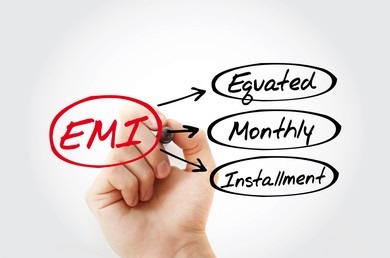
What is Debt Service Ratio? This ratio shows the portion of your income which goes towards servicing your debts, right from your home loan EMIs, to your credit card debt, to that small loan you\’ve taken from a friend. In short, this ratio tells you how deep you are stuck in a debt hole. To get an estimate of this ratio you need know the total debt you owe. Which is, all EMIs, for all loans. Then you need to know your total monthly income. Let’s say your house EMI is Rs. 25000/-, your car EMI is Rs. 5000/-, your personal loan EMI is Rs. 2000/- and your credit card bill is Rs. 3000/-. Thus, the aggregated value of your total EMI per month is Rs.  35,000/-. Let’s say your salary is Rs. 1,00,000/- per month. In this example your debt service ratio = Total EMI/Monthly Salary= (35000/100000)% = 35% So how much should the debt service ratio be? A 30% to 35%debt service ratio is considered normal. In case the income of an individual is low this ratio may go up to 40% to 45%. Anything above 45% is not advisable as that can bring you to the edge of a debt trap. Now that you know how to find out the debt-service ratio, find out what\’s yours and take the necessary action.

Debt Service Ratio Read More »

Sharp Ratio

When you decide to buy a car what is it that you evaluate? Is it only speed? size? Automatic driving? fuel efficiency… or style, snob value, & other specific features (like four-wheel drive) etc.? Chances are you look at most of these parameters before buying a car! Similarly, even in a mutual fund scheme the buying decision should not be a function of a single parameter. But, unfortunately most of us only look at “Returns” while evaluating a scheme As we all know, risk and return go hand in hand with investments. The higher the risks, the higher the gains and vice versa. So, when you look at returns in an isolated manner, it becomes difficult to compare them as one does not get an idea of the risk taken to achieve these returns. Hence, would you put in your hard-earned money in a scheme that is No. 1 today but could disappear out of sight tomorrow, or would you put it on a scheme that is No. 3 but will maintain its position in the long run? Therefore, reliability of the scheme is a critical aspect. In the context of mutual fund scheme’s reliability is nothing but volatility. A scheme on one hand may give good returns but on the other hand if it turns out to be volatile or unreliable may not find favour with investors. Hence this calls for a measure of performance which takes into account both returns as well as volatility / reliability. Sharpe Ratio is one such parameter which is both relevant and extremely significant while describing a fund’s characteristics. Sharpe Ratio expresses the relationship between performance of a scheme and its volatility. Mathematically it can be expressed as: Sharpe ratio = Average returns / Volatility Therefore, it becomes important to evaluate the returns of the schemes for the same amount of risk. Let me give you an example: Say you wish to compare the performance of two students A & B in their annual exams. Student A gets scores of 85, 60, 45, 100 & 60. Student B, on the other hand, gets scores of 70, 75, 60, 60 & 80. Who do you think performed better? If we calculate their averages, Student A: 85 +60+ 45 +100 + 60/ 5 = 350/5 = 70 Student B: 70 +75+ 60 +60 + 80/ 5 = 345/5 = 69 Here it looks like A performed better, right? Though Student A could have a  better average than B, his volatility seems higher. His scores range from 100 to 45. Upon calculating, his volatility comes to 19.74. Student B on the other hand did not deliver spectacularly in any particular subject, but he performed steadily. Upon calculating, his volatility comes to 8. Calculation for volatility is not part of this. Hence the Sharpe Ratio of A would be: 70/19.74 = 3.54 And the Sharpe Ratio of B would be: 69/8 = 8.62 Thus, despite a higher average, A’s Sharpe ratio is lower than that of B. This indicates that simply looking at performance from average marks point of view is not enough to judge performance. This is what Sharpe Ratio does. In a sense it measures performance by making their volatilities equal across schemes. In a sense  Sharpe ratio helps to compare apples to apples instead of apples to oranges. The Sharpe ratio thus provides the returns of the schemes per unit risk and tells us whether a fund’s returns are due to smart investment decisions or as a result of excess ‘risk’.

Sharp Ratio Read More »