Financials

Why jobs are lost?

The US dollar is considered to be a stable currency. Hence most countries invest in US Bonds (which is as good as investing in the US Dollar itself). The dollar is also known as the world’s reserve currency. Due to this demand for the US dollar on account of its stability, its value is strong relative to other currencies like the Chinese Yuan or the Indian Rupee. The outcome of a strong dollar (or a weak Yuan for that matter) has significant impact on both the Chinese and the US economies. For the sake of understanding, let’s assume 1USD = 100 Yuan This means that the US can buy a product costing 100 Yuan just for 1 dollar. As long as the dollar gets stronger and stronger, the US will find it cheaper to import. Let’s see how this happens. Suppose the US dollar were to get stronger as follows:- 1USD = 200 Yuan This means the same product which was costing an American 1 dollar would now cost only ½ USD.                                                                                    Or Even if  China were to raise the cost to 200 Yuan, the Americans would have to pay the same 1USD. This basically means that Chinese goods would be in demand in the US due to their cost advantage stemming from a strong USD against the Chinese Yuan. Quite evidently this would bring down the demand for American goods which simply cannot be manufactured at the price of Chinese goods being sold there. So, what can a strong US brand do to sell in US but at a lower price? One of the things the brand owner does is to move his manufacturing to China. The dollar is a strong currency and can buy a large number of Yuan. Hence the cost of buying land and setting up of the manufacturing plant seems low to the American industrialist. He can also employ Chinese workers at a much lower cost compared to American workers and make the same goods at a lower cost.  Thus By moving his manufacturing away into China, the American industrialist can now compete with the Chinese goods in US. Therefore, several big brands like Apple etc. have their manufacturing plants in different countries.  But By exporting their manufacturing to China, the US also exports away the jobs to China that would have otherwise got created for US workers. This causes unemployment in the US while enhances employment in China. US workers who still have jobs in the US struggle to keep them. They work longer hours but do not demand more money as they are more concerned about holding on their jobs. This situation gives rise to pessimism about their future and they start saving more and spending less. When this happens, the demand for goods and services further reduces and “recession” sets in. Thus, in this way having a strong currency can have a detrimental effect on jobs.

Why jobs are lost? Read More »

Money Supply

Let’s say you are extremely hungry. You go to the nearest restaurant. What is it that you would order when you are in such a state? Perhaps you would ask what can be prepared quickly because your hunger clearly seems to be getting the better of you. You would not order Biryani since it needs to be cooked slowly for it to taste really well. But if something is needed immediately the best option is sandwiches, snacks etc. Let’s say we term the quickly available snack items collectively as F1 and the food items in the menu that the restaurant serves (including those that can be served quickly) as F3. In short, Quick food items = F1 All food items in the Menu (including F1) = F3 Now if we were to replace the Food by Money the context changes as in Money which is easily available like the sandwiches, snacks etc. can be termed M1 while all the money that is there which includes M1 is then termed M3. Let’s analyze when money can be easily made available (M1). M1 is the money in your pocket or in your cupboard or in your savings bank account against which you can issue a cheque and buy goods and services immediately without resorting to any planning whatsoever. We also refer to this money as highly liquid currency. Similarly, the money which is readily available (M1) plus that which is parked as time deposits in the banks is together termed as M3. While M1 is liquid, the bank deposits are not easily usable because one would have to break the deposits first. Hence in comparison to M1, bank deposits can be seen as less liquid currency. So M3 = M1 + Time deposits with the bank. M3 is the broadest measure of money; it is used by economists to estimate the entire supply of money within an economy at any given point of time.

Money Supply Read More »

Balance of Payments

The balance of payments, is a statement of all transactions made between entities in one country and the rest of the world over a defined period. It summarizes all transactions that a country\’s individuals, companies, and government bodies complete with individuals, companies, and government bodies outside the country. Just like individuals, countries also have to maintain an account of all their dealings with the rest of the world. A record of all transactions of money moving in or out of a country over a period of time is what we call a Balance of Payment account. Broadly, we can divide a balance of payment account into two components: current account and capital account. So let’s understand the constituents of the current account, The current account first of all includes all transactions relating to exports and imports of physical goods, called visible trade. The current account includes receipts and payments in respect of services such as banking, tourism and intangible properties such as patents and copyrights, which is called invisibles The current account includes private transfers such as money sent by expatriate workers, dividends and interest payments, etc. The current account includes all official transfers between governments such as international aid. Now what comprises the capital account The capital account includes all transactions related to long-term capital flows between different countries, such as investment of money for purchasing land and factories, known as FDI. It also includes short-term capital flows such as investments in the stock market by FII or borrowing of money by firms (ECB – External Commercial Borrowings) & the government. In short, the capital account includes all transactions related to investment in either physical assets or financial assets of one country by the residents of another country. Now let me tell you the significance of a surplus or deficit in the balance of payments components. A surplus or deficit in different components of the balance of payments account can provide a snapshot of a country’s economy. A surplus in the current account may mean that the country is receiving more money by exporting its goods and services to other countries whereas a deficit indicates that the country is importing more goods and services from the outside world, for which it has to pay money. All surplus in the capital account indicates that foreign investors are investing more in the assets of the country than what the residents of that country are investing in the assets of other countries. A deficit in the capital account indicates that Indian investors are investing more in international markets as compared to foreign investors investing in India. The formula for Balance of Payments is Current Account + Capital Account + Financial Account + Balance Items = 0 The importance of the balance of payment in India can be determined as: It monitors the transaction of all the imports and exports of services as well as goods for a given period. It helps the government to analyze a particular industry’s export growth potential and formulate policies to sustain it. It gives the government a comprehensive perspective on a different range of import and export tariffs. The government could then increase and decrease the tax to discourage imports and encourage exports, individually, and self-sufficiency. In general, we can say that a surplus in the capital account means international investors have confidence in the domestic economy whereas a deficit could be due to lack of confidence. Always keep in mind that after taking all surpluses and deficits of current account and capital account, ultimately it is the overall balance in the balance of payment account that matters…

Balance of Payments Read More »

e-Rupee

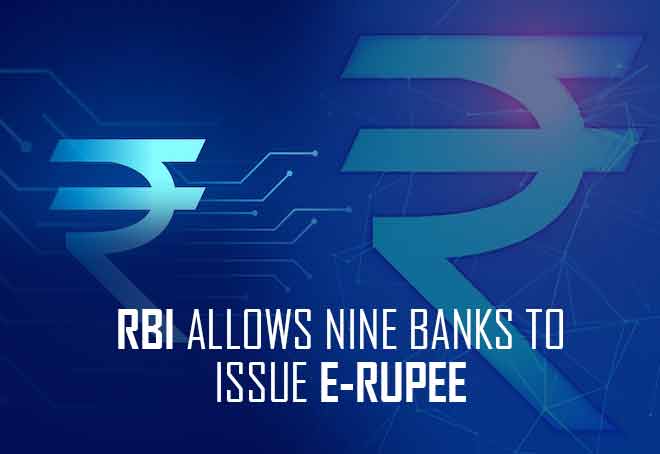
The Digital Rupee (e-Rupee) or (eINR) is the digital counterpart of physical cash, it is issued by the Reserve Bank of India (RBI) as a Central Bank Digital Currency (CBDC). On November, 1, 2022, the Reserve Bank of India  launched the first trial of the Digital Rupee (e-Rupee) in the wholesale segment for the government securities. The pilot launch  of e-Rupee for retail customers went live on 01st December, 2022, in Delhi, Mumbai, Bengaluru and Bhubaneshwar. The foundation of CBDC will be Block Chain technology. A blockchain is essentially a collection of blocks. Each block would contain a group of transactions. Specific computers will run the CBDC’s code and store its blockchain. A token-based system would provide universal access to e-rupee along with privacy by default. Thus, individuals will be able to pay Digital Rupee to whoever they want to via app. The RBI has initially selected nine banks to engage in the pilot project – State Bank of India, Bank of Baroda, Union Bank of India, HDFC Bank, ICICI Bank, Kotak Mahindra Bank, YES Bank, IDFC First Bank, and HSBC. If you are wondering how to use e-Rupee, it is not a rocket science. The process will rather be simple. Just like physical cash, e-rupee or digital rupee will work in similar simple denominations. For example, Rs.5/-, Rs.10/-, Rs.20/-, Rs.50/- Rs.100/-, Rs.200/-, Rs.500/-, and Rs.2000/-. This currency can be used for both person-to-person and person to merchant transactions. Additionally, these transactions will mostly be carried out via QR codes. e-Rupee will not earn you any interest, whereas your money in Bank Savings Account will earn 3.5% interest p.a. How it is different from UPI? One of the motivations behind launching a digital currency is to reduce settlement risk in the system. In the case of UPI transactions, the transfer of money involves a settlement process, where you place a request with your bank and the funds are then deducted from your account and transferred to the beneficiary’s account. But with e-rupee transfers, there is no intermediary. It is literally the electronic equivalent of handing cash over to another person. The money is never ‘in transit’; nor is there any need for inter-bank settlement. The e-rupees are simply transferred from one wallet to another and the funds become the property of the receiving party. The RBI has even mentioned an offline feature, which means that transactions can occur even without a mobile network. This could have serious implications for remote areas, where the penetration of digital payments has suffered. Why was the e-Rupee introduced? To reduce the cost associated with physical cash management. Increasing the adoption of digital currency. Supporting financial inclusion (especially via the offline feature in remote parts of the country with poor connectivity) A safe digital currency without any of the risks associated with cryptocurrency. Unlike perfectly anonymous cash, the RBI will be able to trace the spending patterns of citizens who use CBDC. To explore the application of CBDC to enhance cross-border transactions.

e-Rupee Read More »

e-Rupi

Do not get confused with e-RUPI and e-Rupee both are different. The e-RUPI is issued by RBI and is a legal tender in itself. It need not necessarily be backed by physical currency. The e-Rupee, however, can be used for digital payments in lieu of currency/cash. Today I will talk about e-RUPI. e-RUPI, a new digital payment solution built on the Unified Payments Interface (the \”UPI\”), was recently launched by the Government of India through a press note on August 02, 2021. As per the Government of India, e-RUPI is a revolutionary digital payment service that will ensure a leak-proof delivery of welfare services and it is projected to become the stepping stone towards having a digital currency. e-RUPI is a cashless and contactless instrument for digital payment that will play a significant role in making direct benefit transfer(DBT) more effective. This will provide a new dimension to digital governance. e-RUPI is a one-time use, prepaid e-voucher generated through partner banks participating in the UPI ecosystem, which can be sent by sponsors (government or private organisations) directly to the mobile phones of the intended beneficiaries in the form of an SMS-string or a QR code. The voucher is in the form of a pre-paid voucher which can be redeemed at the center that accept it. For example, if the Government wants to cover a particular treatment of an employee in a specified hospital, it can issue an e-RUPI voucher for the determined amount through a partner bank.  The employee will receive an SMS or a QR Code on his feature phone / smart phone.  He/she can go to the specified hospital, avail of the services and pay through the e-RUPI voucher received on his phone. This digital payment platform has been developed by the National Payment Corporation of India on its UPI platform in collaboration with The Department of Financial Services, the Ministry of Health and Family Welfare, and the National Health Authority. This initiative will connect the sponsor of services with the beneficiaries and service providers. This contactless e-RUPI is easy, safe and secure as it keeps the details of the beneficiaries completely confidential. The entire transaction process through this voucher is relatively faster and at the same time reliable, as the required amount is already stored in the voucher. e-RUPI should not be confused with Digital Currency which the Reserve Bank of India is contemplating.  Instead, e-RUPI is a person specific, even purpose specific digital voucher. e-RUPI works on simple gift-card based technology. You can present the code to a center, and they can immediately provide you with the amount. You will also not require any debit/credit card, mobile app, or internet banking to use the service. e-RUPI is a prepaid payment platform that does not require any service provider to make payments. Consumers are not obliged to divulge their personal information and only need to complete a two-step redemption process. They do not need to have any type of digital payment app or bank account, ensuring protection of their privacy. The payment method is completely contactless.

e-Rupi Read More »

Return on Networth (RONW)

Return on Net Worth (RONW) is used in finance as a measure of a company’s profitability. It reveals how much profit a company generates with the money that the equity shareholders have invested. Therefore, it is also called ‘Return on Equity’ (ROE). This ratio is useful for comparing the profitability of a company to that of other firms in the same industry. Return on Net Worth (RONW) Formula                                                                      RONW =    Net Income / Shareholder’s equity X 100    The numerator is equal to a fiscal year’s net income (after payment of preference share dividends but before payment of equity share dividends). The denominator excludes preference shares and considers only the equity shareholding. Example… A company’s net income for the year was Rs.1,20,000/- and shareholder equity for the year was Rs. 6,00,000/-. This gives us a Return on Net Worth of 20% (Rs.60,000/- net income / Rs.3,00,000/- shareholder equity). This means that for each rupee invested by shareholders, 20% was returned in the form of earnings. So, RONW measures how much return the company management can generate for its equity shareholders. Therefore… RONW is a measure for judging the returns that a shareholder’s gets on his investment. As a shareholder, equity represents your money and so it makes good sense to know how well management is doing with it. Let us now try to understand how RONW is a more appropriate tool for decision making than ROCE. Difference between Return on Capital Employed (ROCE) and Return on Net Worth (RONW). Example of ROCE… A and B both started a business by investing initial capital of Rs.20,000/- each. After one year, A had an after-tax profit of Rs. 8,000 while B made only Rs.6,000/-. The return on capital employed for A was 40% (Rs.8,000/- / Rs.20,000/-) while for B it was 30% (Rs.6,000/- / Rs.20,000/-). On the face of it, it appears that A was the better manager since he earned more profit and therefore a higher return than B – though both started their businesses with the same amount of initial capital. So, therefore as an investor you are likely to feel encouraged to invest in A rather than B But, RONW says… Now, assume that A’s business had shareholder equity of Rs.90,000/- and net income of Rs.8,000/-. While B’s business had shareholder equity of Rs.60,000/- and net income of Rs.6,000/-. RONW of A is Rs. 8,000 / Rs. 90,000 = 8.88% RONW of B is Rs. 6,000 / Rs. 60,000 = 10% Now, with this measure of RONW, we find that B has done better than A! To sum it up… ROCE considers total capital which is in the form of both equity and long term debt such as loans and borrowings. While RONW considers only equity shareholding as the base for deciding efficiency of a company’s operations. So, for an equity investor, RONW is a better measure of efficiency than ROCE, since he is interested in knowing the return on his equity investment rather than return on the company’s total capital. So…. ROCE is an appropriate measure to get an idea of the overall profitability of the company\’s operations. While RONW is an appropriate measure for judging the returns that a shareholder gets on his investment. Hence successful investors like Warren Buffet assign more importance to a company’s RONW to understand their investment growth potential.

Return on Networth (RONW) Read More »

Return on Capital Employed

Return on Capital Employed Return on Capital Employed (ROCE) is used in finance as a measure of returns that a company is realizing from its capital employed. Capital Employed is represented as total assets minus current liabilities. In other words, it is the value of the assets that contribute to a company’s ability to generate revenue. ROCE is thus a ratio that indicates the efficiency and profitability of a company’s capital investments (stocks, shares and long term liabilities). Return on Capital Employed (ROCE) It is expressed as:-                                                                          ROCE =    Earnings / Capital Employed  X 100   The numerator is Earnings before Interest & Tax. It is net revenue after all the operating expenses are deducted. The denominator (capital employed) denotes sources of funds such as equity and short-term debt financing which is used for the day-to-day running of the company.  What does ROCE say… It is a useful measurement for comparing the relative profitability of companies. ROCE does not consider profit margins (percentage of profit) alone but also considers the amount of capital utilized for those profits to happen. It is possible that a company’s profit margin is higher than that of another company, but its ability to get better return on its capital may be lower. So, ROCE is a measure of efficiency also For Example… Company A makes a profit of Rs.200/- on sales of Rs.2000/- Company B makes a profit of Rs.300/- on sales of Rs.2000/- In terms of pure profitability, Company B has profitability of 15% (Rs.300/-  /  Rs.2000/-) x 100 This is far ahead of company A which has 10% profitability (Rs.200/-  /  Rs.2000/-) x 100 Now… Let us assume that Company A had employed Rs.1000/- of capital and Company B used Rs.2000/- to earn their respective profits. So, ROCE of A is:- (earnings / capital employed) (Rs.200/- /  1000/-) X 100 = 20% While ROCE of B is:- (Rs.300/- /  2000/-) X 100 = 15% Thus, ROCE shows us that Company A makes better use of its capital, though its profit percentage is lower than that of Company B. In other words, it is able to squeeze more earnings out of every rupee of capital it employs. Usually… ROCE should always be higher than the cost of borrowing. An increase in the company’s borrowings will put an additional debt burden on the company and will reduce shareholders’ earnings. So, as a thumb rule, a ROCE of 20% or more is considered very good. If a company has a low ROCE, it means that it is using its resources inefficiently, even if its profit margin is high.

Return on Capital Employed Read More »

Dollex & Defty

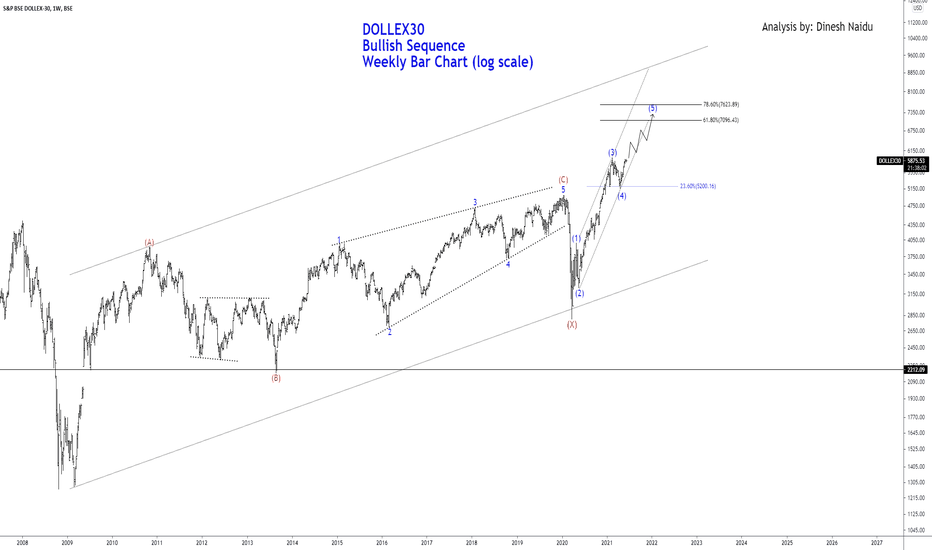
The S&P BSE Sensex and the CNX Nifty are the barometers of the Indian equity markets. The top 30 companies in terms of market capitalization constitute the Sensex and in Nifty it is the top 50 companies. Did you know that the Sensex and the Nifty have dollar-term versions of themselves? BSE Ltd’s Dollex-30 and NSE Defty are indices that are adjusted for exchange rate movements between the dollar and rupee. The constituents remain the same and so do the weightage of the stocks in the indices. The S&P BSE Dollex 30 is the US dollar version of the S&P BSE SENSEX. The S&P BSE Dollex 30 index continuously adjusted for exchange rate movements between the dollar and rupee. On the BSE, it is not just the Sensex that has a dollar version of itself, but the BSE 100 and BSE 200 also have dollar equivalents; called Dollex-100 and Dollex-200. The NSE Defty is to the NSE Nifty what the Dollex is to the Sensex. The NSE Defty is dollar-denominated Nifty. So, if the rupee/dollar equation changes, that change is reflected in the NSE Defty vis-a-vis the Nifty. These indices were developed by the exchanges to provide a benchmark to foreign institutional investors (FIIs) and off-shore funds, to provide them with an instrument for measuring returns on their equity investments in dollar terms. Relevance of these indices Indices such as the Dollex and the Defty will be most relevant to those investors who have invested in Indian equities via dollars. Other than FIIs, there are non-resident Indians (NRIs) who invest in equities in India using dollars. Since these indices take into account currency fluctuations, the returns compared with the rupee-term indices will be different.

Dollex & Defty Read More »

Agro Commodity

India is predominantly an agrarian economy, ranking second in farm production in the world. While keeping pace with the increasing population, the growing agricultural production over the past several decades has thrown up major challenges in marketing, as well as supply, storage, and distribution. Agri commodity trading takes place via future contracts. These contracts can be used for hedging against risk or an opportunity to profit from speculation. A commodity is an essential product. Agro commodities fall into the category of soft commodities; hard commodities are usually mined products. The agri commodity markets do not exist for every agricultural product. Agri commodity trade takes place only in major commodities on six commodity exchanges in India. These products are generally cash crops. Some frequently traded products are spices, cereals, pulses, oilseeds, rubber, fibers like cotton and jute, dry fruits, etc. Commodity trading in agro products helps to develop efficient hedging and speculation strategies. For instance, if there is a marked change in future prices, because of existing spot prices, an efficient hedging strategy can be made. On the other hand, if changes in future price impact existing spot prices, an efficient speculation strategy can be formulated. Thus, on the basis of current trends in the market, it allows for finding future prices. For both retail and corporate investors, trading in agricultural commodities provides them an opportunity to diversify their portfolios. Trading in commodities has become as easy as trading in conventional stocks and securities. All you need is to open a Demat Account and a Trading Account, and complete the requisite formalities. For making most of your investments in agro commodities, industry experts suggest taking into account supply and demand-based factors along with seasonal and weather-related variables. “Agriculture is our wisest pursuit, because it will in the end contribute most to real wealth, good morals, and happiness” – Thomas Jefferson

Agro Commodity Read More »

Commodity Exchange

A commodity exchange is an exchange where various commodities, agricultural and non-agricultural, tangible or intangible, including their derivate products and other raw materials are traded. The commodity exchanges in India are regulated by the Securities and Exchange Board of India (SEBI) since 2015. Prior to this, the FMC or Forwards Market Commission, overseen by the Ministry of Consumer Affairs regulated the Indian commodity exchanges. Mostly the different commodities are classified into agricultural and non-agricultural commodities. The non-agricultural commodities can be further sub-classified into three different categories – bullion, energy, and base metals. Here’s a brief list of the different types of commodities under each category that is regularly bought and sold in the exchanges. Base Metals – Aluminium, copper, lead, nickel, and zinc Bullion – Gold and Silver Energy – Crude Oil and Gas Agriculture – Black Pepper, Cardamom, Castor Seed, Cotton, Palm oil, Kapas, Wheat, Paddy, Chana, Bajra, Barley, and Sugar, among others. Most commodity markets across the world trade in agricultural products and contracts based on them. These contracts can include spot prices, forwards, futures and options on futures. There are six commodity exchanges in India. National Multi Commodity Exchange, established in 2002, Headquarter : Ahmedabad. Trading Commodities : Castor Seeds, Rapeseed, Mustard, Soyabean, Seasame, Copra, Black Pepper, Gram, Gold, Aluminium, Copper, Lead, Nickel, Zinc, Rubber, Jute, Coffee, Isabgoal,etc. Multi Commodity Exchange of India Ltd. (MCX), established in November, 2003, Headquarter : Mumbai. Trading Commodities : Metal, Bullion, Fibres, Energy, Spices, Plantations, Pulses, Petrochemicals, Cereals,etc. National Commodity and Derivative Exchange Limited (NCDEX), established in December, 2003, Headquarter : Mumbai. Trading Commodities : Cereals & Pulses, Fibres, Oil & Oil Seeds, Spices, Plantation Products,  Gold, Silver, Steel, Copper, Crude Oil, Brent Crude Oil, Poluvinyl Chloride, etc. Indian Commodity Exchange (ICEX), established in November, 2009, Headquarter : Gurgaon. Trading Commodities : Gold, Silver, Copper, Lead, Crude Oil, Natural Gas, Mustered, Soyabean, Soyabean Oil, Jute, Menthe Oil, Iron Ore, etc. Shariah Index, established in December, 2010, Headquarter : Gurgaon. This is the first Shariah index created in India utilizing the strict guidelines and local expertise of a domestic Shariah Advisory Board. The index comprises the 50 largest and most liquid shariah compliant stocks within BSE-500. Universal Commodity Exchange, established in April, 2013. It’s a national level electronic commodity exchange in India. Trading Commodities : Gold, Silver, Crude Oil, Chana, Rubber, Mustard, Soyabean, Refined Soya Oil, Turmeric, etc.

Commodity Exchange Read More »