
Rajen Gala

CROWDFUNDING

If you are on Facebook, Twitter or any other social media website you couldn’t have missed the “ALS ice bucket challenge”. The idea was simple. Take a bucket of ice-cold water, dump it on your head and pledge to donate money for research into a progressive neurodegenerative disease called ALS (amyotrophic lateral sclerosis). You then nominate three other people to do the same. Many big celebrities have gone under the bucket and donated towards ALS research. Thanks to social media, the challenge has spread across borders rapidly and helped to garner huge sum of money which would otherwise be difficult to raise from conventional sources. So why are we discussing this? We are here to discuss the concept of Crowdfunding. What is that? Crowdfunding is the practice of raising capital for new projects, ideas and businesses from a large number of people, typically via the internet. Over the past several years, Crowdfunding has become a popular means for entrepreneurs globally to raise funds. So, what are the different types of Crowdfunding? Equity Based: Investors receive shares and revenue in the company. Angel investors, private equity players and venture capitalists follow this model. Lending Based: Investors are repaid their investment over a period of time either just the principle amount or with interest. Rewards Based: Investors receive either tangible item or services in return for their money. Depending on the amount, different rewards are offered. Donation Based: Contributors donate funds just like they do to charities and other non-profit organizations / causes. The most popular way of securing Crowdfunding is the rewards based funding model. How does it work? The Crowdfunding is an easy process. It usually takes place in following order: Describe your idea / business proposal briefly but clearly. Determine the minimum amount of money required to translate idea into reality. Set what Rewards / Incentives will be offered to the crowd for funding the project. Make a video presentation. Put your project on Crowdfunding website for free or for a charge. There are plethoras of Crowdfunding websites that promises start-ups not just funding but also mentoring and advisory services. Ask the crowd to contribute money. Get your project successfully funded and receive money. And finally, after the success of the initiative, the contributors should get their rewards. THE PROS Crowdfunding platforms help fund seekers with marketing strategies, mentorship, consulting and legal advice. Provides a forum for feedback on the project. Relatively inexpensive way to raise funds. THE CONS Often limited amount of funds are raised compared to required funds. Suitable for raising funds for a one-time project and not viable for long-term funding strategy. Exposes the project / idea to public, thus compromising your business strategy. Some due diligence and caution by investors / contributors are required to avoid fraud. Is crowdfunding legal in india? The Securities and Exchange Board of India (SEBI), the regulator for the securities market in India, aims to protect the interests of investors in the country and due to various risks associated with Equity crowdfunding, it has classified the same as illegal. The risk associated with unregulated investments is high because the investor may lack skills and experience of assessing the risk before investing. Small investors with limited savings may get attracted to such risky investments in the expectation of high returns if the start-up goes successful. However, in the absence of any regulations in place and no to less recourse on the issuer of security, such securities are unsecured and could hamper the liquidity of a low-risk appetite investor.


CROWDFUNDING Read More »

Bottom Line & Top Line Growth

We come across these terms so very often and perhaps have got used to it without even understanding. As always let us try and understand these concepts through a story. Punit was a “Bhelpuri Wala” in Mumbai. He would sell Bhel at Juhu beach. Every day he would buy the ingredients worth Rs. 1000/- to prepare his “Bhel”. By the end of the day, he would sell all his stuff for Rs. 1400/- thereby pocketing Rs. 400/- for a day’s efforts. Thus, from the perspective of day, his topline is Rs. 1400/- while his bottom line is Rs. 400/-. Thus, the aggregation of “price” of the product comprises the “top-line” whereas the aggregation of “profits” comprises the “bottom-line”. Thus “top-line” growth would be in the shape of selling more units of Bhel which he can achieve by either working for longer hours or by hiring people under him or increasing the price per unit of bhel. When the top-line (i.e., no. of units of bhel sold ) goes up profit margins remaining the same, the bottom-line too goes up proportionately. But, it is also important to note that “bottom-line” growth would also take place if the “Bhelpuri Wala” decides to increase the price of his “bhel”. Or is able to buy the ingredients at lower price. So, in a sense to increase his bottom-line it is not necessary to increase top-line. Takeaways Both the top-line and bottom-line figures are useful in determining the financial strength of the company, but they are not interchangeable. The bottom line describes how efficient a company is with its spending and managing its operating costs. Top line, on the other hand, only indicates how effective a company is at generating sales and revenue and does not take into consideration operating efficiencies which could have a dramatic impact on the bottom line.

Bottom Line & Top Line Growth Read More »

Goods & Service Tax (GST)

Goods & Service Tax is an indirect tax imposed on the supply of goods and services. It is a multi-stage, destination-oriented tax imposed on every value addition, which managed to replace multiple indirect taxes, including VAT, excise duty, service taxes, etc. Types of GST The State Goods and Services Tax (SGST) SGST is defined as one of the two taxes imposed on transactions of goods and services of every state. Levied by State Government of every state, SGST replaces every kind of existing state tax that include Sales Tax, Entertainment Tax, VAT, Entry Tax, etc. The Central Goods and Services Tax (CGST) CGST is referred as the Central Tax levied on transactions of goods and services which take place within a state. Imposed by the Central Government, CGST ensures to replace all other Central taxes inclusive of State Tax, CST, SAD, etc. The Integrated Goods and Services Tax (IGST) IGST is applied on the interstate transactions of goods and services. IGST is also applicable on the goods being that are imported to distribute among the respective states. The IGST is levied when the movement of products and services occur from one state to another. The Union Territory Goods and Services Tax (UTGST) Applicable on the Intra Union Territory supply of goods and services, the aim to impose UTGST is to apply a collection of tax to provide benefits as same as SGST. The UTGST is applicable to five Union Territories namely Lakshadweep, Damn and Diu, Dadra and Nagar Haveli, Andaman and Nicobar Islands, and Chandigarh. FEATURES Charged on goods and services only Regressive in Nature Burden of paying tax shifted to the third person Major source of revenue for government No feeling of paying tax in certain cases Benefits of GST Eradicates the cascading tax effect Allows higher threshold to businesses for registration Composition scheme for small business operations Easy and Convenient online processes Lesser Tax Compliance Enhanced Efficiency of logistics Exceptions Petroleum products and alcohol liquor for human consumption are outside the preview of GST. Basic Custom duty still continues to be applicable on pert imports. Stamp duty still continues to be charged on purchase( transfer) of immovable property.  

Goods & Service Tax (GST) Read More »

Savings Ratio

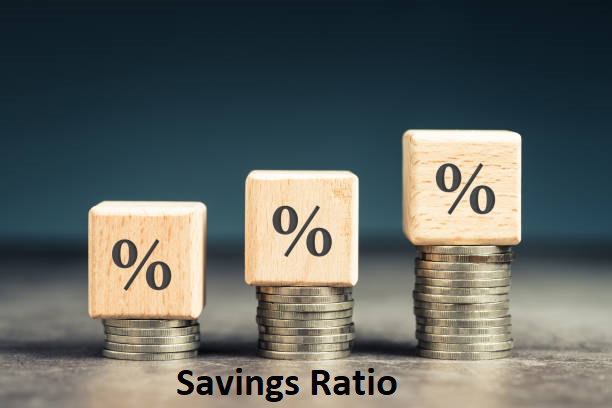
If you’re minimizing your debt, putting money away for retirement and generally bringing in more than you spend each month, you’re financially strong. It’s a very simple concept and stands for the amount of money that one saves at the end of every month expressed as a percentage of the monthly earnings. We would now discuss about the “Savings Ratio”. So, what is savings ratio? Just as the measure of our blood pressure gives us an idea about our health, in the same manner “Savings Ratio” gives us an indication about our financial health. When calculating your saving rate, it’s important to note that it should include your income after taxes, medical expenses such as health insurance, Life Insurance, as well as property taxes and interest on any outstanding debt, including your mortgage, because you’ll over-estimate your savings otherwise. So how is Saving’s Ratio calculated? It is a very simple calculation. All you need to do is divide your savings per month by the income per month. Let’s say your income per month is Rs 100,000 and your savings per month is Rs 10,000 Then your Saving’s Ratio is (10,000/100,000)%=10% Once you figure out your savings rate, you can get a sense of how close you are to financial independence. How much should our savings ratio be? The percentage of saving’s ratio depends upon one’s age. For a young person of 30 years who has lifestyle and EMI expenses a savings ratio of 10% would be good enough. As one grows older and as salary level goes up, the savings ratio of 25% would be reasonable. However, after 50 when one would’ve finished the EMI cycles a savings ratio of more than 30% would be healthy. In contrast a savings ratio of less than 5% would suggest that one’s financial health is fragile.

Savings Ratio Read More »

Thinking About Moving Closer to Your Kids?

Four Financial Implications to Contemplate For some people, living near their grown children is ideal. For others, it’s better to have some separation, even if it’s only an hour or two drive. Each family is different, but how do you know if you should move closer to your kids after you retire? You may love the town that you live in now, but your children have moved away. As they continue to grow and have families of their own, a thought may cross your mind, “Should I consider moving closer to my children and grandchildren?” If so, what are some financial contemplate to keep in mind? Cost of Living Do a cost-comparison between where you live now and the area in which you’re considering moving to. What are real estate prices like? Take a look at the average home costs in your area including property taxes, insurance, maintenance, and upkeep. Check out local restaurants, grocery stores, shops, and any other daily expenses that will impact your budget. Emotional Cost of Relocating One of the biggest considerations you’ll need to make is what your living situation will look like.. Will you be happier being far away from close friends and familiar faces? Many people I know who have relocated have found it challenging to rebuild a strong social network late in life. While your children and grandchildren may be physically closer than before, that doesn’t mean they will have as much time to spend with you as you ‘d hope. It can take time to make new friends, especially at an older age. Will your children and grandchildren be able to fill the gap? The answer is different for everyone. Do think about it. Should you rent or own You need to weigh the pros and cons of renting versus buying a home? When you’re looking for housing, you’ll also want to consider functionality. Will you be hosting celebrations and holiday dinners in your home, or do you primarily plan on spending time over at your child’s place? If so, then you may find it best to downsize to a condo or apartment. If you want to be able to have grandchildren sleepover, host Thanksgiving dinner, and entertain friends and family, then you’ll want to look for a piece of property that can accommodate your needs. Medical and Health issues. You’ll also want to determine how monthly expenses like health care and insurance will vary as well. Medical concerns are fairly common in late-life. Many have chronic conditions that require medications, monitoring and other forms of ongoing management. So, this would be a question and concern to the health while being with children and grandchildren because they would be busy  in their stuff and often make a decision due to health emergency or mental decline. Choosing to move to be closer to adult children can be one of the biggest decisions you make later in life, so be sure, the decision you make is right for you. If you are not sure that retiring to the town where your grandkids live is right for you, there are other options. You can make a tradition of back and forth reciprocal visits, or consider spending part of the year there. Lots of families enjoy planning vacations together, perhaps renting a beach house that accommodates everyone. Choose carefully, choose wisely.

Thinking About Moving Closer to Your Kids? Read More »

Volatility Index {VIX}

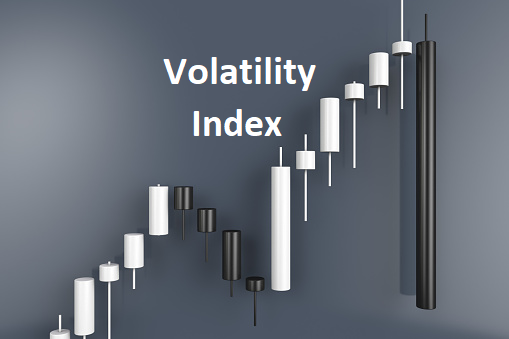
Some people enjoy dancing in the rain but some really hate getting drenched. Some people enjoy the stock market volatility but some get killed by the same volatility. Different people view the same thing differently. But all of them seek one thing above all else: Clarity. I will try to provide clarity on the ‘India Volatility Index ’ or ‘ India VIX ‘ in short. First of all, Volatility denotes the extent to which the value of our investment may be subject to the mood of the market over a given period of time. In other words, volatility refers to the amount of uncertainty or risk about the size of changes in a security\’s value. Commonly, it is observed that the higher the volatility, the riskier the security. So, what is Volatility Index? A volatility index tells us about the market expectations over the short term, usually a month. It tries to capture the sentiments of the market—whether the market is in a complacent or anxious mood. Volatility is what makes our short-term investments look more dangerous than our long-term investments. Some investors feel that surviving short-term market volatility is more challenging than surviving in the long run. Now… Volatile markets can turn upside down in very quick time. In fact, John Maynard Keynes himself once said that markets can remain irrational longer than you can remain solvent. So, every now and then, we may see investors getting caught on the wrong side of market irrationality. A volatility index captures implied volatility in the market. Okay, so how does it work? Implied volatility draws its conclusions from the present pricing of options and not from historic volatility figures. It is expressed in terms of a percentage like 20%, 30%, etc. In a range-bound market, where prices are moving gradually, the volatility index remains low. It is believed that when the volatility index is less than 20%, the market is in a complacent mood and is not expecting any catastrophe. Now… A low volatility index is therefore, associated with price rise. But when the volatility index is greater than 30%, then the market is in the fear zone. A high volatility index is associated with a fall in market prices.  In this manner, a volatility index helps investors gauge the mood of the market. So, what is the India Volatility Index? India Vix is the first volatility index launched in India by the National Stock Exchange. For your additional information, the Chicago Board of Options Exchange (Cboe) introduced the first volatility index for the US markets in 1993. Cboe Vix uses the Standard and Poor’s 500 Index Options for calculating implied volatility, which is reflected by the changes in pricing of options. India Vix is based on the Nifty 50 Index Option prices. Okay, so how does it work? It calculates the percentage of volatility by using a detailed computational methodology which relies on the best bid and offer price of the Nifty 50 index call and put options. Other than gauging the mood of the stock market, a volatility index can also be used to design derivative products in which the volatility index is used as an underlying asset. Investors who are averse to volatility can hedge their portfolio by purchasing derivative products based on the volatility index. And investors with a good appetite for volatility can take the risk by selling the same derivatives product. All in all, a volatility index provides a new game of hedging and trading for market participants. But how is hedging through volatility index derivatives different from hedging through single stock or index derivatives? Well, hedging through single stock or index derivatives is like purchasing a comprehensive insurance which covers many risks that you may not be even aware of. But a derivative product based on volatility index keeps its focus narrow— it provides a hedge against only market volatility. Finally… So, if the prices of your company’s shares are likely to fall due to poor quarterly results, then purchasing volatility index derivatives may not protect you. The market may remain calm even though your own individual portfolio may be performing badly. But if the prices of your stocks are likely to fall due to poor market sentiments and not due to any company-specific reason, then a volatility index derivative may be your right bet. To Sum Up What: Volatility index measures implied volatility in the market over the short term, usually a month. India Vix is the first volatility index launched by the National Stock Exchange. How: India Vix calculates volatility by computational methodology, which relies on the best bid and offer price of the Nifty 50 index call and put options. When: Volatility index can also be used for designing derivative products in which the volatility index is used as an underlying asset.

Volatility Index {VIX} Read More »

Cyclical Stocks

As individual we all experience ups and downs in our personal and professional life. Sometimes even an emotional roller coaster ride that you can\’t quite imagine. You feel good while going up. But as it comes down at a faster pace, you experience panic and fear. In a similar fashion, the occurrence of ups and downs in an economy over a period of time is known as the economic/business cycle. These cycles of an economy can be categorized as expansion, peak, recession, and recovery stages. But the ones who show resilience and patience are the ones who can overcome with flying colours. In the same way, as the economy goes through numerous ups and downs so does some companies and sectors. A cyclical stock is one whose underlying business generally follows the economic cycle of expansion and recession. Profits and share prices of cyclical companies tend to follow the up and downs of the economy; that\’s why they are called cyclicals. When the economy booms, sales of cars, air tickets, homes etc. tend to increase. On the other hand, cyclicals are prone to suffer in economic downturns. Let us consider an example. Suppose the economy is booming and income levels are rising, then more and more people will be willing to purchase homes. This will result in more construction activity and home prices are also likely to rise. As a result, companies in the business of construction and selling housing properties will see an increase in their profits and share prices. Contrary, if the economy is slow, less people are likely to invest in the housing market and share prices in the stock market of these construction companies will also suffer in line with lower profits. However, not all businesses are dependent on economic cycles. Companies operating in the business of basic consumer goods don’t get affected since demand for their products and services continue regardless of the state of the economy. For instance, if the economy slows down and, as a result, consumer confidence takes a hit, people may postpone or cut expenditure on discretionary spending such as buying a new car, traveling abroad or buying luxury item but they may not cut expenses on essential items such as toothpaste, electricity, healthcare etc. Therefore, companies in the business of producing and selling basic consumption goods are least affected by economic cycles. Shares of such companies are termed as non-cyclical or defensive stocks. Cyclical stocks can be classified under two categories. Rate Sensitive Sectors  These are the businesses which are primarily affected by the interest rates prevailing in the economy and thus any contraction or expansion in economy consequently affects them. Auto companies, banks and capital goods fall under this category. Commodity Based Sectors  Earnings and cash flow of these businesses are dependent on the demand & supply of their products/raw materials. During expansion, there is increase in demand, resulting in business expansion; whereas in the times of recession, the demand gets subdued, leading to business contraction. Metals, mining, sugar, cement companies etc., follow these patterns. So, how do you identify a cyclical stock? Before selecting a cyclical stock, it makes sense to pick an industry that is due for a revival. Declining interest rates and growing consumer spending signals towards the economic expansion. Then, in that industry, choose companies that look especially attractive. Predicting an upswing can be extremely difficult, especially since many cyclical stocks start doing well many months before the economy comes out of a recession. Buying requires research and courage. On top of that, investors must get their timing perfect. It pays to keep an eye on the business cycle and know where it is and where it is going. For conservative investors non-cyclical stocks many of which also pay good dividends may make more sense while building a portfolio. However, keep in mind that this relative safety comes with a price and that is missing growth opportunities in an up market.

Cyclical Stocks Read More »

Probate, Succession Certificate, Letter of Administration

PROBATE                                                                                           What is a Probate? Probate under Indian succession act Section 2(f), means copy of the Will certified under the seal of court. When Probate is granted by the Court having territorial jurisdiction it could be considered that Will and the acts of the executor of Will are valid. It is evidence which proves validity and execution of Will as well as proves that person making Will was having valid testamentary capacity to make a Will.  How to apply for Probate? A Testamentary Petition has to be filed in the competent Court having pecuniary and territorial jurisdiction. That means if the value of the property is high one may have to approach higher Court obtaining grant of probate through a wills and probate lawyers or probate law firms.  What documents are required along with the Probate Petition? In case of Probate Petition, the Court usually asks the petitioner a proof of death of the testator but there are some vital documents that are required as well. The following are the documents that are required in probate process – Death Certificate of the testator. AADHAR CARD of the testator. Ration Card of testator. Original Will. List of Legal Heirs. AADHAR of all legal heirs. Documentary proof of the properties mentioned in the Will. Probate Petition process On receipt the Petition for Probate of Will, the Court issues notice to the legal heirs of the deceased to file objections, if any, to grant of probate. In such case if the any of the legal heirs having objection can file his/her objection. If there is no objection, then the Court will grant Probate, and if there is any objection to Probate Petition, then the Court will determine the validity and basis of such objection and if satisfied, would convert the Probate Petition to a Suit.   LETTER OF ADMINISTRATION What is Letter of Administration? Letters of Administration is issued by the Court of competent jurisdiction to appoint suitable persons to administrate property of a deceased person. Letter of Administration for deceased estate is granted to dispose of the asset of person who has died without Will or in respect of asset that does not cover in same. Letter of Administration is required when: No Executor has been appointed in Will. Executor appointed is legally not capable. Executor appointed refuses to act. Executor died before probate of Will. Executor has died before testator. Will is proved/probate granted but executor died immediately after that. How to apply for Letter of Administration? The Application for Letters of Administration has to be filed in the competent Court having pecuniary as well as territorial jurisdiction which implies that if the value of the property is high then one may have to approach higher court for obtaining Letter of Administration. What documents are required along with the Petition? The Court usually asks the petitioner a proof of death of the testator but there are some vital documents that are required as well. The following are the documents are required– Death Certificate of the testator. AADHAAR CARD of the testator. Ration Card of testator. Original Will, if any. List of Legal Heirs. AADHAAR of all legal heirs. Documentary proof of the properties mentioned in the Will. Court Process On receipt the Petition, the Court issues notice to the legal heirs of the deceased to file objections, if any, to grant of Letter of Administration. In such case if the any of the legal heirs having objection can file his/her objection. If there is no objection, then the Court will grant Letter of Administration, and if there is any objection, then the Court will determine the validity and basis of such objection and if satisfied, would convert the Petition to a Suit.   SUCCESSION CERTIFICATE What is a Succession Certificate? A Succession Certificate is a certificate given to the successor of a deceased person who has not prepared a Will. A succession certificate is given to the successor of a deceased person who has not prepared a will in order to establish the authenticity of the successor. The succession certificate also gives the certificate holder authority over the deceased person’s debts and securities. The payment of debts of the deceased person and also the transfer of the securities of the deceased person can be made by the certificate holder. Procedure to obtain a Succession Certificate The applicant will prepare a petition, verify and sign the same and submit it to the district judge in the appropriate jurisdiction after paying the appropriate court fees. The district judge will give an opportunity for the preliminary hearing of the petition filed by the applicant/petitioner and if the petition is admitted, he shall fix a day for the final hearing in respect of the same and also send notice of the hearing to whomsoever he thinks fit. After hearing all the concerned parties, the judge will decide if the applicant is within his right to apply for the Succession Certificate and shall grant the Succession Certificate to him if satisfied. The district judge may also require the applicant to provide a bond with one or more sureties or any other security so as to make good any possible loss arising out of the use or misuse of such certificate. Documents Required To obtain a legal heir certificate in Maharashtra, submit the following documents along with the application. An application form that is duly filled. Death certificate Identity card Ration card Death certificate Conclusion: Probate, Letter of Administration and Succession Certificate are legal documents through which rights pertaining to the estate of the deceased are granted. Probate and Letter of Administration are the primary documents through which administrative rights pertaining to the estate of the deceased are validated. The role of Succession Certificate is very limited in comparison with the other two documents. Succession Certificate can be used for acquiring debts and securities but rights pertaining to immovable property and assets that are of significant worth requires grant of Probate or Letters of Administration.

Probate, Succession Certificate, Letter of Administration Read More »

Systematic Investment Plan

When it comes to investing, we unnecessarily complicate the process with thinking about it too much – like, when to start? Where to invest? How much to invest? What if the investment tanks? Investment is the best way to grow your money and to fulfil your future needs. As savings are never enough and money never grows when just kept in your bank accounts. Talking about investments, there are many investment plans available in market but SIP with mutual funds is the one which is now a days considered best among all the investment plans. Understanding SIP! Systematic Investment Plan commonly known as SIP is basically a mode of investment with mutual funds. It is a long-term investment plan generally with the tenure of 10 to 15 years, where one can invest their money periodically which can be daily, weekly, monthly or quarterly options and gets Units of mutual funds. SIP help investors to bring a discipline to their investment methodology. Advantages of Investing through SIP SIP is Pocket Friendly SIP allows to invest in chunks not in bulk this facility with SIP makes it pocket friendly. There is no compulsion that one needs to invest a big amount, one can  even start SIP with a minimum of Rs.500 monthly. SIPs Enables Rupee-cost Averaging It’s a fact that SIP works better than other investment plans available in the market which allows lump sum payment, and this is because of rupee-cost averaging. Under the rupee-cost averaging one can typically buy more of a mutual fund unit when the prices are low, and similar vice versa. This contributes to a good discipline.   Month Amount Rising Market Falling Market Volatile Market   NAV (Rs.) Units Allotted NAV (Rs.) Units Allotted NAV (Rs.) Units Allotted 1 10000 10.00 1000.00 10.00 1000.00 10.00 1000.00 2 10000 12.50 800.00 9.25 1081.08 10.83 923.36 3 10000 12.68 788.64 8.95 1117.32 11.00 909.09 4 10000 13.05 766.28 8.42 1187.65 10.50 952.38 5 10000 13.72 728.86 8.05 1242.24 10.23 977.52 6 10000 13.98 715.31 7.00 1428.57 10.65 938.97 Total 60000 12.50 4799.09 8.50 7056.86 10.52 5701.32 On investment of Rs.10000/- per month, in different market scenarios, you can see how many units are accumulated. In rising markets 4799.09 units, in Falling market 7056.86 units and in volatile market 5701.32 units are accumulated. So, while in falling market one must invest more to get maximum units but in actual sense, they tend to redeem all the units. SIP have the Power of Compounding Compounding occurs when the returns you earn on your investments start earning returns.   Over time, this result in a snowball-effect, that may increase your potential returns manifold.   Name Age Monthly SIP (Rs.) No. of years Investment Amount Value at age 60 yrs (Rs.) Gain Mr. A 20 1000 40   4,80,000 3,14,03,755 3,09,23,755 Mr. B 30 1000 30   3,60,000    70,09,821    66,49,821 Mr. C 40 1000 20   2,40,000    15,15,955    12,75,955 The above table shows the investments of Rs.1000/- per month by Mr. A, Mr. B and Mr. C, but the time horizon of investment differs. Mr. A did monthly investment for 40 years and earned Rs.3,09,23,755/- returns on his investment of Rs.4,80,000/-, Mr. B did monthly investment for 30 years and earned Rs.66,49,821/- returns on investment of Rs.3,60,000/- and Mr. C did monthly investment for 20 years and earned Rs.12,75,955/- on investment of Rs.2,40,000/-. So, we can understand by this example that investing regularly for long term earns more return due to power of compounding.

Systematic Investment Plan Read More »

Power of Compounding

What an impact can power of compounding have? If you start walking towards the moon, and start 1 step on the first day and double the steps every day, How long do you think it will take to reach the moon? 2 years? 20 Years? Let’s find out! Within 30 days, you will cover over 3.84 lakh kms and reach the moon. Yes, it will just take 30 days. But what if you delay by 15 days? You will cover only 11 kms. That’s the power of compounding. As Albert Einstein says “Compounding interest is the eighth wonder of the world. He who understands it, earns it… he who doesn’t pays it.” In simple words power of compounding means the increase in the value of investment, due to the interest earned on the principle, as well as the accumulated interest. For example, if you invest an amount of Rs.1 Lakhs for 10 years in different investment avenues at different compounding rates as shown in the table.   Investments Avenue Rate of Interest Maturity Amount Savings Account 2.75% Rs.131165 Debt Fund 6% Rs.179084 Equity Funds 12% Rs.310584 Shares 15% Rs.404555 The longer your money can remain uninterrupted, the more your wealth can grow with the help of compounding. Suppose you invest an initial capital of Rs.1 lakh @ 12% compounding rate for different time duration as shown in the table. Years Maturity Amount 10 Rs.310584 20 Rs.964629 30 Rs.2995992 40 Rs.9305097 Key Rules for Compounding Control your Expenses The best way to harness the power of compounding is to raise your investments. But if you have a limited income, you can increase your savings by controlling your expenses. One way to do it is to create a budget and identify areas you can reduce your costs each month. Spending wisely and smartly can increase your savings and you can invest more. This way, you stand a chance to reap better returns. Starting Early You must start early with your investments to make the most out of the power of compounding. For example, if you put your money into an investment plan as soon as you start earning, you can enable your savings to grow significantly over time. Discipline To create a healthy corpus and meet your financial goals on time, it is critical to have investment discipline. Investing regularly at the start of your investment journey can ensure discipline. It is wise not to skip your SIP payments. When you regularly invest month after month, you not only increase your savings but also develop investment discipline. This is a vital habit if you wish to achieve financial success. Be patient Most investors look to chase quick returns. But in the attempt to earn quick money, they can make mistakes that could result in big losses. As we know, the power of compounding magnifies over time. Hence, it can help to have a long-term approach towards investing. One must invest patiently that could reap healthy returns over time. You don’t need to be a financial expert to benefit from the power of compounding. Every investor can take advantage of this concept and put it to good use. However, when invested over the long term, the difference in terms of value is huge.

Power of Compounding Read More »