Rajen Gala

PLI Scheme

In the framework of the Atmanirbhar Bharat Programme, the PLI schemes aim at enhancing Indian manufacturers competitiveness, attracting investments in cutting-edge technology, creating efficiencies and economies of scale as well as enhancing exports. Production Link Incentive Scheme (PLI) is an initiative started by the Government of India to not only encourage foreign companies to find workforce in the country and thereby generate employment, and also encourage domestic and local production to create micro jobs. The PLI schemes aim to develop capacities in the local supply chain, introduce new downstream operations, and incentivize investments into high-tech production. PLIs are essentially the incentives to companies to boost the product. They could be in the form of tax rebates, import and export duty concessions, or maybe easier land acquisition terms. Generally, the benefits of a PLI Scheme are passed on to the final consumers of the goods in terms of lower prices. Take the example of electric vehicles. They don’t have ready demand but a shift to greener automobile is essential for the country. In this regard, the government has introduced FAME scheme. It stands for Faster Adoption and Manufacturing of Hybrid and Electric Vehicles. Under this scheme there are lot of concessions for EV makers. How do they spur production of goods? Say you are the government, and you want to spur production of a certain category of goods. The demand for such goods isn’t all that great. But you think once they are manufactured in large quantities, or sold at the right price points, it should work out fine. This is where you will employ PLI or a production-linked incentive scheme. The PLI is an old and popular tool with governments to spur production of goods that the country sees as necessary for social good, taxes, or employment-generation reasons. Products like Auto Components, Automobile, Aviation, Chemicals, Electronic Systems, Food Processing, Medical Devices, Metals & Mining, Pharmaceuticals, Renewable Energy, Telecom, Textile & Apparel, and White Goods come under PLI Scheme. The companies approved for PLI scheme include Motherson Sumi, Bosch, Maruti Suzuki, Hero MotoCorp, Hero Cycles, Toyota, Bharat Forge, Sona BLW and many more.
PLI Scheme Read More »

Electric Vehicles (EV)

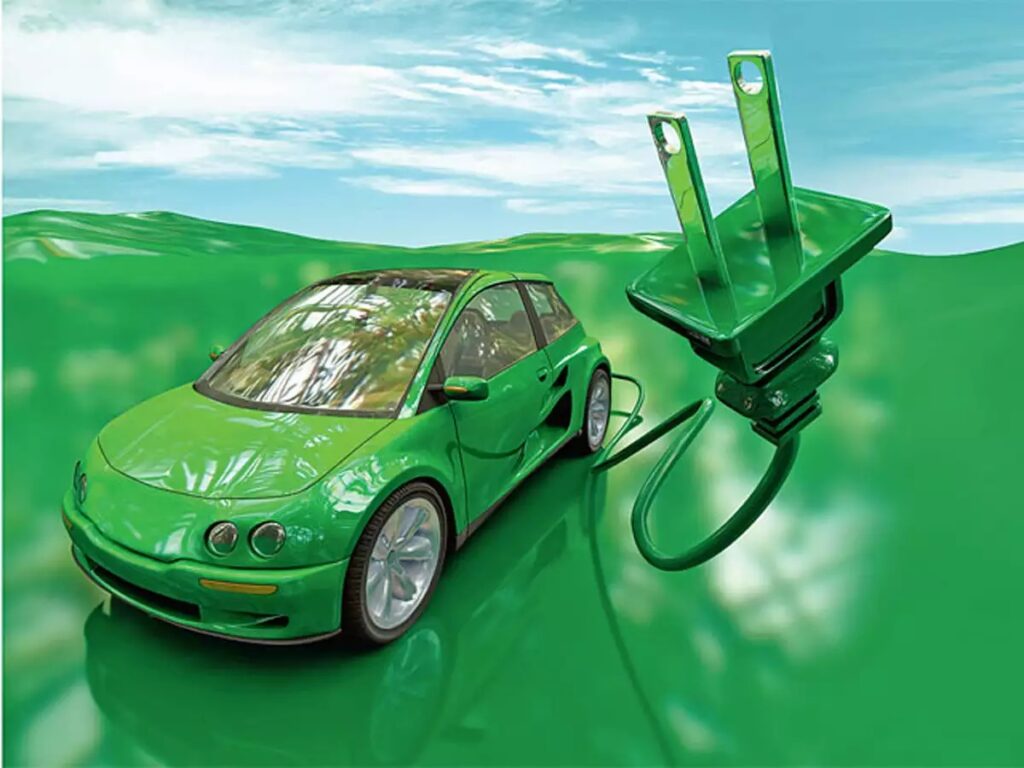
The Electric Vehicle industry in India is growing very fast. The governments of India have launched schemes and incentives to promote electric mobility in the country and some regulations and standards are also in place. The running cost of an electric vehicle is much lower than an equivalent petrol or diesel vehicle. Electric Vehicles (EVs) are run by electric motors which are powered by energy stored in batteries. EVs have an electric motor instead of an Internal Combustion Engine (ICE). Electric vehicles use electricity to charge their batteries instead of using fossil fuels like petrol or diesel. Benefits of Electric Vehicle over Internal Combustion Engine Low Maintenance Cost The most important reason that can motivate you to buy an EV is the maintenance cost. If you buy a car with an IC engine, it will have more mechanical parts and therefore will have more complexities and difficulty in maintenance. EVs are easy and cheaper to maintain because of their simple structure and operations. Low Cost Another major advantage that EVs deliver over conventional IC engine vehicle is the running cost. The running costs come down to even less than a single rupee per kilometer depending on the vehicle used. Convenient Charging You might be familiar with the crowd that suddenly emerges on the fuel stations during peak hours. Also, planning to get the fuel refilled while you are on your way to your workplace can get you late too. EVs have a major advantage in this case where you can simply plug in your vehicle at your home for 4 to 5 hours and you are ready to move again without any delay. EVs nowadays also come with fast charging capabilities which allows them to charge up within 60 mins. Easy Driving All the electric vehicles starting right from an electric scooter and going all the way up to an electric bus are gearless. Yes, EVs are an absolute pleasure to drive because you don’t have to operate the gear mechanisms. You only have to use a set of buttons or pedals which will make you increase or decrease the speed and that’s all. Pollution Free EVs are one of the most eco-friendly modes of transport available right now in the market. If you are using EV, you have definitely done good for the environment. Buying an EV can reduce the carbon footprint because there will be no emissions at all. Government Incentives Now, the central government also wants you to buy an EV because EVs are the future. The central government has recently introduced a new electric vehicle policy under which you can get additional benefits up to ₹1.5 Lakhs. Availability of adequate Charging Infrastructure is one of the key requirements for accelerating the adoption of electric vehicles in India. In this regard, Ministry of Power has issued “Charging Infrastructure for Electric Vehicles – Guidelines and Standards” mentioning the roles and responsibilities of various stakeholders at Central & State level, for expediting the development of public EV charging infrastructure across the country. The government of India have undertaken multiple initiatives to promote manufacturing and adoption of electric vehicles in India. With support of the government, electric vehicles have started penetrating in the Indian market. However, availability of adequate Charging Infrastructure is one of the key requirements for accelerated adoption of electric vehicles in India. Some of the Indian companies associated with EVs are, Tata Motors Ltd., Ashok Leyland Ltd., Amara Raja Batteries Ltd., Exide Industries Ltd., Hero MotoCorp Ltd., Himadri Speciality Chemicals Ltd., Vedanta Ltd., Hindalco Industries Ltd., JBM Auto Ltd., Olectra Green Ltd., SML Isuzu Ltd., and many more.

Electric Vehicles (EV) Read More »

Semiconductor Technology

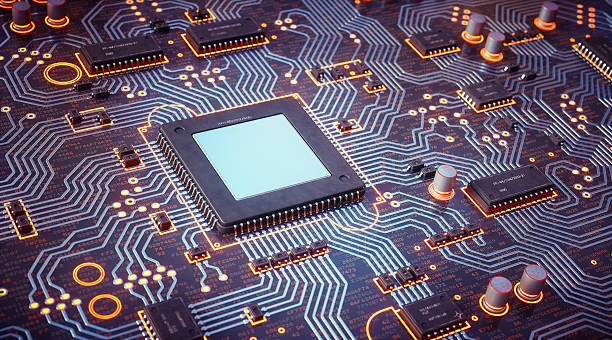
You’ve undoubtedly heard about semiconductors. But while most people have heard of semiconductors, very few people know much about them. They really are everywhere, from the processor and AI chips in our smartphones to electronic devices for electric and autonomous vehicles, to new sensors for healthcare. What is Semiconductor? A semiconductor is a physical substance designed to manage and control the flow of current in electronic devices and equipment. It either doesn’t allow a freely flowing electric current or repels the current completely. A semiconductor sits between a conductor and an insulator and is commonly used in the development of electronic chips, computing components, and devices. It’s generally created using silicon, germanium, or other pure elements. Without semiconductors, our world would look much more like when we would have no electronic hand calculators, microwave ovens, digital alarm clocks, cell phones, tablets, personal computers, electronically controlled transmissions or washing machines. Once reserved for televisions and radios, semiconductors are now unavoidable in day-to-day life. From making toast in the morning to switching on a light, checking the weather or reading an e-book. Controlling the computers we use for business, the phones and mobile devices we use to communicate, the cars and planes that get us from place to place, the machines that diagnose and treat illnesses, the military systems that protect us, and the electronic gadgets we use to listen to music, watch movies, and play games, just to name a few. A single semiconductor chip has as many transistors as all of the stones in the Great Pyramid in Giza, and today there are more than 100 billion integrated circuits in daily use around the world, that’s equal to the number of stars in our corner of the Milky Way galaxy. Semiconductor firms generally organize their activities around the two main stages of semiconductor production, design and manufacturing. Companies that focus only on design are referred to as “fabless” firms, while companies that focus only on manufacturing are called “foundries.” Semiconductor firms that do both are called Integrated Device Manufacturers, or IDMs. Taiwan, United States, South Korea, Japan & Netherland dominates the semiconductor market. Taiwan is the country that produces the greatest number of chips globally, thanks to Taiwan Semiconductor Manufacturing Company, which controls 51% of the global chip market. Let there be no doubt that the fusion of hardware and software is accelerating in America, but when it comes to producing chips of any kind, Asian countries dominate the chip market, which includes the supply chain as well. As a matter of fact, many American companies rely on Asian countries for Chips to meet their manufacturing needs. Some Indian companies associated with semiconductor technology are Tata Elxsi, ASM Technologies, MosChip Semiconductor Technologies & many more. Now Indian conglomerate Vedanta Ltd. is planning to invest up to 1.5 Lakh Crore into the electronic chip and display manufacturing space. It expects to roll out display units, for use in mobile phones and electronics devices, by 2024 and electronic chips from Indian manufacturing plants by 2025.

Semiconductor Technology Read More »

Metaverse

The metaverse is a virtual universe that extends the dimensions of the physical world. The metaverse, as you may know, is a collection or network of 3D virtual worlds designed to foster social interaction. Using advanced human-computer interaction hardware (e.g., Augmented Reality-Virtual Reality headsets) and software, users can interact with each other in the metaverse through their digital avatars. One of the keys to developing the metaverse is high quality virtual reality, which allows users to interact with different elements in the same way they would in the real world. Fundamental implementations of Metaverse Gaming Virtual Reality software power gaming platforms by creating an illusion for a realistic experience using 3-D images, VR headsets, full display screens. Companies like Meta and Epic Games attempt to build a connected universe of virtual realities, gaming has a new home. Social Interactions In today’s world, where a large portion of our communication is done through social media channels and messaging platforms, interactions can become very mechanical and emotionless, and may frequently lead to miscommunication and misunderstandings. This is a major issue. With the metaverse, people will be able to socialize in the virtual world, where they will be able to connect, collaborate, and communicate even if they are not physically present. Yet no one will feel the difference or experience physical separation. Media & entertainment Do you recall the film Avatar? Perhaps you may recall how the sci-fi film depicted human interaction. The humans in the film would interact with the alien world through virtual avatars, which would be created using a combination of artificial intelligence (AI), virtual reality (VR), and augmented reality (AR) technology, without ever leaving their safe confines. In the metaverse , media and entertainment will look very similar. To enter the virtual world, all you have to do is put on your AR-VR headsets. You can attend virtual concerts, visit virtual theme parks, place bets on sports, and so on, just as you do in the real world. The metaverse will also increase participation and make it possible for multiple artists to perform together, allowing for an even closer connection with fans. Virtual Tourism With the metaverse, customers will be able to take a 3D virtual hotel tour and research the location of the hotel where they are considering staying using VR platforms and hardware. Before booking a hotel room, travellers can put on their 3D digital avatars and take a virtual tour of the facility. For instance, you can explore the Atlantis, The Palm, located in Dubai virtually. In addition, with virtual tourism, another use is that people who would otherwise be unable to travel due to physical limitations or other factors can use it to travel around the world. Commerce & Trade Brands will set up virtual shops in the metaverse in the future, where buyers will be able to take a 3D virtual tour and try out various products before making a purchase. The products will be delivered to your home once the purchase has been made. The purchasing process will be very similar to what we currently encounter in supermarkets, except that it will take place online entirely. Manufacturing The metaverse will also be a large-scale industrial workspace. Manufacturing companies can make digital copies of their machinery known as \”digital twins\” that they can test in the metaverse before implementing in the real world. The design can then be corrected or improved before construction begins, saving time and resources. Theme Park Disney Park visitors could soon be riding through the metaverse as the entertainment giant explores headsetless augmented reality. It will track visitors through their phones, and generate and project personalised 3D effects onto nearby physical spaces such as walls and objects around the visitors in the park. The experience of visiting the park virtually will be catered to each individual, while some may greet Belle and Cinderella, the others may say hi to Mickey Mouse upon their arrival, and so on.

Metaverse Read More »

Internet of Things

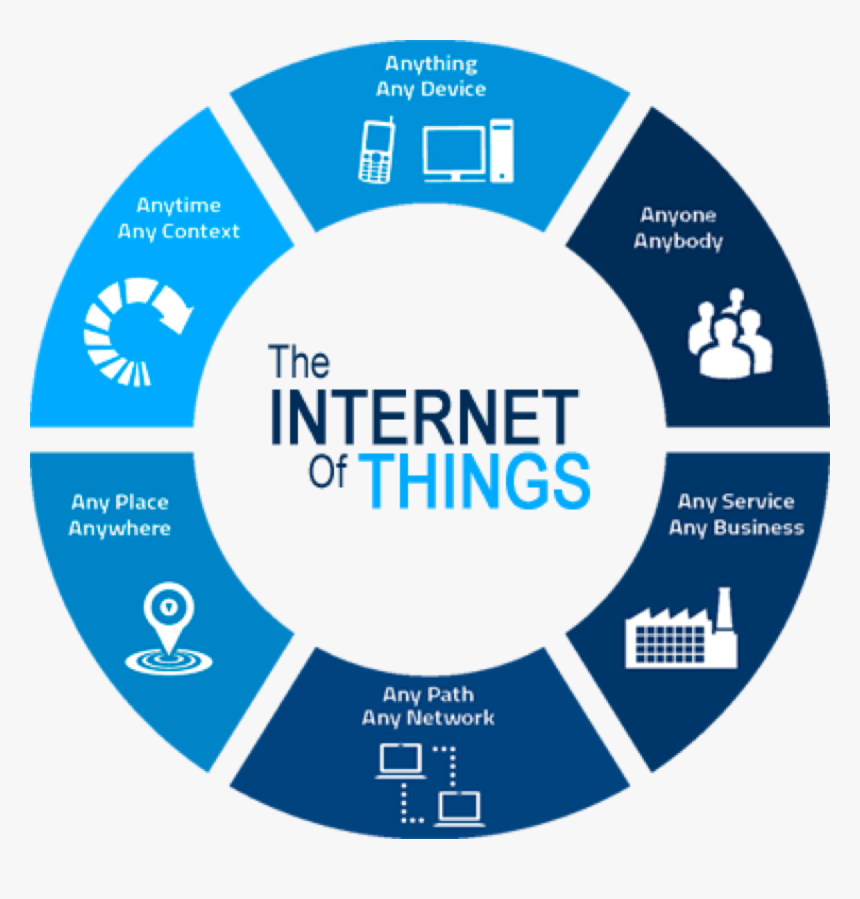
The Internet of Things, refers to the billions of devices including interrelated computing devices, digital machines, objects, animals or people that are provided with Unique Identifiers and the ability to transfer data over a network without requiring human-to-human or human-to-computer interaction. Connected to the internet and equipped with sensors, these devices power much of the developing data-based economy and bridge the divide between the physical and digital worlds. Due to super-cheap computer chips and the commonly used wireless networks, it\’s possible to turn anything, from something as small as a pill to something as big as an aeroplane, into a part of the IoT. Importance of IOT It is one of the most important technologies of everyday life. It can connect every day objects like kitchen appliances, Cars, thermostats, Monitors to the internet via embedded devices. Seamless communication is possible between people, processes and things. Smart home concept is a good example of IoT. Internet enabled thermostats, doorbells, smoke detectors and security alarms create a connected hub where data is shared between physical devices and users can remotely control the things in that hub via a mobile app or website. I.e., adjusting temperature Settings, unlock doors, etc. Emerging tools and technologies like smart speakers, machine learning, and 5G are enabling huge gains to efficiency and more control at home and in the workplace. For Example A lightbulb that can be switched on using a smartphone app is an IoT device. An IoT device could be as light as a child\’s toy or as serious as driverless truck. IoT enables companies to automate processes and reduce labour costs. It also cuts down on waste and improves service delivery, making it less expensive to manufacture and deliver goods, as well as offering transparency into customer transactions. Best suited for Sectors like Defence, Infrastructure, Manufacturing, Automation Industry, Agriculture, Transportation & Logistic, Public Sector, Retail, Healthcare, etc. What are IoT Platforms? One IoT device connects to another to transmit information using Internet transfer protocols. IoT platforms serve as the bridge between the devices\’ sensors and the data networks. Top IOT platformsare Amazon Web Services, IBM’s Whtson, Microsoft Azure, ThingsWorx IOT platform, Cisco IOT Cloud Connect, Oracle Integrated Cloud, etc. IOT Market in India In India, the government is focusing on the benefits entailing the introduction of Internet of Things with its flagship programs such as Digital India, Make in India and Smart India-Smart Cities among others. For IoT to truly become key to consumers, it needs to fit around, enhance their daily lives and reach all tiers of the economy, thus becoming more inclusive. Smart cities are the future and the Indian Government has identified over 100 potential cities to address the growing challenges of rapid urbanisation. Governments with the help of IoT platforms and applications is targeting to improve core infrastructure services such as traffic congestion and parking problems by real time tracking, analysing and action to better the services.

Internet of Things Read More »

Drone

Drones can be referred as Unmanned Aerial Vehicles (UAVs), Miniature Pilotless Aircraft or Flying Mini Robots, drones are gaining popularity. The last few years have been significant in terms of drone adoption, usage expansion across industries, government organisations and global awareness. Originally drones were developed for the military and aerospace industries, drones have found their way into the mainstream because of the enhanced levels of safety and efficiency they bring. Drones are a transformative technology that, over the next decade, will change in ways you likely never imagined. From quick deliveries at rush hour to scanning an unreachable military base, drones are proving to be extremely beneficial in places where man cannot reach or is unable to perform in a timely and efficient manner. Today drones are used for Agriculture, Parcel Delivery, Disaster mitigation and Relief, Logistics, Filmmaking and photography, Law Enforcement, Real Estate, Navigation and many more. Commercial drones fall into the category of Electronic Vehicles. Similar to Electronic Automobiles, drones offer another important option in fending off greenhouse gasses and becoming carbon neutral. Big tech companies like Facebook and Google are experimenting with solar powered drone technology to beam Internet to remote locals. This could transform connectivity. Drone fireworks are gaining popularity. Drone displays are becoming a replacement for fireworks, due to concerns about firework-related air pollution and environmental damage. Since, there are multiple uses of drones and they are cost-efficient in the long term, there are a few companies like Paras Defence and Space Technologies Ltd., Hindustan Aeronautics Ltd., Zen Technologies, Rattanindia Enterprises, Info Edge, DCM Shriram Industries, which are looking to expand their business with the help of drones. Despite the convenience of drones, their potential threats to the community or the environment should not be overlooked. Air traffic safety is the biggest concern due to the risk of injuries to the general public. In most situations, drones are not allowed to fly over controlled airspace and near clusters of people. On 26th August, 2021 new drone rules were published by the Ministry of Civil Aviation with 30 key features of Drone Rule, 2021. This rule had replaced the Unmanned Aircraft System Rule 2021, issued on 12th March, 2021. Also, no pilot license will be required to operate micro drones used for non-commercial use, nano drones and organizations using such drones. The number of forms has also been reduced from 25 to 5 and types of fees sharply reduced. Digital sky platform is an initiative by the aviation ministry to provide a secure and scalable platform that supports drone technology frameworks such as NPNT (no permission, no take-off), designed to enable flight permissions digitally and managing unmanned aircraft operations and traffic efficiently. Government of India is planning to create a strong drone  ecosystem in India while eliminating all unnecessary operational and entry barriers and generating employment opportunities as there are more than 200 startups in this field.

Drone Read More »

Artificial Intelligence (AI)

Artificial intelligence (AI) has gained immense importance over the years, so much so that it has found its presence felt in almost all the sectors that one can think of. There are various uses of AI in the today’s scenario. Words cannot suffice the potential that AI holds when it comes to adding value to the Indian economy. Industries have been using AI to bring automation into the processes. Better AI algorithms are being developed every day to pace up various industry processes. The number of companies adopting AI technology in India is increasing with every passing day. What is Artificial Intelligence? Artificial Intelligence is the intelligence shown by machines through which they try to mimic human intelligence. With the help of AI, machines could be trained in certain circumstances to take the decision on their own. With that, they can work on their own without any human intervention. Some of the major sectors that take the help of AI services are, Banking, Medical Assistance, Transportation & Logistic, Navigation, Cyber Security, Education, Human Resources, Smart Devices, Social Network Platforms, Agriculture, Manufacturing, Retail, Marketing, Financial Services, etc. Some of the major filed where AI is widely used are Online Food Delivery, Shopping, Google Maps, Driving Assistance, E Payment Gateways, Search and Recommendation and many more. The role of artificial intelligence (AI) applications in enterprises is rapidly evolving with AI Tools like Customer Relationship Management (CRM) and Enterprise Resource Management (ERM). With each day new uses and applications of AI are emerging. This also makes it an important field for students and learners to dive into. There is an exponential growth in the demand for skilled AI developers. Benefits of Artificial Intelligence Automation – Businesses that use AI automation are able to augment their capabilities, while off-loading repetitive tasks to the machine. Some jobs can be tiring like , paper checking, form submission, etc. These can be automated with the help of AI with the least human intervention. Speed – AI can do a lot of work without stopping as compared to humans with remarkable speed. Accuracy – AI reduces the chances of error as compared to humans. Since the machine will always act according to the fixed AI algorithm, there are fewer errors. AI helps us in defining new limits of accuracy and precision with reduced risks. Exploration– Artificial Intelligence has helped us to discover many unexplored places like volcanic sites, ocean beds, etc. Humans cannot visit these vulnerable sites as they can’t survive in those places. An AI machine can go to such vulnerable places and can also collect information. Data Collection– Data analytics is already a trending technology in the modern-day business world. Industries and businesses know the value of analyzing huge chunks of data and extracting useful information from it. Low Cost – If AI is outperforming human efforts, then opting for AI automation will slash costs in the long run for a business. Some Indian names associated with AI business are Tata Elxsi Ltd., Bosch Ltd., Happiest Minds Technologies Ltd., Persistent Systems Ltd., etc. The number of AI start-ups in India has significantly increased in recent years. Some overseas companies like Google, Apple, Amazon, Microsoft are already using AI. The future scope of Artificial Intelligence keeps on increasing due to new job roles and advancements in the AI sector. Various roles in an AI career are, AI analysts and developers, AI Data Scientists, AI Software Engineer, AI Architect, AI Researchers, AI Algorithm Specialist, Robotics Expert, Military and Aviation Experts, Maintenance and Mechanical Engineers, Surgical Al Technicians, etc.

Artificial Intelligence (AI) Read More »

Price Per Earning (P/E Ratio)

The P/E Ratio or ‘Price to Earnings’ Ratio looks at the relationship between stock price and company’s earnings i.e., Earnings per share. It is sometimes also referred to as ‘Price Multiple’ or ‘Earnings Multiple’ The P/E Ratio is the most popular metric of stock analysis, though not the only one. PE is calculated as… Price to Earning = Market Value per share / Annual earnings per share The market value per share (numerator) is the current market price of a single share. The annual earnings per share (denominator) is the net income of the company for the most recent 12 months period divided by number of outstanding shares of the company. So, annual Earning Per Share (EPS) =  Net Income For Example: A company having share price of Rs.40/- and Earning Per share (EPS) of Rs.8/- would have a P/E ratio of Rs.5/-. P/E Ratio = Rs.40/- / Rs.8/- = Rs.5/- But what does this P/E ratio tell you? Essentially, the P/E Ratio gives you an idea of what the market is willing to pay for the company’s earnings. How come?                Some thumb rules: A higher P/E Ratio shows willingness of market to pay more for the company’s earnings. Some investors read a high P/E as an over-priced stock, which may be the case sometimes. However, it can also indicate that the market has high hopes for the share’s future and has bid up the price. Considering our previous example where P/E ratio is 5. Since this is a ratio of market value to annual earnings depicted as 5:1, this means that the market is prepared to pay Rs.5/- now for every single rupee of earning from a particular stock. Conversely… A low P/E Ratio may indicate ‘vote of no-confidence’ by the market which means that the investors have undervalued the stock due to lack of confidence in its future growth. However, it could also mean that this is a stock which has been overlooked by the market and does possess strong future growth potential. (a possible contra pick) If this is the case, they are considered value stocks and investors sometimes make their fortunes spotting these ‘diamonds’ before the rest of the market discovers their true value. So, what is the right P/E?…       There is no correct answer to this question because part of the answer depends on your willingness to pay for earnings. The more you are willing to pay (high P/E) means that you believe that the company has good long-term prospects over and above its current position. So, for some investors, a P/E of 5 would be a great deal while for some others a P/E of 5 for a particular stock is high. So, a P/E ratio also depicts the perceived value of a particular stock. Types of P/E       Trailing P/E: – In the example earlier, we have considered annual earnings per share (EPS), which is the sum of earnings for the last 12 months. This gives ‘trailing P/E’ or actual P/E based on known earnings figures. Forward P/E:- In the P/E ratio formula, you can use expected earnings per share (next 12 months) in place of previous annual earnings per share. This will give an idea of what could be the best price to pay for a particular share for its anticipated earnings. If earnings are expected to grow in the future the estimated P/E will be lower than the current P/E. If the estimated EPS is Rs.10/- and current market price is Rs.40/-, then the P/E would be 4 (Rs.40/- / Rs.10/-). This P/E is lower than the P/E given in earlier example, where the EPS was lower. Factors affecting P/E Ratio… Growth – Better the growth prospects of the company, the more willing people are, to be a part of that company by paying more per rupee of earning. Risk – The higher the risk, the lesser inclination people would have; to invest in equity shares thus affecting share price to an extent. Past Track Record – Track record is a major factor that determines consumer trust and willingness to invest in a particular company. Government Vision – Government’s approach and vision for a particular industry and company affects the P/E Ratio. Government restrictions on certain industries affects business of a company and hence its share price. Performance of Economy – General effects on economy; for e.g., monsoon etc. impacts company performance. A good monsoon leads to higher productivity, growth in economy and will reflect on the stock’s P/E.

Price Per Earning (P/E Ratio) Read More »

Base Effect

The base effect occurs whenever two data points are compared as a ratio where the current data point or point of interest is divided or expressed as a percentage of another data point, the base or point of comparison. The base effect can lead to distortion in comparisons and deceptive results, or, if well understood and accounted for, can be used to improve our understanding of data and the underlying processes that generate them. Inflation is often expressed as a month-over-month figure or a year-over-year figure. Base effect a riddle for economic indicators. It is a term generally used in inflation. It refers to the impact of an increase in the price level (i.e., previous years inflation) over the corresponding rise in price levels in the current year (i.e., current inflation). If the inflation rate was low in the corresponding period of the last year, then even a small increase in the price index will give a high rate of inflation in the current year. Similarly, if there is a rise in the price index in the corresponding period of last year and recorded high inflation, then an absolute increase in the price index will show a lower inflation rate in the current year. To understand base effect, we need to revisit Inflation to understand its implication. Inflation is the ‘rate of change’ of prices. If for a certain week, the inflation figure is at 12%, it means the price index is 12% higher as compared to the corresponding week in the previous year. Here’s an example…… To explain base-effect: Week 30 2020 – index was at 100. Week 31 2020 – index was at 98. Week 30 2021 – index is at 112. (Figures 100,98,112 are just an example) Thus, inflation is 12% (denoting a 12% increase in prices). Now Week 31 2021 – index continues to be at 112. So as compared to the base exactly one year ago (week 31 2020) inflation would be at 14.29% [(112 -98)/98 ]*100 Now though the index continued to be the same as what it was in week 30 of 2021, the inflation went up as the corresponding base was lower in the previous year. So even if the prices of the goods that represent the index did not change as compared with the previous week ( i.e., week 31- 2021 over week 30- 2021), the inflation figure changed due to the effect of the previous year. This is the base-effect for inflation. Which means…. Every reported inflation number is with reference to the inflation number  that existed exactly one year back re-based to 100. To make it simpler, if we say inflation is 5%, it means that if the price of goods comprising the inflation basket was 100 exactly a year back, it is 105 today. To sum up The base effect relates to inflation in the corresponding period of the previous year: Thus, if the inflation rate was too low in the corresponding period of the previous year, even a smaller rise in the Price Index will arithmetically give a high rate of inflation now. On the other hand, if the inflation rate was too high in the corresponding period of the previous year a large price rise might land up presenting itself as minor rise in inflation due to the base effect. Thus, the term ‘base effect’ has a lot of impact while ascertaining inflation numbers and can sometimes appear to misrepresent ground realities because it is dependent on a number that existed one year back.

Base Effect Read More »

Bank Deposit Insurance

Deposit Insurance and Credit Guarantee Corporation (DICGC) DICGC is a subsidiary of Reserve Bank of India which provides insurance of deposits and guaranteeing of credit facilities to all such banks registered under the guidelines of the RBI Act. The DICGC insures all deposits such as Savings, Fixed, Current, Recurring, etc. All commercial banks including branches of foreign banks functioning in India, local area banks and regional rural banks are insured by the DICGC. All State, Central and Primary cooperative banks, also called urban cooperative banks, functioning in States / Union Territories which have amended the local Cooperative Societies Act empowering the Reserve Bank of India (RBI) to order the Registrar of Cooperative Societies of the State / Union Territory to wind up a cooperative bank or to supersede its committee of management and requiring the Registrar not to take any action regarding winding up, amalgamation or reconstruction of a co-operative bank without prior sanction in writing from the Reserve Bank are covered under the Deposit Insurance System. At present all co-operative banks other than those from the States of Meghalaya, and the Union Territories of Chandigarh, Lakshadweep and Dadra and Nagar Haveli are covered under the deposit insurance system of DICGC. Primary cooperative societies are not insured by the DICGC. Each deposit is insured up to a maximum of Rs.5,00,000/- (Rupees Five Lakhs Only) for both principal and interest amount held by the investor. The deposits kept in different branches of same bank are aggregated for the purpose of insurance cover and a maximum amount of up to Rupees Five Lakhs is covered. For example, if an individual has an account with a principal amount of Rs.4,90,000/- plus accrued interest of Rs.9,000/- the total amount insured by the DICGC would be Rs.4,99,000/-. If, however, the principal amount in that account was Rs.5,00,000/-, the accrued interest would not be insured, not because it was interest but because that was the amount over the insurance limit. If an individual also opens other deposit accounts in his capacity as a partner of a firm or guardian of a minor or director of a company or trustee of a trust or a joint account, say with his/her spouse, in one or more branches of the bank then such accounts are considered as held in different capacity and different right. Accordingly, such deposits accounts will also enjoy the insurance cover up to Rupees Five Lakhs separately. All funds held in the same type of ownership at the same bank are added together before deposit insurance is determined. If the funds are in different types of ownership or are deposited into separate banks, they would then be separately insured. If individuals open more than one joint accounts in which their names are not in the same order for example, A, B and C; C, B and A; C, A and B; A, C and B; or group of persons are different say A, B and C and A, B and D etc. then, the deposits held in these joint accounts are considered as held in the different capacity and different right. Accordingly, insurance cover will be available separately up to Rupees Five Lakhs to every such joint account where the names appearing in different order or names are different. If a bank goes into liquidation, DICGC is liable to pay to the liquidator the claim amount of each depositor up to Rupees Five Lakhs within two months from the date of receipt of claim list from the liquidator. The liquidator has to disburse the claim amount to each insured depositor corresponding to their claim amount. If a bank is reconstructed or amalgamated / merged with another bank: The DICGC pays the bank concerned, the difference between the full amount of deposit or the limit of insurance cover in force at the time, whichever is less and the amount received by him under the reconstruction / amalgamation scheme within two months from the date of receipt of claim list from the transferee bank / Chief Executive Officer of the insured bank/transferee bank as the case may be. The DICGC while registering the banks as insured banks furnishes them with printed leaflets for display giving information relating to the protection afforded by the Corporation to the depositors of the insured banks. In case of doubt, depositor should make specific enquiry from the branch official in this regard. Banks have the right to set off their dues from the amount of deposits. The deposit insurance is available after netting of such dues. Deposit insurance premium is borne entirely by the insured bank. The deposit insurance scheme is compulsory and no bank can withdraw from it. The Corporation may cancel the registration of an insured bank if it fails to pay the premium for three consecutive half year periods. In the event of the DICGC withdrawing its coverage from any bank for default in the payment of premium the public will be notified through newspapers. Registration of an insured bank stands cancelled if the bank is prohibited from receiving fresh deposits; or its license is cancelled or a license is refused to it by the RESERVE BANK; or it is wound up either voluntarily or compulsorily; or it ceases to be a banking company or a co-operative bank within the meaning of Section 36A(2) of the Banking Regulation Act, 1949; or it has transferred all its deposit liabilities to any other institution; or it is amalgamated with any other bank or a scheme of compromise or arrangement or of reconstruction has been sanctioned by a competent authority and the said scheme does not permit acceptance of fresh deposits. In the event of the cancellation of registration of a bank, deposits of the bank remain covered by the insurance till the date of the cancellation. On liquidation etc. of other de-registered banks i.e., banks which have been de-registered on other grounds such as non-payment of premium or their ceasing to be eligible co-operative banks under section 2(gg) of the DICGC

Bank Deposit Insurance Read More »