

Estate & Succession

Probate, Succession Certificate, Letter of Administration

PROBATE                                                                                           What is a Probate? Probate under Indian succession act Section 2(f), means copy of the Will certified under the seal of court. When Probate is granted by the Court having territorial jurisdiction it could be considered that Will and the acts of the executor of Will are valid. It is evidence which proves validity and execution of Will as well as proves that person making Will was having valid testamentary capacity to make a Will.  How to apply for Probate? A Testamentary Petition has to be filed in the competent Court having pecuniary and territorial jurisdiction. That means if the value of the property is high one may have to approach higher Court obtaining grant of probate through a wills and probate lawyers or probate law firms.  What documents are required along with the Probate Petition? In case of Probate Petition, the Court usually asks the petitioner a proof of death of the testator but there are some vital documents that are required as well. The following are the documents that are required in probate process – Death Certificate of the testator. AADHAR CARD of the testator. Ration Card of testator. Original Will. List of Legal Heirs. AADHAR of all legal heirs. Documentary proof of the properties mentioned in the Will. Probate Petition process On receipt the Petition for Probate of Will, the Court issues notice to the legal heirs of the deceased to file objections, if any, to grant of probate. In such case if the any of the legal heirs having objection can file his/her objection. If there is no objection, then the Court will grant Probate, and if there is any objection to Probate Petition, then the Court will determine the validity and basis of such objection and if satisfied, would convert the Probate Petition to a Suit.   LETTER OF ADMINISTRATION What is Letter of Administration? Letters of Administration is issued by the Court of competent jurisdiction to appoint suitable persons to administrate property of a deceased person. Letter of Administration for deceased estate is granted to dispose of the asset of person who has died without Will or in respect of asset that does not cover in same. Letter of Administration is required when: No Executor has been appointed in Will. Executor appointed is legally not capable. Executor appointed refuses to act. Executor died before probate of Will. Executor has died before testator. Will is proved/probate granted but executor died immediately after that. How to apply for Letter of Administration? The Application for Letters of Administration has to be filed in the competent Court having pecuniary as well as territorial jurisdiction which implies that if the value of the property is high then one may have to approach higher court for obtaining Letter of Administration. What documents are required along with the Petition? The Court usually asks the petitioner a proof of death of the testator but there are some vital documents that are required as well. The following are the documents are required– Death Certificate of the testator. AADHAAR CARD of the testator. Ration Card of testator. Original Will, if any. List of Legal Heirs. AADHAAR of all legal heirs. Documentary proof of the properties mentioned in the Will. Court Process On receipt the Petition, the Court issues notice to the legal heirs of the deceased to file objections, if any, to grant of Letter of Administration. In such case if the any of the legal heirs having objection can file his/her objection. If there is no objection, then the Court will grant Letter of Administration, and if there is any objection, then the Court will determine the validity and basis of such objection and if satisfied, would convert the Petition to a Suit.   SUCCESSION CERTIFICATE What is a Succession Certificate? A Succession Certificate is a certificate given to the successor of a deceased person who has not prepared a Will. A succession certificate is given to the successor of a deceased person who has not prepared a will in order to establish the authenticity of the successor. The succession certificate also gives the certificate holder authority over the deceased person’s debts and securities. The payment of debts of the deceased person and also the transfer of the securities of the deceased person can be made by the certificate holder. Procedure to obtain a Succession Certificate The applicant will prepare a petition, verify and sign the same and submit it to the district judge in the appropriate jurisdiction after paying the appropriate court fees. The district judge will give an opportunity for the preliminary hearing of the petition filed by the applicant/petitioner and if the petition is admitted, he shall fix a day for the final hearing in respect of the same and also send notice of the hearing to whomsoever he thinks fit. After hearing all the concerned parties, the judge will decide if the applicant is within his right to apply for the Succession Certificate and shall grant the Succession Certificate to him if satisfied. The district judge may also require the applicant to provide a bond with one or more sureties or any other security so as to make good any possible loss arising out of the use or misuse of such certificate. Documents Required To obtain a legal heir certificate in Maharashtra, submit the following documents along with the application. An application form that is duly filled. Death certificate Identity card Ration card Death certificate Conclusion: Probate, Letter of Administration and Succession Certificate are legal documents through which rights pertaining to the estate of the deceased are granted. Probate and Letter of Administration are the primary documents through which administrative rights pertaining to the estate of the deceased are validated. The role of Succession Certificate is very limited in comparison with the other two documents. Succession Certificate can be used for acquiring debts and securities but rights pertaining to immovable property and assets that are of significant worth requires grant of Probate or Letters of Administration.

Probate, Succession Certificate, Letter of Administration Read More »
WILL

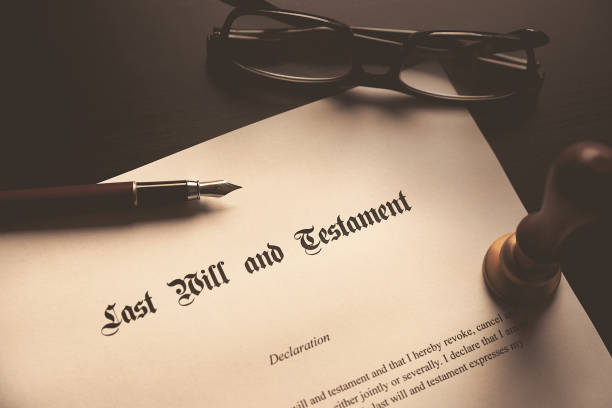
WILL A Will is a sensitive topic. People are not comfortable discussing a Will in India. There is a misconception that if someone tells to make a Will, the person thinks that nothing is going to happen to him or he doesn’t have any assets or he thinks indirectly you are telling him that his end is near or that you are eyeing his property. However, all apprehensions disappear when I make them understand the consequences of not making a Will. I have shared some information on Will. What does Will mean? Will means the legal declaration of the intention of a testator with respect to his property which he desires to be carried into effect after his death. The person who makes the Will is called “Testator” and the person who inherits property under a Will is called the “legatee” or “beneficiary”. The testator will express his intentions about distribution of his property amongst his sons/daughters/relatives/friends when he is alive, but it will come into effect only after his death. The essential characteristic of a valid Will are as follows, There must be a legal declaration, Such declaration must be with respect to the properties of the testator, The declaration must be intended to operate after the death of the testator. Who can make a Will…? As a general proposition of law, every person of sound mind who has attained the age of majority may dispose of his property by Will. Persons capable of making Will contains four Explanations which are as follows: Explanation 1 stipulates that a married woman may dispose of by Will of any property which she could alienate by her own act during her life. Explanation 2 stipulates that persons who are deaf and dumb are not thereby incapacitated of making a Will if they are able to know what they do by it. Explanation 3 lays down that a person who is ordinarily insane may make a Will during an interval in which he is of sound mind i.e. during lucid interval. Explanation 4 imposes a bar saying that no person can make a Will while he is in such a state of mind, whether arising from intoxication or from illness or from any other cause that he does not know what he is doing. Apart from that, so far as Hindus are concerned, it is the consistent view of all the courts that a Hindu who has not attained the age of majority prescribed by the Indian Majority Act cannot execute a valid Will. It has also been authoritatively held that a person who has not the capacity to comprehend the extent of his property and the nature of the claims of all people whom he is excluding from participation does not possess a sound disposing mind to execute a valid Will. To put it in precise terms, a Hindu who has attained majority and is of sound disposing mind may bequeath by Will whatever property he or she is entitled to give away during the life time. Example A, can perceive what is going on in his immediate neighbourhood, and can answer familiar questions, but has not competent understandings as to the nature of his property, or the persons who are of kindred to him, or in whose favour it would be proper that he should make his Will. Mr. A cannot make a valid Will. A, executes an instrument purporting to be his Will, but he does not understand the nature of the instrument, nor the effect of its provisions. This instrument is not a valid Will. A, being very feeble and debilitated, but capable of exercising a judgement as to the proper mode of disposing of his property, makes a Will. This is a valid Will. Will helps in Wills helps in clarity regarding distribution of properties. If you have a physical property it should be specifically distributed to avoid the disputes. Will allows you transfer of offshore assets. Suppose you have assets in India as well as outside India. So, should you make one Will which covers both the assets? Or should you make separate Wills in each country where you have assets? So, the answer to this question depends on the types of assets you have. If you have movable assets even a single Will be sufficient to cover all the assets. But if you have immovable assets outside India or in multiple countries then separate Wills for each country is advisable. Immovable assets take the law of the land where the asset is situated. Will can allow you to disinherit certain relatives. If you want someone among your legal heirs not to have any assets of yours post your death then making a Will is compulsory. If you die without making a Will, this person as per succession law might get some part of your assets. Tax Saving. For example: Let us suppose that a person preparing the Will has a son and a wife. If there were no Will, both would inherit his assets in equal proportion. But in order to save subsequent taxes, it might be better to distribute the assets not to the son but to the son’s wife, as well as to the grand-children. This can easily be achieved through the Will. Important points while making Will: Will must be signed by the testator. Ideally the person should sign on all the pages of the Will but at least on the last page signature by testator is must. Unsigned Will is invalid. What happens if a person signs all the pages of the Will and forgets to sign the last page? The Will is invalid. The last page signature is compulsory in India. If suppose a person has two Houses. If he gives one house to one of his Son today and the other house to the other Son after his death. It’s not a Will it’s a settlement. A Will must be attested by at least two witnesses. Minimum two witnesses

WILL Read More »

Hindu Succession Act 1956

Hindu Succession Act, 1956 Who is an Hindu…? This Act applies:- To any person, who is a Hindu by religion in any of its forms or developments including a Virashalva, a Lingayat or a follower of the Brahmo, Prathana or Arya Samaj. To any person who is Buddhist, Jain or Sikh by religion. To any other person who is not a Muslim, Christian, Parsi or Jew by religion unless it is proved that any such person would not have been governed by the Hindu law or by any custom or usage as part of that law in respect of any of the matters dealt with herein if this Act had not been passed. Who is a Hindu? Following persons are Hindu: Any child legitimate or illegitimate, both of whose parents are Hindu, Buddhists, Jains or Sikhs by religion. Any child legitimate or illegitimate, one of whose parents is Hindu, Buddhists, Jains or Sikhs by religion and is brought up as a member of such religion to which such parent belongs or belonged to. Any person who is a convert or reconvert to the Hindu, Buddhists, Jain or Sikh. Rules of Succession When a Hindu Male Dies Intestate. It is clearly provided in Section 8 of the Hindu Succession Act that the property of a male Hindu dying intestate shall be held according to the provisions of the Hindu Succession Act in the following manner: Firstly, upon the heirs, being the relatives specified in Class I of the schedule; Secondly, if there is no heir of Class I, then upon the heirs, being the relatives specified in Class II of the schedule; Thirdly, if there is no heir of any of the two classes, then upon the agnates of the deceased; and Lastly, if there is no agnate, then upon the cognate of the deceased. The Hindu Succession Act contains a schedule wherein the legal heirs are classified as Class I and Class II depending upon the relationship between the testator and his heirs. Hindu Male Class I heirs Son, daughter, widow, mother. Son of a predeceased son; daughter of a predeceased son. Son of a predeceased daughter, daughter of a predeceased daughter. Widow of a predeceased son. Son of a predeceased son of a predeceased son, daughter of predeceased son of a predeceased son; widow of a predeceased son of a predeceased son. Hindu Male Class II heirs Father (a) Son’s daughter’s son, (b) Son’s daughter’s daughter, (c)Brother, (d) Sister. (a) Daughter’s son’s son, (b) Daughter’s son’s daughter, (c) Daughter’s daughter’s son, (d) Daughter’s daughter’s daughter’s (a) Brother’s son, (b) Sister’s son, (c) Brother’s daughter, (d) Sister’s daughter Father’s father, father’s mother Father’s widow, brother’s widow Father’s brother, father’s sister Mother’s father, mother’s mother. Mother’s brother, mother’s sister. Explanation: In this schedule, references to a brother or sister do not include reference to a brother or sister by uterine blood. The adopted children (sons and daughters) are also to be counted as heirs in Class I and also the child born out of void or voidable marriages are considered to be legitimate by virtue of Section 16, and hence they are entitled to succession. Legal heirs listed in Class I of the schedule qualify to become the legal heirs in the first place. Only when the legal heirs mentioned in Class I are not present, then the legal heirs of Class II come into the picture. Section 9 of the Hindu Succession Act states, that among the legal heirs specified in the schedule, those in Class I shall take preference simultaneously and to the exclusion of all other heirs. Those in the first entry in Class II shall be preferred to those in the second entry, and so on. A male person whose legal heirs fall in the category in Class I of the schedule mentioned above will share the assets by giving one share to the widow. If there is more than one widow, then all the widows taken together will have one share. Likewise, the surviving sons and daughters and also the mother of the person dying intestate will each have a share. Likewise, all the legal heirs taken together in the lineage of each predeceased son or each predeceased daughter of the person, shall have one share between them. With regard to the property of a male person dying intestate, the sum shall be divided between the legal heirs in the second class of the schedule in any one entry, so that they share the assets of the person dying intestate equally. It is clearly provided in the Section 8 of the Hindu Succession Act, that if the legal heirs in Class I and II are not present, then the assets of the deceased person dying intestate shall be given away to agnates. Finally, if there is no agnate, then the assets will devolve upon the cognates of the deceased. Example: When a person died, he had two sons, each son had two sons further one of his sons died. When the person died ½ of the wealth goes to the son who is alive and the other half goes to the son’s kitty who is dead. Since the other son is not alive this half will be divided in to his grand sons in equal ratios. In such a scenario each blood line gets one share and not each person gets one share. Agnates In case a Hindu male passes away intestate and leaves no class I or class II heirs, then the property would devolve on agnates. A person is said to be an agnate of another if the two are related by blood or adoption wholly through males. Agnate relationship does not extend to relationship by marriage and is restricted to relationship by blood. Also, agnate does not include widows of lineal descendants of the intestate. Cognates If a Hindu male passes away without a Will and has no class I or class II heirs or agnates, then the succession would be through

Hindu Succession Act 1956 Read More »

Succession

What is succession? Passing of assets and liabilities from a dead person to a living person is called succession. Liabilities can be transferred to the living person subject to the available assets. Two terms commonly used with respect to succession are: Testamentary Succession which means the disposition of the property of an individual, generally effected by a Will or Codicil, which would take effect after his death. Intestate Succession which implies succession to the property of the deceased without him having provided for the manner in which it is to be given to his heirs. RELIGION BASED APPLICABLE LAWS: Hindus, Buddhists, Sikhs & Jains- Hindu Succession Act, 1956. Muslims – shariat – Muslim Personal Law. Parsis, Christians, Jews, others married under Special Marriages Act – Indian Succession Act, 1925. Hindu Succession Act, 1956 Who is an Hindu…? This Act applies:- To any person, who is a Hindu by religion in any of its forms or developments including a Virashalva, a Lingayat or a follower of the Brahmo, Prathana or Arya Samaj. To any person who is Buddhist, Jain or Sikh by religion. To any other person who is not a Muslim, Christian, Parsi or Jew by religion unless it is proved that any such person would not have been governed by the Hindu law or by any custom or usage as part of that law in respect of any of the matters dealt with herein if this Act had not been passed. Muslim Personal Law All the Muslims in India are governed by the Muslim Personal Law (Shariat) Application Act, 1937. This law deals with marriage, succession, inheritance and charities among Muslims. … These laws are not applicable in Goa state, where the Goa Civil Code is applicable for all persons irrespective of religion. Indian Succession Act 1925 To whom does this act applies: Europeans by birth or descent domiciled in India. Other Europeans and English subject if they own immovable property in India. Persons of mixed Europeans and Native Blood. Indian Christians. Jews Parsi Hindus, for Testamentary Succession. Muhammadan, many provisions of testamentary succession apply to Muslims. Person Marring under Special Marriage Act.

Succession Read More »